
 العربية
Nursing Program
🩺 Nursing Program
Program Mission
The Nursing Program seeks to prepare qualified healthcare professionals who possess the clinical and professional knowledge and skills required to contribute to the delivery of safe and effective healthcare services, work within the medical team, and practice under appropriate professional supervision and responsibility.
🩺 Nursing Technician Program
Program Mission
The Nursing Technician Program is committed to preparing professionally and ethically qualified nurses who possess the applied nursing knowledge and skills required to provide comprehensive patient care and promote clinical safety in accordance with approved healthcare standards.
🩺 Nursing Technician Program
Educational and Professional Program Objectives
- Clinical Skills: Equip students with essential clinical nursing skills to care for patients across different conditions and age groups.
- Infection Control: Apply infection-control protocols, procedures, and occupational-safety standards within healthcare facilities.
- Ethics and Communication: Instill ethical and humanitarian values, principles of nursing practice, and effective communication with patients and the healthcare team.
- Emergency Response and Monitoring: Train students to respond promptly to emergencies and accurately monitor vital signs and clinical changes.
- Field Training: Strengthen continuous field training through partnerships with hospitals and specialized centers.
📚 Core Knowledge Domains of the Nursing Program
Core Knowledge Domains – Nursing Technician Program
- Medical and Biomedical Sciences: Explain the fundamental principles of medical and biomedical sciences related to clinical practice.
- Human Anatomy and Physiology: Describe the structure and functions of the human body in health and disease.
- Pathophysiology: Explain the pathological mechanisms of common diseases and health conditions.
- Signs and Symptoms: Identify the clinical signs and symptoms of common diseases.
- Diagnostic Tests: Interpret basic laboratory and diagnostic test results in the context of the patient’s clinical condition.
- Pharmacology: Explain the basic principles of pharmacology and the safe use of medications.
- Microbiology: Understand the principles of microbiology and infection control.
- Nutrition and Public Health: Explain the principles of nutrition, public health, and disease prevention.
- Diagnosis and Treatment: Explain the principles of diagnosis, treatment, and follow-up for common health conditions.
- Emergency Medicine: Understand the principles of emergency medicine, first aid, and basic life support.
- Surgery and Procedures: Explain the principles of surgery and basic clinical procedures within the scope of nursing technician practice.
- Care of Special Populations: Understand the basic principles of caring for children, women, and older adults.
- Primary Healthcare: Understand the principles of primary healthcare and community health.
- Professional Ethics: Understand the principles of professional ethics, healthcare laws, and regulations.
- Patient Safety and Quality: Explain the principles of patient safety and healthcare quality assurance.
- Scientific Research: Understand scientific research methods and evidence-based practice.
- Health Technologies: Understand the principles of using information systems and digital technologies in healthcare.
👨⚕️ Nursing Technician Program Graduate Profile
Graduate Profile & Competencies
- Scientific Competence: Demonstrate integrated knowledge of the basic and clinical medical sciences required for professional practice.
- Clinical Competence: Perform basic clinical assessment and contribute to patient diagnosis, treatment, and follow-up within the approved scope of practice.
- Clinical Reasoning: Analyze clinical information, identify health problems, and make appropriate decisions within the limits of the graduate’s professional scope.
- Emergency Competence: Recognize critical conditions, provide an appropriate initial response, seek medical assistance, and arrange timely referral.
- Patient Safety: Apply safety, infection-control, and medical-error prevention standards.
- Communication: Communicate effectively with patients, their families, and the healthcare team.
- Teamwork: Work effectively within a multidisciplinary team under appropriate medical supervision and approved regulations.
- Professional Ethics: Maintain confidentiality, privacy, respect, patient rights, professional responsibility, and accountability.
- Patient-Centered Care: Provide care while considering patients’ psychological, social, and cultural needs.
- Evidence-Based Practice: Access, evaluate, and appropriately use reliable medical information in professional practice.
- Use of Technology: Use electronic health records, information systems, and relevant medical technologies.
- Lifelong Learning: Demonstrate a positive commitment to continuous professional development and updating knowledge and skills.
- Social Responsibility: Contribute to prevention programs, health promotion, primary healthcare, and community service.
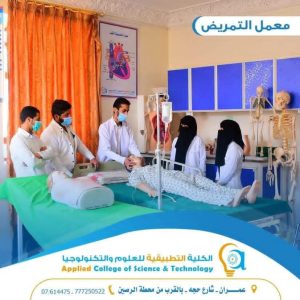
🎓 Graduation Requirements – Nursing Technician Program
Graduation Requirements
- Courses: Successfully complete all compulsory and elective courses in the study plan.
- Cumulative GPA: Achieve the minimum approved cumulative GPA.
- Theoretical and Practical Courses: Successfully complete theoretical, practical, and clinical courses.
- Clinical Training: Complete clinical training in approved hospitals and health centers.
- Clinical Hours: Complete the required number of clinical hours or clinical experiences.
- Skills Assessment: Successfully pass practical clinical skills assessments.
- Clinical Examinations (OSCE): Successfully pass structured practical examinations such as OSCE when adopted by the program.
- Internship: Successfully complete field training or a clinical internship if required by the study plan.
- First Aid: Complete first-aid and basic life-support requirements.
- Graduation Project: Complete a graduation project or scientific research project if required by the study plan.
- Attendance and Discipline: Comply with attendance and academic and clinical discipline requirements.
- Professional Registration and Licensing: Fulfill any licensing or professional-registration requirements imposed by the relevant regulatory authority.
🏥 Career Opportunities and Areas of Employment – Nursing Technician Program
Career Opportunities & Job Scope
1. Healthcare Institutions and Facilities
- Public and private hospitals.
- Medical and health centers.
- Primary-care and outpatient clinics.
- Emergency departments.
- Specialized clinics within the approved scope of practice and supervision.
- Maternal and child health centers.
2. Primary and Community Healthcare
- Primary healthcare centers.
- Community health and disease-prevention programs.
- Chronic-disease prevention and maternal and child health programs.
- Health education programs.
- Vaccination campaigns and public-health programs.
3. Humanitarian and Healthcare Organizations
- Non-governmental and international organizations.
- Humanitarian health programs and primary healthcare projects.
- Emergency and disaster-response programs.
- Community health projects.
4. Advanced Clinical and Administrative Fields (with Appropriate Experience and Qualifications)
Graduates may contribute to:
- Coordinating healthcare services and managing clinics and health units.
- Quality assurance, patient safety, and infection control.
- Health education, records, and health information.
- Community health programs.