
 العربية
Pharmacy Program
💊 Pharmacy Diploma Program
Pharmacy Diploma Program Overview
The Pharmacy Diploma Program is an applied healthcare program designed to prepare scientifically and professionally qualified pharmacy personnel to work in various fields of pharmaceutical services through the integration of theoretical knowledge with practical and field training.
Applied College of Science and Technology – Pharmacy Technician Program
Key Achievements and Development Areas
The Pharmacy Technician Program operates within the Applied College of Science and Technology and seeks to develop its educational and training processes in the pharmaceutical field in line with labor-market needs and healthcare-sector requirements.
Key Achievements and Development Areas:
- Providing an appropriate and stimulating environment for learning and training.
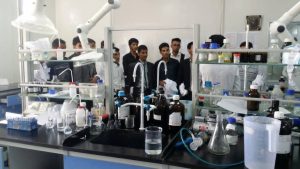
- Providing well-equipped and advanced pharmacy laboratories for practical application.
- Providing qualified staff to teach and train students in the pharmaceutical field.
- Emphasizing practical application and field training in pharmacies.
- Organizing annual visits to pharmaceutical factories to strengthen students’ practical experience.
- Establishing partnerships with hospitals and pharmacies to qualify students and develop their professional skills.
- Preparing students to work in pharmaceutical storage, drug warehouses, and pharmacies.
- Preparing qualified pharmacy personnel capable of providing pharmaceutical services and serving the community.
Pharmacy Technician Program
Program Mission and Vision
The Pharmacy Technician Program is committed to preparing professionally and ethically competent pharmacy assistants who possess the applied knowledge and skills required to manage and dispense medications, maintain pharmaceutical inventory, and provide basic patient guidance in accordance with good pharmacy practice and medication-safety standards.
Pharmacy Technician Program
Educational and Professional Program Objectives
- 1. Equip students with fundamental knowledge of pharmacology, pharmaceutical dosage forms, and accurate medication-dose calculations.
- 2. Provide students with practical skills in reading prescriptions, dispensing medications, and safely handling pharmaceutical preparations under pharmacist supervision.
- 3. Train students in good pharmaceutical storage practices, supply-chain and inventory management, and application of medication-safety and control requirements.
- 4. Develop proficiency in using approved electronic systems and software used in pharmacy and medical-warehouse management.
- 5. Reinforce the ethics of the pharmacy profession, effective communication with patients and the healthcare team, and the promotion of rational medication use in the community.
Pharmacy Technician Program
Intended Learning Outcomes
A – Knowledge & Understanding
- A1 • Explain the fundamental concepts and principles of pharmaceutical sciences.
- A2 • Identify medications, their uses, and pharmaceutical dosage forms.
- A3 • Explain the principles of proper medication storage and preservation.
- A4 • Explain the rules, regulations, and professional ethics applicable to pharmacy practice.
B – Professional & Practical Skills
- B1 • Handle medications and pharmaceutical preparations safely.
- B2 • Contribute to dispensing medications in accordance with regulations and instructions under appropriate professional supervision.
- B3 • Apply principles of medication storage, organization, and inventory control in pharmacies and warehouses.
- B4 • Use pharmaceutical tools and equipment efficiently and safely.
- B5 • Apply acquired practical skills in pharmacies and healthcare facilities.
C – Communication & Professional Practice
- C1 • Communicate effectively with patients, clients, and healthcare professionals.
- C2 • Work effectively within the healthcare team.
- C3 • Adhere to professional ethics and maintain confidentiality of information.
D – Community Service & Professional Practice
- D1 • Contribute to the delivery of pharmaceutical services and community service.
- D2 • Contribute to raising awareness of the safe and proper use of medications.
- D3 • Apply safety and quality procedures in the pharmacy work environment.
E – Learning & Professional Development
- E1 • Apply pharmaceutical knowledge and skills to solve professional problems.
- E2 • Use field training and scientific visits to pharmaceutical factories to develop professional skills.
- E3 • Continue learning and self-development and keep pace with developments in the pharmaceutical field.
💊 Pharmacy Technician Program Graduate Profile
Graduate Profile & Specifications
A graduate of the Pharmacy Technician Program is a scientifically and professionally qualified pharmacy technician who possesses the knowledge and skills required to work in various pharmaceutical-service settings and is able to:
- Safe Medication Handling: Handle medications and pharmaceutical preparations safely and responsibly.
- Medication Dispensing: Contribute to dispensing medications in accordance with regulations and instructions under appropriate professional supervision.
- Storage and Preservation: Apply proper medication storage, organization, and preservation practices.
- Areas of Employment: Work efficiently in pharmacies, drug warehouses, and healthcare facilities.
- Use of Equipment: Use pharmaceutical tools and equipment correctly and safely.
- Field Application: Apply acquired theoretical and practical knowledge and skills in the workplace.
- Community Service: Contribute to the delivery of pharmaceutical services and community service.
- Effective Communication: Communicate effectively with patients, clients, and members of the healthcare team.
- Ethics and Regulations: Adhere to professional ethics and the laws and regulations governing pharmacy practice.
- Teamwork: Work effectively as part of a team and assume professional responsibility.
- Quality and Safety: Maintain medication safety and quality during storage and handling.
- Continuous Development: Continue learning and professional development and keep pace with developments in the pharmaceutical field.
🎓 Graduation Requirements
Graduation Requirements
- Course Completion: Successfully complete all theoretical and practical courses.
- Academic Requirements: Complete all approved academic and applied requirements specified in the study plan.
- Field and Practical Training: Successfully complete field and practical training in approved hospitals and health centers.
- Credit and Training Hours: Complete the minimum approved academic and training hours specified in the study plan.
- Professional Skills: Master the essential skills required for professional practice within the program’s approved scope.
- Final Examinations: Successfully pass the final theoretical and practical examinations.
- Skills Log: Complete the program-approved skills log and practical training requirements.
- Vital Signs: Demonstrate proficiency in measuring vital signs and performing basic supportive procedures within the approved scope of practice.
- Emergency First Aid: Demonstrate proficiency in basic first aid and emergency response in accordance with professional authorization.
📚 Program Knowledge Domains
Program Knowledge Domains
- Pharmacy Fundamentals: Fundamentals of pharmacy and pharmaceutical terminology.
- Pharmacology: Pharmacology, medication classifications, uses, and basic effects.
- Pharmaceutics: Pharmaceutics and the preparation of pharmaceutical preparations and dosage forms.
- Pharmaceutical Chemistry: Pharmaceutical chemistry and biochemistry related to pharmacy.
- Pharmacognosy and Medicinal Plants: Medicinal drugs, plants, and sources of pharmaceutical substances.
- Dosage Calculations: Calculation of medication doses and pharmaceutical quantities and methods of preparation.
- Medication Storage: Methods of medication storage and preservation and monitoring expiration and quality.
- Medication Dispensing: Dispensing medications and handling prescriptions in accordance with approved authorization and regulations.
- Rational Medication Use: Rational and safe medication use and medication education for patients.
- Infection Control: Infection control and occupational safety in the pharmacy work environment.
- Pharmacy Management: Management and organization of pharmacies and drug stores and maintenance of records.
- Drug Interactions: Fundamentals of drug interactions, side effects, and medication-related precautions.
- Professional Ethics: Professional ethics, confidentiality, and patient rights.
- Field Training: Practical and field training in pharmacies and healthcare institutions.
🏥 Career Opportunities and Areas of Employment
Career Opportunities & Job Scope
- Community Pharmacies: Public and private pharmacies.
- Hospital Pharmacies: Hospital and medical-center pharmacies.
- Drug Warehouses: Drug and medical-supply warehouses.
- Distribution Organizations: Warehouses and pharmaceutical distribution organizations.
- Pharmaceutical Companies: Pharmaceutical and medical-supply companies and institutions.
- Organizations and Programs: Institutions, organizations, and healthcare programs related to pharmaceutical services.
- Primary Healthcare: Health centers and primary healthcare clinics within the approved scope of practice.
- Inventory Management: Contribute to receiving, organizing, storing, and monitoring the expiration of medications.
- Medication Dispensing: Contribute to preparing and dispensing medications according to prescriptions, instructions, and approved authorization.
- Organization and Records: Contribute to managing and organizing records and pharmaceutical inventory and monitoring medication movement.
- Patient Education and Guidance: Contribute to providing basic medication education and guidance to patients under pharmacist supervision.