
 العربية
Physician Assistant Program
🩺 General Physician Assistant Program
General Practitioner Assistant Program
It is a health sciences program designed to prepare scientifically and practically qualified healthcare personnel to work in healthcare, contribute to preventive and therapeutic health services, and work within the healthcare team under the supervision of a qualified physician.
Applied College of Science and Technology – General Physician Assistant Program
Key Achievements and Development Areas
The General Physician Assistant Program operates within the Applied College of Science and Technology and seeks to develop its educational and training processes in line with labor-market needs and healthcare-sector requirements.
Key Achievements and Development Areas:
- Providing qualified and specialized academic staff.
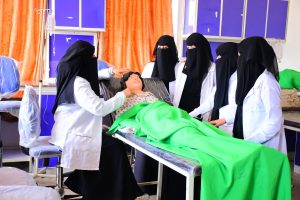
- Providing educational laboratories equipped with medical devices, instruments, and models.
- Developing the students’ educational and training environment.
- Emphasizing field training and clinical sciences.
- Integrating theoretical learning with practical and applied training.
- Developing students’ scientific, professional, and personal skills.
- Preparing graduates to contribute effectively to the delivery of healthcare services.
Physician Assistant Technician Program
Program Mission and Objectives
The Physician Assistant Technician Program seeks to prepare supporting healthcare professionals with clinical competence and applied skills to provide primary healthcare services, basic diagnostic support, and emergency interventions in accordance with professional and ethical standards, thereby strengthening the public-health system in the community.
Physician Assistant Technician Program
Educational and Professional Program Objectives
- Equip students with basic medical knowledge and clinical skills required for initial examination and preliminary assessment.
- Prepare personnel capable of managing common health conditions and providing primary healthcare in urban and rural areas.
- Train students to respond promptly to urgent and emergency cases and refer them appropriately to higher levels of care.
- Promote preventive health awareness and participation in immunization and community epidemic-control programs.
- Develop ethical and professional practices and teamwork skills within an integrated healthcare team.
Physician Assistant Technician Program
Intended Learning Outcomes
A – Knowledge & Understanding
- A1 • Understand the fundamentals of medical and clinical sciences related to physician-assistant practice.
- A2 • Recognize common health conditions and appropriate approaches to their management.
- A3 • Understand the basic laboratory and imaging investigations required for common conditions.
- A4 • Understand the principles of disease prevention and health promotion.
B – Clinical & Practical Skills
- B1 • Perform initial patient assessment and examination.
- B2 • Recognize common health conditions and manage them within the approved scope of practice.
- B3 • Identify essential laboratory and imaging investigations for common conditions.
- B4 • Perform essential medical and therapeutic procedures for common conditions within the approved scope of practice.
- B5 • Provide first aid for emergencies and injuries.
- B6 • Assist in surgical procedures by preparing the patient and supporting the physician during the procedure.
C – General & Professional Skills
- C1 • Communicate effectively with patients and members of the healthcare team.
- C2 • Work collaboratively as part of a healthcare team and cooperate with different health professions.
- C3 • Use problem-solving approaches in the delivery of healthcare services.
- C4 • Adhere to professional ethics and maintain patient privacy.
- C5 • Assume professional responsibility and demonstrate commitment to continuous learning and professional development.
👨⚕️ General Physician Assistant Program Graduate Profile
Graduate Profile & Competencies
- Academic Qualification: Holds a General Diploma in Physician Assistant studies.
- Job Title: Holds the job title of Physician Assistant Technician.
- Medical Knowledge: Possesses fundamental medical and health knowledge appropriate to the field of practice.
- Examination and Assessment: Possesses skills in initial patient examination and assessment.
- Case Management: Able to manage common health conditions within the approved scope of professional practice.
- Assessment and Investigations: Able to identify appropriate basic investigations for common conditions.
- First Aid and Emergencies: Possesses first-aid and emergency-response skills.
- Surgical Assistance: Able to assist with procedures and surgical operations under physician supervision.
- Administrative Responsibilities: Able to perform selected administrative and organizational duties in health centers and units.
- Teamwork: Able to work within the healthcare team and collaborate with physicians, nurses, and other health professionals.
- Professional Ethics: Committed to professional ethics and professional responsibility.
- Communication Skills: Possesses effective communication and compassionate interpersonal skills with patients.
- Continuous Development: Demonstrates the ability to pursue continuous learning and develop professional skills.
- Community Service: Able to contribute to health promotion, disease prevention, and community service.
🎓 Graduation Requirements
Graduation Requirements
- Course Completion: Successfully complete all theoretical and practical courses.
- Academic Requirements: Complete all approved academic and applied requirements specified in the study plan.
- Practical Training: Successfully complete field and practical training in approved pharmacies and healthcare institutions.
- Credit and Training Hours: Complete the minimum approved academic and training hours specified in the study plan.
- Professional Skills: Master the essential skills required to work as a pharmacy technician.
- Final Examinations: Successfully pass the final theoretical and practical examinations.
📚 2. Program Knowledge Domains
Program Knowledge Domains
- Nursing Fundamentals: Concepts and principles of nursing care.
- Anatomy Sciences: Anatomy and physiology and their relationship to nursing practice.
- Infection Control: Microbiology, infection control, and sterilization.
- Pharmacology: Fundamentals of medication administration and monitoring of effects.
- Clinical Nutrition: Fundamentals of nutrition and its relationship to patient health and care.
- Medical-Surgical Care: Nursing care for patients with medical and surgical conditions.
- Pediatric Nursing: Nursing care for children and newborns.
- Maternal and Obstetric Nursing: Maternal and child care.
- Emergency Care: Emergency nursing and first aid.
- Mental Health: Mental health and psychiatric nursing.
- Community Health: Community health nursing, health education, and disease prevention.
- Assessment and Monitoring: Patient assessment, monitoring vital signs, and documenting nursing care.
- Professional Ethics: Nursing ethics, patient rights, and confidentiality of health information.
- Quality and Safety: Patient safety and quality principles in healthcare delivery.
- Clinical Training: Practical and clinical training in approved hospitals and health centers.
🏥 4. Career Opportunities and Areas of Employment
Career Opportunities & Job Scope
- Hospitals: Maternity, gynecology, and obstetrics departments in public and private hospitals.
- Primary Healthcare: Primary healthcare centers and units.
- Maternal and Child Health: Maternal and child health centers and clinics.
- Reproductive Health: Family-planning and reproductive-health centers.
- Specialized Centers: Specialized centers and clinics for maternal and newborn care.
- Organizations and Programs: Institutions, organizations, and healthcare programs related to maternal and child health.
- Antenatal Care: Antenatal-care centers and monitoring of normal pregnancy within the approved scope of practice.
- Labor and Delivery Services: Contribute to maternal care during pregnancy, labor, delivery, and the postpartum period in accordance with professional authorization.
- Newborn Care: Contribute to newborn care and provide essential newborn services.
- Health Education: Contribute to health education and awareness of reproductive health and family planning.
- Prevention Programs: Participate in maternal and child health programs and prevention of pregnancy and childbirth complications.