
 العربية
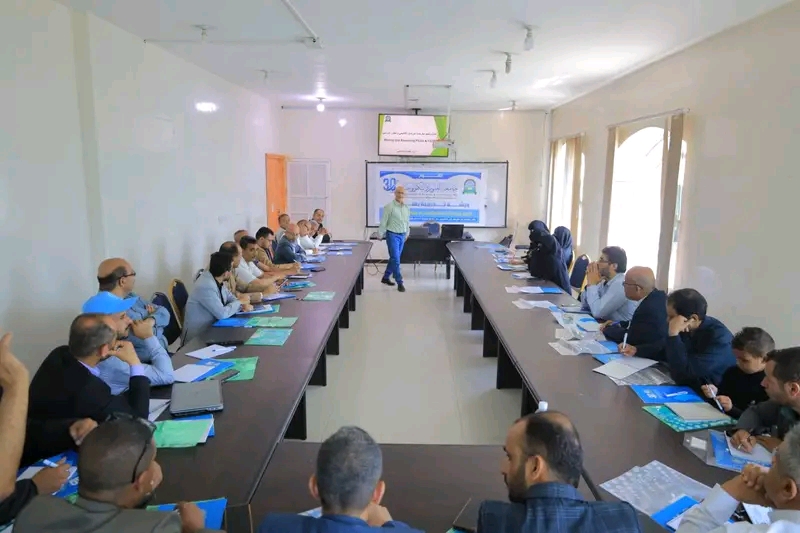
Ibb– Under the esteemed patronage of Prof. Dr. Al-Qassem Mohammed Abbas, President of the University of Science and Technology (Main Campus – Sana’a), the Deanship of Development and Quality Assurance organized a specialized two-day training workshop titled “Writing and Evaluating Academic Program and Course Learning Outcomes”. The workshop targeted all faculty members at the UST Ibb Branch as part of the university’s ongoing drive to enhance educational quality, elevate academic performance, and refine measurement and evaluation mechanisms in alignment with academic accreditation and quality assurance standards.
Focus on Quality Assurance and Curriculum Enhancement
This workshop is part of a series of qualitative training programs implemented by the university to empower academic staff with the knowledge and skills necessary to evaluate learning outcomes scientifically and methodologically. This initiative aims to improve teaching quality, develop curricula, and boost students’ cognitive and skill acquisition levels.
The workshop was delivered by international expert, academic, and trainer Prof. Dr. Essam Al-Mazjaji, with the attendance of branch director Dr. Makram Al-Jamali, deputy branch director Dr. Bader Al-Farah, heads of academic departments, head of the branch’s Development and Quality Assurance Unit Dr. Yusuf Shaddad, and all faculty members across various programs and specializations.
Opening Remarks and Institutional Commitment
The workshop commenced with a welcoming address by branch director Dr. Makram Al-Jamali, who emphasized that writing and evaluating learning outcomes for academic programs and courses represents a fundamental pillar of modern university education. He noted that such processes go beyond merely measuring theoretical knowledge to assess students’ capabilities in critical thinking, analysis, application, and the mastery of professional and values-based skills required by the job market and community.
Dr. Al-Jamali highlighted that UST places profound emphasis on quality and academic development through continuous faculty training programs, striving to elevate awareness of accreditation standards and refine evaluation instruments to ensure measurable, reviewable, and improvable learning outputs. He also expressed sincere gratitude to University President Prof. Dr. Al-Qassem Mohammed Abbas for his ongoing patronage, continuous support for branch development, and commitment to institutional excellence across all colleges and branches.
Quality Assurance Perspective
In the address delivered by the Development and Quality Assurance Unit at the branch, Dr. Yusuf Shaddad explained that evaluating program and course learning outcomes is one of the most vital components of the quality assurance system. It enables academic departments to assess the achievement of program and course objectives, identify strengths and weaknesses in the educational process, and make data-driven improvement decisions.
Day One: Core Scientific and Practical Themes
During the first day, the workshop covered several scientific and practical themes concerning the writing and evaluation of program and course outcomes:
-
Fundamental Concepts: Prof. Dr. Essam Al-Mazjaji reviewed the core concepts of learning outcomes, distinguishing them from general educational objectives, and clarifying that learning outcomes define what a student is expected to know, understand, and be able to perform upon completing a course or program.
-
Types of Learning Outcomes: The sessions addressed cognitive, skill-based, mental, professional, and affective learning outcomes, detailing how to formulate them clearly and measurably while aligning them with program missions, objectives, market demands, and accredited academic standards.
-
Alignment and Mapping Mechanisms: The trainer discussed mechanisms for aligning course learning outcomes with program learning outcomes, emphasizing the necessity of clear mapping matrices between courses and target outcomes so that every course contributes progressively and cohesively to building student competencies. He warned that a lack of alignment can cause educational redundancy or critical omissions, ultimately impacting program quality.
The first day concluded by stressing the importance of utilizing the workshop’s outcomes to update course specifications, refine measurement tools, and activate continuous improvement and monitoring mechanisms within academic departments, thereby fostering high-quality learning outcomes for students and graduates at the university branch.