 العربية
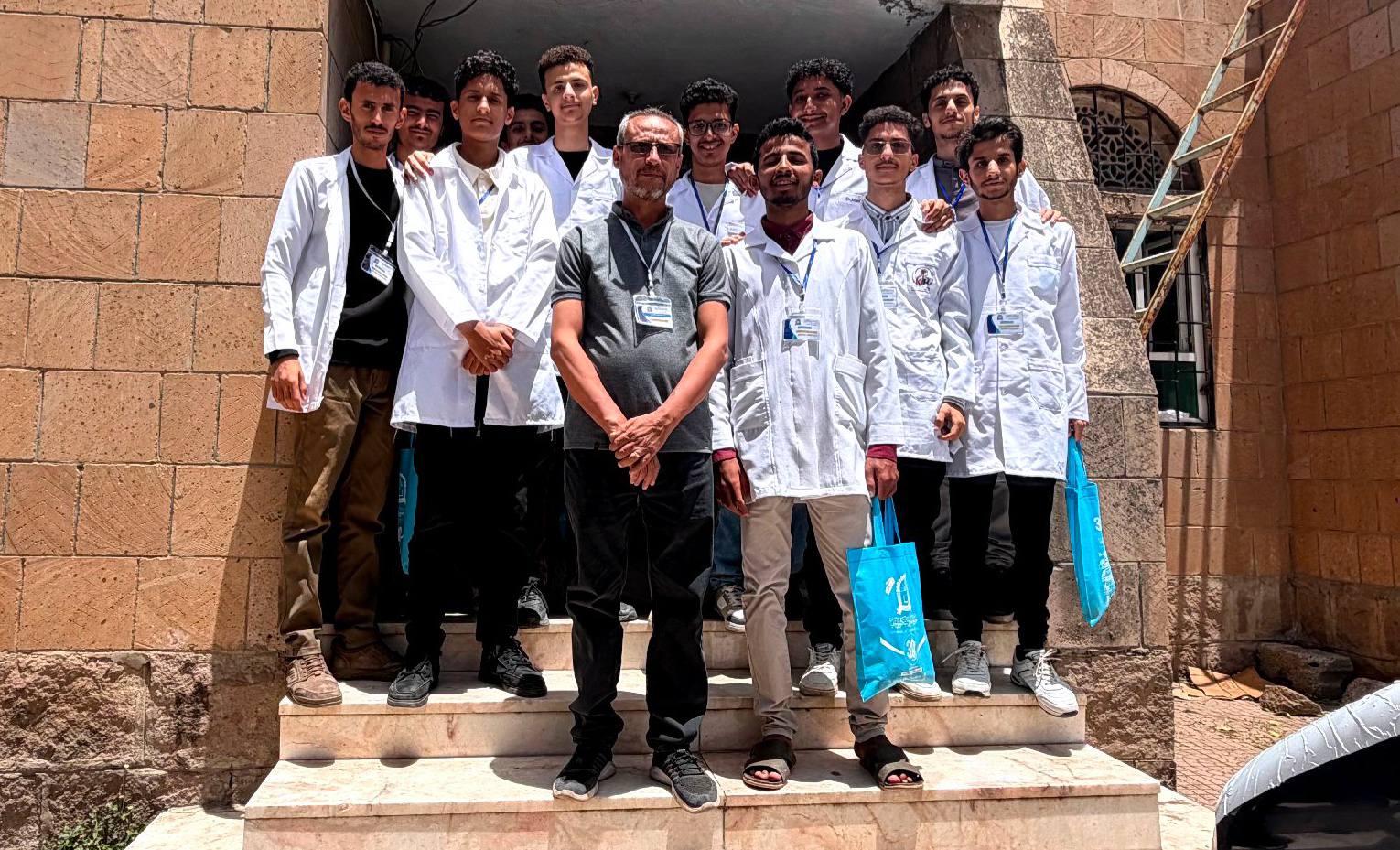
Ibb– In alignment with its educational vision to promote applied medical training and bridge theoretical knowledge with clinical practice, the Department of Medicine and Surgery at the UST Ibb Branch has officially launched its specialized field visit program for students in the General Medicine and Surgery Program. This initiative forms part of a robust academic plan designed to cultivate scientifically and practically qualified medical professionals equipped to serve the community with high efficiency and professional integrity.
Comprehensive Field Training for Clinical Excellence
The launch of the field program was carried out under the direct patronage and support of branch director Dr. Makram Al-Jamali, with close supervision and follow-up from the head of the Department of Medicine and Surgery, Dr. Radwan Al-Hammoudi, accompanied by Dr. Rashad Al-Khawlani and Dr. Abdulmajeed Al-Jabri.
The program aims to elevate student competencies and seamlessly integrate classroom learning with practical healthcare applications across prominent medical and health institutions in the governorate.
Group Segmentation for Structured Field Coverage
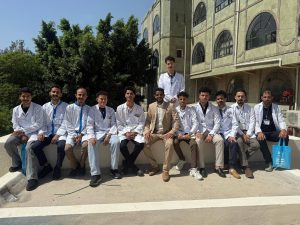
To ensure an organized, safe, and highly effective learning environment, the department divided the first-year batch of General Medicine and Surgery students into four distinct groups:
-
Two male student groups
-
Two female student groups
This strategic division ensures comprehensive field coverage and maximizes practical learning opportunities during institutional visits.
Field Visits to Core Health Institutions
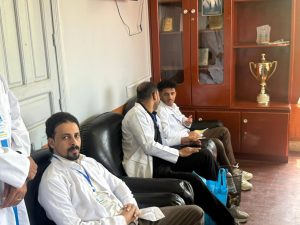
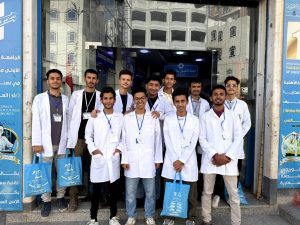
The field training commenced with two extensive exploratory tours:
-
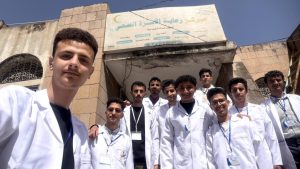
Group 1 visited the Family Health Care Center in the governorate.
-
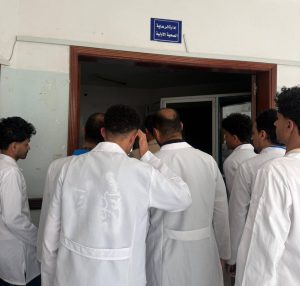
Group 2 headed to the Public Health and Population Office.
-
Coordination is currently underway to execute upcoming field tours for Groups 3 and 4 across various health and service institutions in the governorate.
Practical Insights at the Family Health Care Center
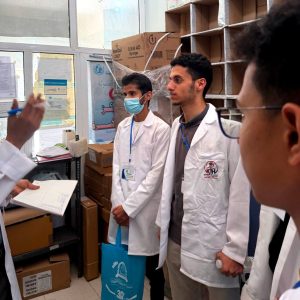
Students in the first group gained direct exposure to primary healthcare administration and community medical services through a guided tour that included:
-
General medical consultation clinics
-
Maternal and child health follow-up units
-
Vaccination, immunization, and cold chain storage sections
-
Emergency surgical and medical intervention clinics
-
Therapeutic nutrition department
-
Diagnostic laboratory
-
Pharmacy and prescription dispensing workflows
This visit significantly deepened students’ understanding of primary healthcare’s vital role in safeguarding community wellness and elevating medical service standards.
Exploring Public Health Management at the Health Office
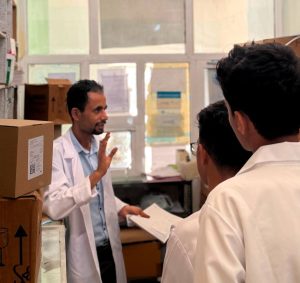
The second group initiated its field deployment with an official visit to the Public Health and Population Office, where they were welcomed by the General Director, Dr. Najeeb Morshed Al-Kamel. He provided a comprehensive briefing on the office’s administrative and technical structure alongside its core public health programs:
-
The electronic epidemiological surveillance program (eDEWS)
-
The Expanded Program on Immunization (EPI)
-
Health education and public media programs
-
Malaria and vector-borne disease control programs
-
Rabies control program
Hands-On Experience with Epidemiological Surveillance
Students visited the eDEWS unit, where specialists delivered detailed explanations regarding:
-
Immediately reportable diseases
-
Epidemiological investigation methodologies
-
Sample collection and contact tracing
-
Preventive containment protocols for disease outbreaks
This visit granted students an advanced, real-world perspective on health crisis and epidemic management.
Health Education as a First Line of Defense
The tour included the health education and media program, enabling students to discuss the critical importance of community awareness in disease prevention and health behavior promotion, alongside volunteer training frameworks designed to deliver accurate health messages to the public.
Clinical and Preventive Dimensions at the Rabies Control Unit
The second group concluded its field visits at the Rabies Control Unit within Al-Thawra General Hospital in Ibb, reviewing:
-
Clinical and preventive dimensions of the disease
-
Transmission routes of the rabies virus
-
Approved therapeutic protocols
-
Dosage guidelines and preventive procedures
-
Statistical data and medical complications associated with the infection
UST Commitment to Applied Medical Education
Through these structured field programs, the UST Ibb Branch reaffirms its dedication to graduating physicians possessing robust scientific knowledge and hands-on operational experience, fully prepared to respond effectively to modern healthcare system demands. These activities reflect the university’s steadfast commitment to embedding preventive and community medicine concepts and linking medical education directly to real-world clinical environments.
Ongoing Field Program Expansion
The Department of Medicine and Surgery confirmed that the field visit program will continue to encompass remaining student groups and additional health and service institutions, advancing its curriculum-driven mission to build advanced field expertise among future medical practitioners.