
 العربية
 Master's Program in Computing
The history of the Master’s Program in Computing at the Faculty of Computers and Information Technology, University of Science and Technology (UST), dates back to the 2007/2008 academic year, when it was launched under the name Master’s Program in Information Technology in response to the growing need for specialized academic, research, and professional competencies in the fields of computing and information technology.
The program aims at:
- Preparing highly competent graduates in computing disciplines who are capable of pursuing advanced graduate studies or engaging in scientific research.
-
Developing students’ entrepreneurial and creative skills to address local and global challenges.
-
Enabling students to conduct impactful research and contribute to advancing the computing field.
-
Preparing graduates with the necessary skills to meet the labor market demands at both the national and regional levels.
A. Knowledge and Understanding
A1. Demonstrate a critical understanding of advanced knowledge, including contemporary research and development issues relevant to a specific specialization or profession within the field of computer science.
B. Cognitive / Intellectual Skills
B1. Analyze complex problems and apply principles of computer science and related disciplines to develop appropriate solutions.
C. Practical and Professional Skills
C1. Design, implement, and evaluate modern computing solutions that address a defined set of requirements within the context of computer science.
C2. Conduct rigorous scientific research, present relevant findings, and defend results effectively.
D. General and Transferable Skills
D1. Communicate effectively across various professional contexts.
D2. Recognize professional responsibilities and make informed decisions in the field of computing based on legal and ethical principles.
D3. Work effectively as both a member and a leader of a team engaged in activities related to computing disciplines.
Upon completing the Master of Computer Science program, graduates will possess the following attributes:
- Researcher
- Software Developer
- Professional
- Self‑Learner
- Data Analyst
- Information Technology Manager
- Problem Solver
- Artificial Intelligence Engineer
- Software Engineer
- Security Analyst
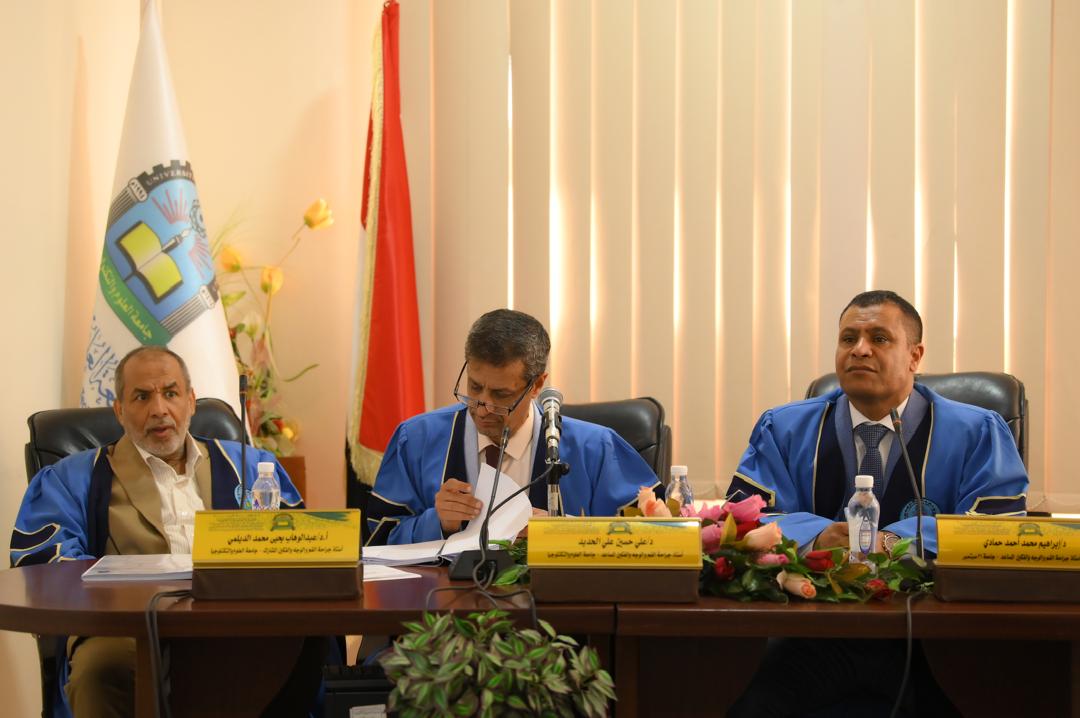
- Successfully complete all courses specified in the study plan.
- Successfully pass the defense of the master’s thesis.
- Submit the required bound copies of the research thesis.
- Pass the English proficiency examination.
- Complete all degree‑granting procedures approved by the Graduate Studies Committee, the Graduate Studies Council, and the University Council.
- Algorithms and Computational Theory
- Programming Languages and Software Development
- Computer Systems and Architecture
- Artificial Intelligence and Machine Learning
- Data Science and Analytics
- Cybersecurity and Cryptography
- Cloud Computing and Distributed Systems
- Human-Computer Interaction (HCI)
- Software Engineering and Systems Design
- Computer Networks and Internet of Things (IoT)
- Information Systems and Technology Management
- Computer Graphics and Computer Vision
- Computer Science Researcher
- Artificial Intelligence Engineer
- Software Engineer / Developer
- Entrepreneur in Technology Startups
- Cloud Solutions Engineer
- Cloud Engineer
- Cybersecurity Analyst / Engineer
- Data Scientist / Data Analyst
- Teaching Assistant
- Information Technology Consultant