
 العربية
 Providing a distinguished educational and research services in the fields of computer science, cybersecurity and networks, software engineering, and artificial intelligence, in a way that contributes to enhancing and improving levels of compliance with national and international computing standards, through quality academic programs, specialized teaching staff, an excellent educational environment, and an effective partnership in order to achieve good practices in the computing disciplines at the national level.
- Provide students with the fundamental knowledge and skills required in the scientific and professional fields of Information Technology.
- Enable students to develop analytical and critical thinking skills to create modern solutions that meet the needs of the labor market and society.
- Enhance students’ capabilities in continuous self-development, scientific research, and innovation.
- Equip students with the ability to keep pace with emerging technologies and acquire practical skills applicable across various fields.
-
Department Faculty Members
Dr. Nabil Ahmed Mohammed Al-Mikhlafi
Head of the Computer Science Department- Academic Rank: Assistant Professor
- Specialization: Computer Information Systems
- Extension: 5135
- Email: n.almikhlafi@ust.edu.ye
Dr. Naseeba Abdulhakim Al-Maqtari
Chair of the Graduation Projects and Field Training Committee- Academic Rank: Assistant Professor
- Specialization: Software Engineering & Artificial Intelligence
- Extension: 5159
Assoc. Prof. Abdul Latif Ghallab
Faculty Member- Academic Rank: Associate Professor
- Specialization: Computer Science
- Extension: 6248
Dr. Widad Abdulraqib Al-Surouri
Coordinator of the Cybersecurity and Networks Program- Academic Rank: Assistant Professor
- Specialization: Artificial Intelligence
- Extension: 3159
Dr. Mohammed Abdul Latif Al-Sharjabi
Advisor to the University President for Quality and Academic Accreditation- Academic Rank: Assistant Professor
- Specialization: Cybersecurity and Networks
Dr. Wadie Abdulhafiz Al-Qubati
College Quality Assurance Coordinator- Academic Rank: Assistant Professor
- Specialization: Artificial Intelligence (NLP)
Ms. Ameerah Taha Yaseen Al-Adimi
Assistant Dean, Female Students Branch- Academic Rank: Assistant Lecturer
- Specialization: Information Systems & Business Intelligence
- Extension: 3159
Mr. Fikri Al-Shaibah
Coordinator of the Software Engineering Program- Academic Rank: Assistant Lecturer
- Specialization: Cybersecurity and Networks
- Extension: 4124
Academic Programs
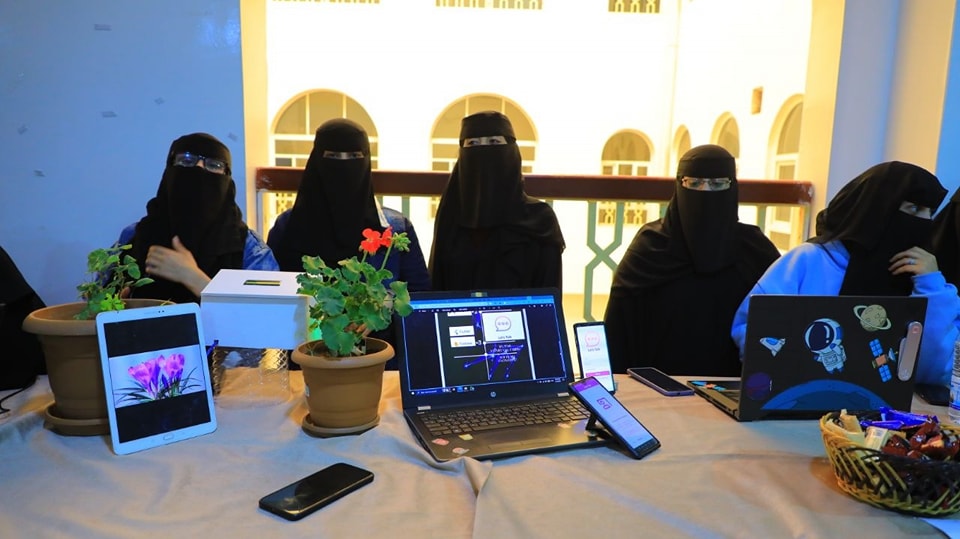
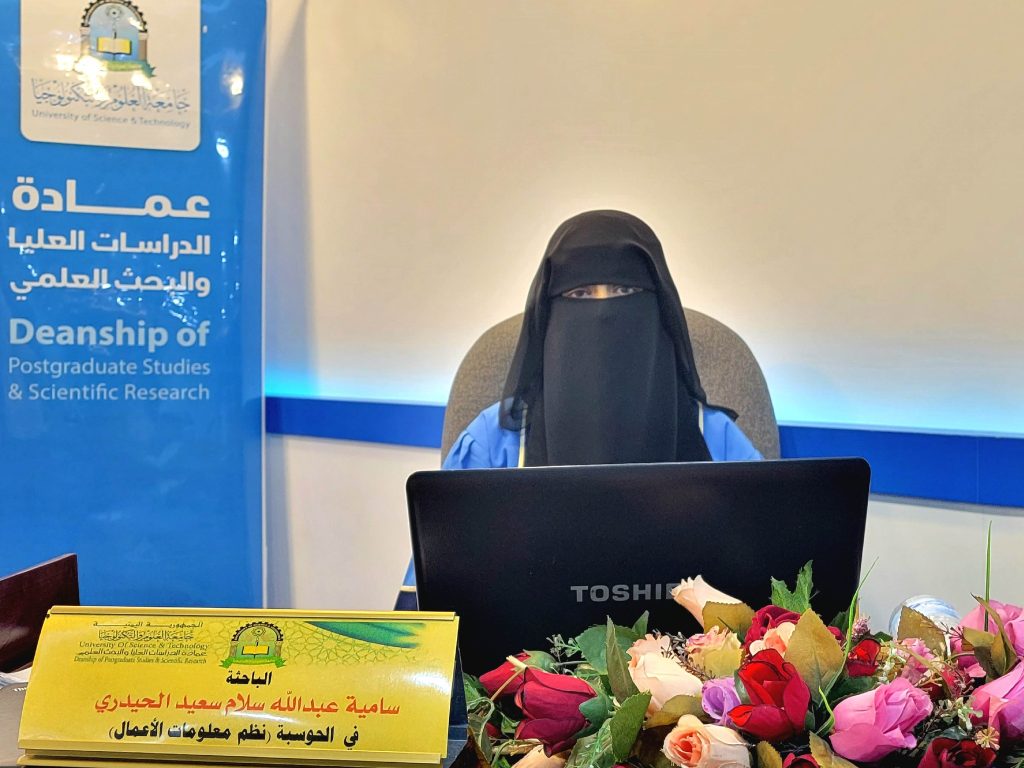
Scientific research
Introduction
First: Artificial Intelligence and Data Science Track
- Artificial Intelligence, Machine Learning, Deep Learning, and Computer Vision
- Explainable Artificial Intelligence (XAI)
- Natural Language Processing and Sentiment Analysis
- Data Science and its Applications
- Medical Artificial Intelligence and Healthcare Machine Learning
Second: Cybersecurity and Distributed Systems Track
- Cybersecurity and Malware Detection
- Internet of Things (IoT) Security
- Edge Computing and Cloud Computing
- Interconnected and Distributed Systems
Third: Intelligent Networks and Communication Systems Track
- Wireless Networks and Sensor Networks (WSN)
- Coverage Optimization and Energy Efficiency
- Traffic Engineering
- Quality of Service and MPLS/TCP Protocols
Fourth: Software Engineering and Quality Assurance Track
- Software Engineering
- Test Quality and Test Smell Analysis
- Systematic Mapping Studies
- Software Process Improvement and Quality Assurance
Fifth: Applied Computing and Mathematical Modeling Track
- Applied Mathematics
- Graph Theory
- Topological Indices and Their Applications
Sixth: Educational Technology and Digital Transformation Track
- E‑Learning
- Augmented and Virtual Reality Applications (AR/VR)
- Intelligent Educational Systems
Computer Science Department Facilities
Advanced Technical Infrastructure & Smart Learning Environments
The Faculty of Computing and Information Technology provides a world-class technical ecosystem. Our facilities are meticulously designed to foster innovation, academic excellence, and hands-on technical proficiency.
1. Smart Classrooms
Our lecture halls are integrated with state-of-the-art interactive displays and High-Resolution visual systems. Each hall features optimized acoustics and climate control to ensure an ideal atmosphere for student focus and learning.
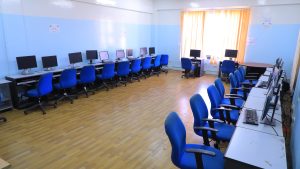
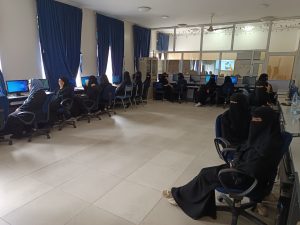
2. General Computer Laboratories
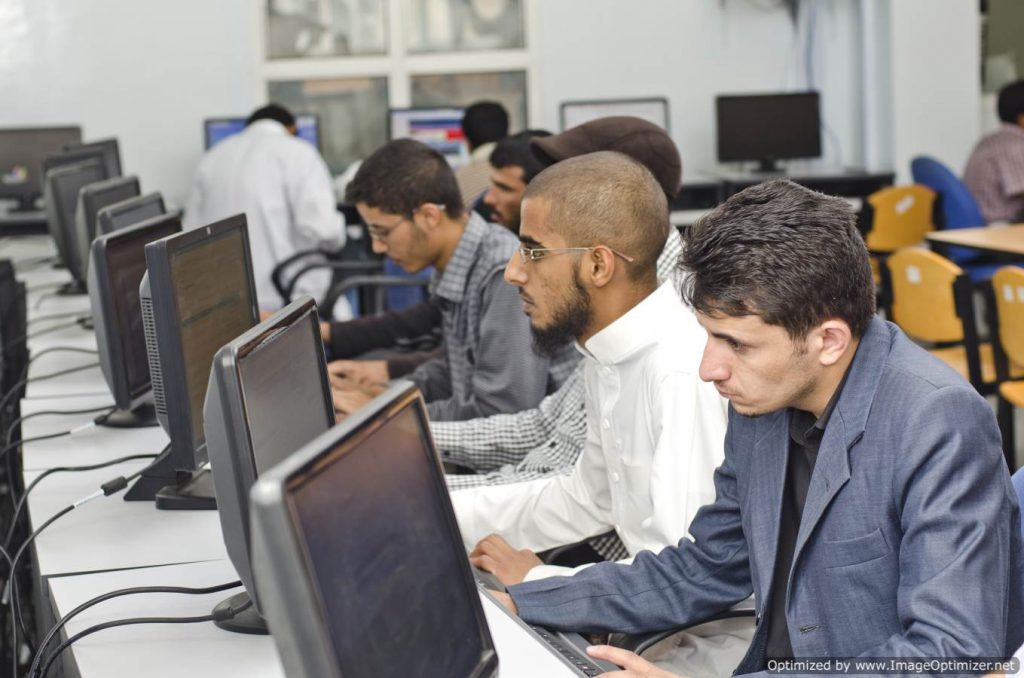
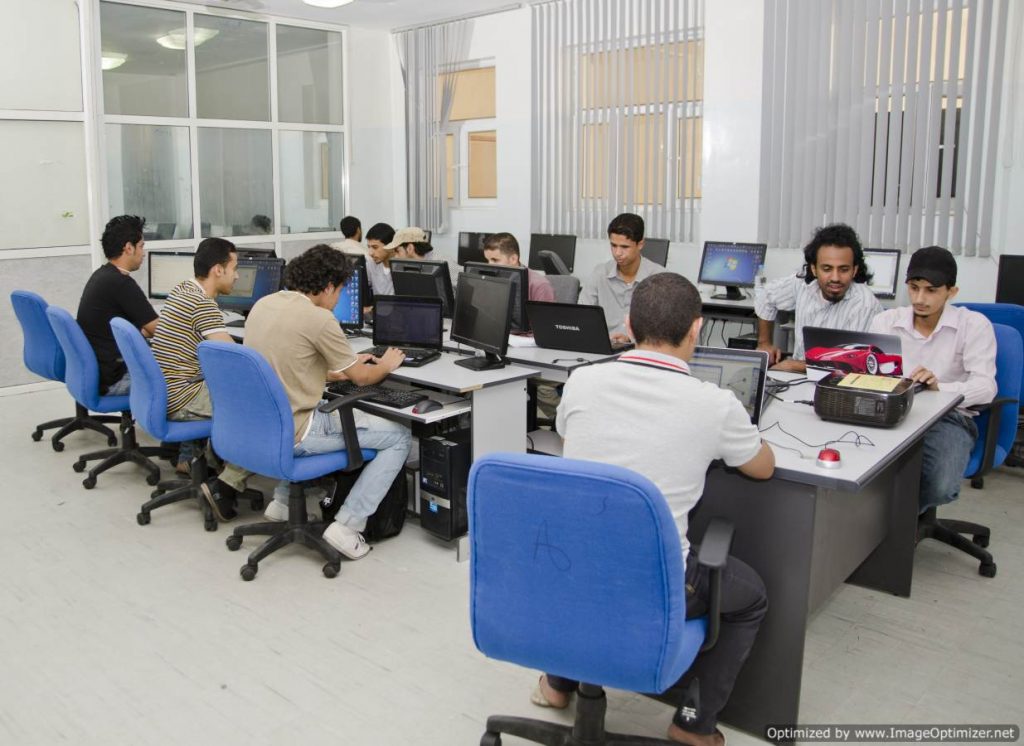
We provide multiple high-spec computer labs housing high-performance workstations. These labs are updated with the latest industry-standard software and operating systems to support students across all specializations.
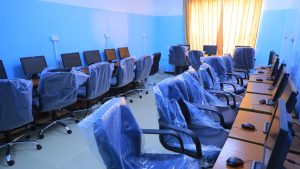
Advanced Research & Specialized Labs
• AI & Machine Learning Labs
Powered by high-end GPU processing units, these labs support complex computations for Data Science, Artificial Intelligence, and Computer Vision projects.
• Cisco Networking & Cybersecurity Labs
Equipped with professional-grade Cisco routers and switches, providing a sandbox for network architecture and digital security training.
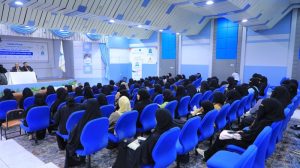
3. Grand Seminar & Defense Hall
A prestigious venue dedicated to scientific discussions, thesis defenses, and international seminars. The hall is equipped with high-fidelity audio systems to host major academic events and competitions.
4. Digital Library & Shared Facilities
Our infrastructure includes a modern digital library with global database access, specialized faculty consulting offices, and campus-wide amenities including sports halls and green student areas.
Graduation Projects Registry
| Project Title | Students | Supervisor |
|---|---|---|
| "Heba" Charity Project Application |
|
Prof. Abdullah Al-Hashedi |
| Purchase Behavior Analysis & Product Recommendation |
|
— |
| Online Platform for Personal Skills Development |
|
Prof. Abdullatif Ghallab |
| Watheeq (Document/Archive System) |
|
Dr. Nusaiba Maqtari |
| Intelligent MS Diagnosis System via Radiographic Imaging |
|
Dr. Sadiq Al-Tawil |
| Project Title | Students | Supervisor |
|---|---|---|
| Automating Incident Response using SIEM & SOAR |
|
Prof. Bilal Al-Fahaidy |
| Malware Analysis Framework |
|
Prof. Mohammed Al-Sharjabi |
| Advanced Phishing Detection using NLP |
|
Prof. Mohammed Al-Sharjabi |
| Intelligent IDS using Machine Learning |
|
Prof. Farouq Al-Fahaidy |
| Integration for OTX & MITRE ATT&CK (CTI-BERT) |
|
Aisha Al-Hadam |
Computer Science Department
Note: Publications are sorted descending by year. Duplicates within the department were removed using DOI or normalized title.
| No. | Research title and DOI link | Authors | Journal / Conference / Publisher | Scopus/WoS classification | Year | Scientific field |
|---|---|---|---|---|---|---|
| 0 | Wadee A. Nashir, A S. Al-Hegami, Belal Al-Fuhaidi, Wedad AL-Sorori and Naseebah Maqtary |
Sana’a University Journal of Applied Sciences and Technology | Not specified in Scopus/WoS | 2026 | Arabic NLP and Computational Linguistics | |
| 1 | Umar, M., Zeeshan, M., Rafiq, S., Siddique, I., Shakoor, B., and Ghallab, A. S | Scientific Reports, 16, 4527. Scopus Q1 | Scopus Q1 | 2026 | Medical AI and Health Informatics | |
| 2 | Khan, Z.U.A., Mughal, M.A., Haq, I.U. et al | Sci Rep (2026) | Not specified in Scopus/WoS | 2026 | Cybersecurity and Network Security | |
| 3 | Al-Adimi AT, Ghilan MM, Yousef WS, Ghallab A | PLoS One 21(2): e0343217. Scopus Q1 | Scopus Q1 | 2026 | Information Systems, Business Intelligence and Digital Transformation | |
| 4 | Zulqarnain, R.M., Naveed, H., Naseer, H., Ali, R., Ghallab, A. S., Siddique, I., and Abdal, S | Scientific Reports. Scientific Reports, Scopus Q1 | Scopus Q1 | 2026 | Artificial Intelligence, Machine Learning and Data Science | |
| 5 | Abdu Alameri, Walid Yousef, Mohammed Alsharafi, Noman Al-Naggar, and Belal Al-Fuhaid | Baghdad Science Journal, 2025 | Scopus/WoS | 2025 | Computer Science / Computing Applications | |
| 6 | Al-Hashedi, A.H., Al-Halabi, H.A., and Ghallab, A | University of Science and Technology Journal for Engineering and Technology, 3(1), 117-136 | Not specified in source – verify Scopus/WoS | 2025 | Information Systems, Business Intelligence and Digital Transformation | |
| 7 |
DOI: 10.1155/acis/8709881
|
Al-Fahaidy, Farouk Abduh Kamil, Mohamad Yahya H. Al-Shamri, Abdullatif Ghallab, Ahmed Fuad Aldubai, Belal Al-Fuhaidi, Sadik Al-Taweel, Mohamed Al-Olofy, Abdullah Hameed Ali Naji, and Moath Faisal Ali Ahmed | Applied Computational Intelligence and Soft Computing 2025, no. 1 (2025): 8709881 | Scopus Q1 | 2025 | Medical AI and Health Informatics |
| 8 | Nashir, Wadee A., Abdulqader M. Mohsen, Asma A. Al-Shargabi, Mohamed K. Nour, and Badriyya B. Al-Onazi | IEEE Access (2025) | Scopus / Web of Science – Quartile to verify unless stated | 2025 | Arabic NLP and Computational Linguistics | |
| 9 | Al-Anazi, Reema G., Wadee A. Nashir, Badriyya B. Al-Onazi, Anoud A. Alhamad, and Asma A. Al-Shargabi | IEEE Access (2025) | Scopus / Web of Science – Quartile to verify unless stated | 2025 | Artificial Intelligence, Machine Learning and Data Science | |
| 10 | Mohammed Al-Duais, Abdualmajed A. G. Al-Khulaidi, Fatma Susilawati Mohamad, Walid Yousef, Belal Al-Fuhaidi, Murshid Al-Taweel, Mumtazimah Mohamad, and Mohd Nizam Husen | Indonesian Journal of Computer Science, vol. 14, no. 2, 2025 | Not specified in source – verify Scopus/WoS | 2025 | Medical AI and Health Informatics | |
| 11 | Thoyazan Sultan Algaradi | International Journal of Computer Networks And Applications | ResearchGate / Google Scholar source – verify Scopus/WoS | 2025 | Cybersecurity and Network Security | |
| 12 | Bukht Mehdi, K., Mousa, A.A.A., Baloch, S.A., Demirbilek, U., Ghallab, A., Siddique, I., and Zulqarnain, R. M | Journal of Nonlinear Mathematical Physics, 32, 22. Scopus Q2 | Scopus Q2 | 2025 | Computer Science / Computing Applications | |
| 13 | Zulqarnain, R.M., Wang, H., Zulfiqar, U., Ali, R., Siddique, I., Ghallab, A.S., Tareen, H.S.R.K., and Abdal, S | Scientific Reports, 15, 26072. Scopus Q1 | Scopus Q1 | 2025 | Artificial Intelligence, Machine Learning and Data Science | |
| 14 | Yousef, W., Al-Adimi, A., Ghallab, A., Alameri, A., Al-Dowail, M., and Al-Taweel, S | Conference on Emerging Smart Technologies and Applications (eSmarTA), pp. 1-8, IEEE. Scopus | Scopus – Quartile to verify | 2025 | Artificial Intelligence, Machine Learning and Data Science | |
| 15 | Abdullah, Jafar S., Mohammed I. Aal-Nouman, and Belal Al-Fuhaidi | Iraqi Journal of Information and Communication Technology 8.2 (2025): 29-41 | Not specified in source – verify Scopus/WoS | 2025 | Computer Networks, IoT and Communications | |
| 16 | Al-Onazi, Badriyya B., Wadee A. Nashir, and Asma A. Al-Shargabi. “” Diwan | IEEE Access (2025) | Scopus / Web of Science – Quartile to verify unless stated | 2025 | Arabic NLP and Computational Linguistics | |
| 17 | Al-Duais, Mohammed, Abdualmajed AG Al-Khulaidi, Fatma Susilawati Mohamad, Walid Yousef, Belal Al-Fuhaidi, Sadik Ali Murshid Al-Taweel, Mumtazimah Mohamad, Mohd Nizam Husen, and Nooraini Yusoff | Journal of Future Artificial Intelligence and Technologies 2, no. 2 (2025): 242-254 | Not specified in source – verify Scopus/WoS | 2025 | Medical AI and Health Informatics | |
| 18 | Siddique, I., Nadeem, M., Shakoor, B., Kraiem, H., Ghallab, A. S., Yaseen, Z. M., and Abdullaeva, B | Scientific Reports, 15, 45030. Scopus Q1 | Scopus Q1 | 2025 | Computational Intelligence and Optimization | |
| 19 | Qayyum, M., Nayab, S., Siddique, I., and Ghallab, A | Scientific Reports,15, 8929. Scopus Q1 | Scopus Q1 | 2025 | Medical AI and Health Informatics | |
| 20 | Thoyazan Sultan Algaradi | Conference Paper | ResearchGate / Google Scholar source – verify Scopus/WoS | 2025 | Cybersecurity and Network Security | |
| 21 | Al-Shargabi, M | University of Science and Technology Journal for Engineering and Technology, 3(1), 47-75 | Not specified in Scopus/WoS | 2025 | Computer Networks, IoT and Communications | |
| 22 | Ali, G.A., Al-Mansori, M., Zahary, A.T., Ghallab, A., Hamid, D.T.A., Omar, A.H.H., and Khan, A | Conference on E-Education, E-Business, E-Management and E-Learning (IC4e), Tokyo, Japan, 2025, pp. 372-376, IEEE. Scopus | Scopus – Quartile | 2025 | Information Systems, Business Intelligence and Digital Transformation | |
| 23 | N. Almekhlafi, A. H. Al-Hashedi, and A. A. F. Mhoub, (2025) | UST J Eng Tech, vol. 3, no. 2, pp. 111–124, Dec. 2025, doi: https:10.59222/ustjet.3.2.5 | Not specified in Scopus/WoS | 2025 | Cloud, Edge and Distributed Computing | |
| 24 | Nashir, Wadee A., Abdulqader M. Mohsen, Asma A. Al-Shargabi, Mohamed K. Nour, and Badriyya B. Al-Onazi | Data in Brief (2025): 111940 | Scopus / Web of Science – Quartile | 2025 | Arabic NLP and Computational Linguistics | |
| 25 | Aly, M., Ghallab, A., and Fathi, I. S | IEEE Access, 12, 184726-184754. Scopus Q1 | Scopus Q1 WoS |
2024 | Medical AI and Health Informatics | |
| 26 | Farouk Abduh Kamil Al-Fahaidy, Radwan AL-Bouthigy, Mohammad Yahya H. Al-Shamri & Safwan Abdulkareem | EURASIP Journal on Image and Video Processing, 2024:3, Jan. 2024 | Scopus/WoS | 2024 | Computer Networks, IoT and Communications | |
| 27 | S. Al-Taweel, G. A. Ali, S. Alhazbi, W. Yousef, B. Al-Fuhaidi, T. Albater, et al | 2024 1st International Conference on Emerging Technologies for Dependable Internet of Things (ICETI), November 2024, pp. 1-6 | Scopus – Quartile | 2024 | Computer Networks, IoT and Communications | |
| 28 | Y. Al-Ashmoery, Y. Chaabi, K. Lekdioui, B. Al-Fuhaidi, K. Alwesabi, H. Haider, and A. M. Zaid | 2024 1st International Conference on Emerging Technologies for Dependable Internet of Things (ICETI), November 2024, pp. 1-8 | Scopus/WoS | 2024 | Computer Networks, IoT and Communications | |
| 29 | B. Al-Fuhaidi, A. Alabbadi, N. Maqtary, W. Al-Sorori, S. Al-Taweel, and W. Yousef | 2024 1st International Conference on Emerging Technologies for Dependable Internet of Things (ICETI), November 2024, pp. 1-8 | IEEE proceedings – Scopus/WoS | 2024 | Computer Networks, IoT and Communications | |
| 30 | F. M. M. Alsheebah and Belal Al-Fuhaidi | IEEE Access, 2024 | Scopus / Web of Science – Quartile Scopus Q1 |
2024 | Artificial Intelligence, Machine Learning and Data Science | |
| 31 | G. Nagi and B. Al-Fuhaidi | 2024 1st International Conference on Emerging Technologies for Dependable Internet of Things (ICETI), November 2024, pp. 1-5 | Scopus/WoS | 2024 | Computer Networks, IoT and Communications | |
| 32 |
DOI: 10.1155/acis/5324998
|
Ali H Alsaidi, Wedad Al-Sorori, Abdulqader M Mohsen | Applied Computational Intelligence and Soft Computing, Wiley, 2024 | Scopus/WoS Scopus Q1 |
2024 | Educational Technology and Quality Assurance |
| 33 | Redhwan Q. Shaddad; Wahib Aldhaferi; Baleegh Mohammed; Essam Assad | Conference Paper | ResearchGate / Google Scholar source – verify Scopus/WoS | 2024 | Computer Networks, IoT and Communications | |
| 34 | Al-adimi, Amira, Mokhtar Mohammed Ghilan, and Walid Yousef | Sana’a University Journal of Applied Sciences and Technology 2, no. 6 (2024): 527-537 | Not specified in Scopus/WoS | 2024 | Information Systems, Business Intelligence and Digital Transformation | |
| 35 | Essam A. Abduh, Belal A. Al-Fuhaidi, and Fahd A. Alqasemi | University of Science and Technology Journal for Engineering and Technology, vol. 2, no. 2, pp. 17-36, 2024 | Not specified in Scopus/WoS | 2024 | Cybersecurity and Network Security | |
| 36 | A. Ghallab, T. Alswari, S. Alhazbi, B. Al-Fuhaidi, M. Hadwan, F. Al-Fahaidy, et al | 2024 1st International Conference on Emerging Technologies for Dependable Internet of Things (ICETI), November 2024, pp. 1-7 | Scopus – Quartile | 2024 | Computer Networks, IoT and Communications | |
| 37 | B. Al-Fuhaidi, Z. Farae, W. Al-Sorori, N. Maqtary, Y. Al-Ashmoery, F. Al-Fuhaidy, and S. Al-Taweel | 2024 1st International Conference on Emerging Technologies for Dependable Internet of Things (ICETI), November 2024, pp. 1-8 | IEEE proceedings – Scopus/WoS | 2024 | Cybersecurity and Network Security | |
| 38 |
DOI: 10.1155/2024/2625922
|
Belal Al-Fuhaidi et al | Applied Computational Intelligence and Soft Computing, vol. 2024, Article 2625922, 2024 | Scopus Q1 | 2024 | Cybersecurity and Network Security |
| 39 | Al-Hashedi, A., Almekhlafi, N., Othman, M. T. B., and Ghallab, A | Conference on Emerging Technologies for Dependable Internet of Things (ICETI), Sana’a, Yemen, 2024, pp. 1-7. IEEE. Scopus | Scopus – Quartile to verify | 2024 | Computer Networks, IoT and Communications | |
| 40 | Mohammed A. S. A. Ali; Redhwan Q. Shaddad | Conference Paper | ResearchGate / Google Scholar source – verify Scopus/WoS | 2023 | Computer Networks, IoT and Communications | |
| 41 | A. Ghallab, M. H. Saif, M. E. Mousa, B. Al-Fuhaidi, G. A. Ali, and G. Nagi | 2023 3rd International Conference on Emerging Smart Technologies and Applications (eSmarTA), Taiz, Yemen, 2023, pp. 1-6 | Scopus – Quartile to verify | 2023 | Artificial Intelligence, Machine Learning and Data Science | |
| 42 | Zulqarnain, R. M., Nadeem, M., Siddique, I., Mansha, A., Ghallab, A. S., and Samar, M | Scientific Reports, 13(1), 22132. Scopus Q1 | Scopus Q1 | 2023 | Computational Intelligence and Optimization | |
| 43 | Ayache, A., Gutman, I., Alameri, A., and Ghallab, A | Journal of Mathematics, 6, 66–81 | Not specified in source – verify Scopus/WoS | 2023 | Computer Science / Computing Applications | |
| 44 | Aly, M., Ghallab, A., and Fathi, I. S | IEEE Access, 11, 121419-121433. Scopus Q1 | Scopus Q1 | 2023 | Artificial Intelligence, Machine Learning and Data Science | |
| 45 | Rushdi Fahmi Qasem; Farhan M. A. Nashwan; Redhwan Q. Shaddad | Conference Paper | ResearchGate / Google Scholar source – verify Scopus/WoS | 2023 | Computer Networks, IoT and Communications | |
| 46 | M. S. Al-Duais, A. A. G. Al-Khulaidi, F. S. Mohamad, B. Al-Fuhaidi, S. A. M. Al-Taweel, W. Yousef, and M. Mohamad | Journal of Jilin University (Engineering and Technology Edition), vol. 42, no. 9, pp. 131-145, 2023 | Not specified in source – verify Scopus/WoS | 2023 | Educational Technology and Quality Assurance | |
| 47 | Aljedaani, W., Rustam, F., Mkaouer, M.W., Ghallab, A., Rupapara, V., Washington, P.B., Lee, E., and Ashraf, I | Scopus Q1 | Scopus Q1 | 2022 | Artificial Intelligence, Machine Learning and Data Science | |
| 48 | Redhwan Q. Shaddad et al. | Conference Paper | ResearchGate / Google Scholar source – verify Scopus/WoS | 2022 | Computer Networks, IoT and Communications | |
| 49 |
DOI: 10.1155/2022/6614730
|
A. Al-Hashedi, B. Al-Fuhaidi, A. M. Mohsen, Y. Ali, H. A. Gamal Al-Kaf, W. Al-Sorori, and N. Maqtary | Applied Computational Intelligence and Soft Computing, 2022 | Not specified in source – verify Scopus/WoS | 2022 | Computer Networks, IoT and Communications |
| 50 | Redhwan Q. Shaddad; Muneef A. Razaz; Gopran S. Ali et al. | Conference Paper | ResearchGate / Google Scholar source – verify Scopus/WoS | 2022 | Cybersecurity and Network Security | |
| 51 | Mohsen, A. M., Al-Sorori, W. and Ghallab, A | International Journal of Information Technology (IJIT), 8(2) | Not specified in source – verify Scopus/WoS | 2022 | Computational Intelligence and Optimization | |
| 52 | Thoyazan Sultan Algaradi; Rama B | International Journal of Electrical and Computer Engineering (IJECE) | ResearchGate / Google Scholar source – verify Scopus/WoS | 2022 | Cybersecurity and Network Security | |
| 53 | Alameri, A., Alsharafi, M., Saeed, W. A., Ghallab, A., Yousef, W. M., and Modabish, A | International Journal of Multidisciplinary Research and Analysis (IJMRA), 5(12), pp. 3539-3550 | Not specified in Scopus/WoS | 2022 | Computer Networks, IoT and Communications | |
| 54 |
DOI: 10.1155/2022/3895976
|
F. A. Al-Fahaidy, B. Al-Fuhaidi, I. AL-Darouby, F. AL-Abady, M. AL-Qadry, and A. AL-Gamal | Applied Computational Intelligence and Soft Computing, 2022 | Scopus/WoS Scopus Q1 |
2022 | Medical AI and Health Informatics |
| 55 | Ohood Al-Masri, Wedad Abdulraqeeb Al-Sorori, Object-Oriented Test Case Generation Using Teaching Learning-Based Optimization (TLBO) Algorithm | IEEE Access | Scopus / Web of Science – Quartile | 2022 | Computer Science / Computing Applications | |
| 56 | Aljedaani, W., Peruma, A., Aljohani, A., Alotaibi, M., Mkaouer, M.W., Ouni, A., Newman, C.D., Ghallab, A. and Ludi, S | ACM, pp. 170–180. Scopus | Scopus – Quartile | 2021 | Software Engineering | |
| 57 | Altabeeb, A. M., Mohsen, A. M., Abualigah, L., and Ghallab, A | Applied Soft Computing, 108, 107403. Scopus Q1 | Scopus Q1 | 2021 | Computer Networks, IoT and Communications | |
| 58 | B. Al-Fuhaidi, W. Al-Sorori, N. Maqtary, A. Al-Hashedi, and S. Al-Taweel | 2021 International Conference on Intelligent Technology, System and Service for Internet of Everything (ITSS-IoE), 2021, pp. 1-6 | IEEE proceedings – Scopus/WoS | 2021 | Cybersecurity and Network Security | |
| 59 | Abohatem, A., Al-Khulaidi, A., and Ghallab, A | Design Engineering, 12154-12170. | Not specified in source – verify Scopus/WoS | 2021 | Computer Networks, IoT and Communications | |
| 60 | Mhoub, A. A. F., Al-Sanafi, A. A. A., and Ghallab, A. S. N | Journal of Social Studies, 27(1), 95-123 | Not specified in Scopus/WoS | 2021 | Cloud, Edge and Distributed Computing | |
| 61 | Ghallab, A., Almuzaiqer, A., Al-Hashedi, A., Mohsen, A., Bechkoum, K., and Aljedaani, W | Conference on Intelligent Technology, System and Service for Internet of Everything (ITSS-IoE), pp. 1-7, IEEE. Scopus | Scopus – Quartile | 2021 | Information Systems, Business Intelligence and Digital Transformation | |
| 62 | Redhwan Q. Shaddad; Fahd Alqasemi; S. A. Alfaqih et al. | Book Chapter | ResearchGate / Google Scholar source – verify Scopus/WoS | 2021 | Computer Networks, IoT and Communications | |
| 63 | Al-Fahaidy, F., H. Al-Doais, F. Al-Fu-Haidy, A. Al-Oqabi, and E. Qasabah | Am. J. Sci. Res. Essays 6 (2021): 1-15 | Not specified in Scopus/WoS | 2021 | Artificial Intelligence, Machine Learning and Data Science | |
| 64 | Ghallab, A., Saif, M.H., Mohsen, A | Proceedings of International Conference on Recent Trends in Machine Learning, IoT, Smart Cities and Applications. Advances in Intelligent Systems and Computing, vol 1245. Singapore, Springer. Scopus | Scopus – Quartile to verify | 2021 | Cybersecurity and Network Security | |
| 65 | S. Talal, W. S. M. Yousef, and B. Al-Fuhaidi | 2021 International Conference on Intelligent Technology, System and Service for Internet of Everything (ITSS-IoE), 2021, pp. 1-6 | Not specified in source – verify Scopus/WoS | 2021 | Cloud, Edge and Distributed Computing | |
| 66 | Redhwan Q. Shaddad; Esam M. Saif; Husam M. Saif et al. | Conference Paper | ResearchGate / Google Scholar source – verify Scopus/WoS | 2021 | Computer Networks, IoT and Communications | |
| 67 | W. Al-Sorori, A. M. Mohsen, Y. Ali, N. A. Maqtary, A. M. Altabeeb, B. Al-Fuhaidi, A. Alhashedi, and H. A. G. Al-Kaf | 2021 International Conference on Intelligent Technology, System and Service for Internet of Everything (ITSS-IoE), 2021, pp. 1-6 | IEEE proceedings – Scopus/WoS indexing to verify | 2021 | Arabic NLP and Computational Linguistics | |
| 68 | Fahd Alqasemi; Salah Al-Hagree; Redhwan Q. Shaddad; Ammar Thabit Zahary | 2021 International Conference on Intelligent Technology, System and Service for Internet of Everything (ITSS-IoE) | IEEE proceedings – Scopus/WoS | 2021 | Computer Networks, IoT and Communications | |
| 69 | A. Mohsen, Y. Ali, W. Al-Sorori, N. A. Maqtary, B. Al-Fuhaidi, and A. M. Altabeeb | 2021 1st International Conference on Emerging Smart Technologies and Applications (eSmarTA), 2021, pp. 1-8 | IEEE proceedings – Scopus/WoS | 2021 | Artificial Intelligence, Machine Learning and Data Science | |
| 70 | Ayache, A., Alameri, A., Ghallab, A., and Modabish, A | Sylwan Journal, 164(3):107-116 | Scopus Q3 | 2020 | Computer Science / Computing Applications | |
| 71 | Wedad Al-sorori and Abdulqader Mohsen | Applied Soft Computing Journal 92 (2020) 106325, Elseiver | Scopus / Web of Science – Quartile to verify unless stated | 2020 | Computational Intelligence and Optimization | |
| 72 |
DOI: 10.1155/2020/7403128
|
Ghallab, A., Mohsen, A., and Ali, Y | Applied Computational Intelligence and Soft Computing, 21, 7403128. Scopus Q1 | Scopus Q1 | 2020 | Arabic NLP and Computational Linguistics |
| 73 |
DOI: 10.1155/2020/8818826
|
Belal Al-Fuhaidi, Abdulqader M. Mohsen, Abdulkhabeer Ghazi, and Walid M. Yousef | Journal of Sensors, vol. 2020, Article ID 8818826, 18 pages, 2020 | Scopus / Web of Science – Quartile Scopus Q1 |
2020 | Computer Networks, IoT and Communications |
| 74 |
The role of the academic community in achieving the national transformation program 2020 to reach the knowledge society and achieve the vision of Saudi Arabia 2030.
|
Al-Shargabi, M. | Fifth Community Partnership Forum in Scientific Research, Riyadh, Saudi Arabia. | Not specified in Scopus/WoS | 2020 | Educational Technology and Quality Assurance |
| 75 | Thoyazan Sultan Algaradi; Rama B | International Journal on Advanced Science Engineering and Information Technology | ResearchGate / Google Scholar source – verify Scopus/WoS | 2019 | Cybersecurity and Network Security | |
| 76 | Al-Shargabi, M | International Journal of Advanced Computer Science and Applications | Not specified in source – verify Scopus/WoS | 2019 | Educational Technology and Quality Assurance | |
| 77 | Al-Fuhaidy, Farouk AK, Faisal Saif Alkamali, and Khaled Al-sofy | Am. J. Comput. Sci. Appl (2019) | Not specified in source – verify Scopus/WoS | 2019 | Computer Networks, IoT and Communications | |
| 78 | Sadik Ali, Abdurahman H., and Belal A. Al-Fuhaidi | International Journal of Computer Applications, vol. 178, no. 10, pp. 14-22, May 2019 | Not specified in source – verify Scopus/WoS | 2019 | Educational Technology and Quality Assurance | |
| 79 | Al-Fuhaidy, Farouk Abduh Kamil, Khalid Abdullah Al-Sofy, and Faisal Saif Alkamali | AASCIT Commun 6, no. 1 (2019): 13-21 | Not specified in source – verify Scopus/WoS | 2019 | Computer Networks, IoT and Communications | |
| 80 | Al-Fuhaidy, Farouk Abduh Kamil, Faisal Saif Alkamali, Khaled Abdullah Al-Soufy, Tianjin Feng, Uma Devi Sankarasubbu, Senthil Kumar Suburaj, Majid Dashtdar et al | American Journal of Electrical and Computer Engineering 3, no. 1 (2019): 1-9 | Not specified in source – verify Scopus/WoS | 2019 | Computer Networks, IoT and Communications | |
| 81 | Al-Shargabi, M | International Journal of Advanced Trends in Computer Science and Engineering | Not specified in Scopus/WoS | 2019 | Information Systems, Business Intelligence and Digital Transformation | |
| 82 | Taha H. Dahawi; Zulfadzli Yusoff; Redhwan Q. Shaddad; Mohd Shahril Salleh; John M. Senior | International Journal of Technology | Scopus/WoS – Quartile to verify | 2019 | Computer Networks, IoT and Communications | |
| 83 |
DOI: 10.48084/etasr.3079
|
Al-Shargabi, M | Engineering, Technology & Applied Science Research | Not specified in Scopus/WoS | 2019 | Information Systems, Business Intelligence and Digital Transformation |
| 84 | Altabeeb, A. M., Mohsen, A. M., and Ghallab, A | Applied Soft Computing, 84, 105728. Scopus Q1 | Scopus Q1 | 2019 | Computer Networks, IoT and Communications | |
| 85 | Belal Al-Fuhaidi, Hasan A. A. Asaad, and Sadek Al-Taweel | International Journal of Software Engineering and Computer Systems, vol. 5, no. 1, pp. 16-35, February 2019 | Not specified in Scopus/WoS | 2019 | Computer Networks, IoT and Communications | |
| 86 | Al-Dhubhani, Raed Saeed, Jonathan Cazalas, Rashid Mehmood, Iyad Katib, and Faisal Saeed | In International Conference of Reliable Information and Communication Technology, pp. 819-832. Cham: Springer International Publishing, 2019 | Springer proceedings/journal – Scopus/WoS | 2019 | Cybersecurity and Network Security | |
| 87 | Al-kamali, Faisal Saif, Farouk Abdu Al-Fuhaidy, and Khaled Abdullah Al-soufy | Am. J. Comput. Commun. Control 5, no. 1 (2018): 30-38 | Not specified in Scopus/WoS | 2018 | Computer Networks, IoT and Communications | |
| 88 |
DOI: 10.1155/2018/1641750
|
Redhwan Q. Shaddad; Ahmed M. Al-Samman; Murad A. Rassam | Wireless Communications and Mobile Computing | Scopus/WoS – Quartile to verify | 2018 | Computer Networks, IoT and Communications |
| 89 | Belal Al-Fuhaidi and Hasan A. A. Asaad | Wireless Communication Technology, WHIOCE, Singapore, June 2018 | Not specified in source – verify Scopus/WoS | 2018 | Computer Networks, IoT and Communications | |
| 90 | Rajab, A., Huang, C. T., & Al-Shargabi, M | Optical Switching and Networking, 29, 15-26 | Springer proceedings/journal – Scopus/WoS indexing to verify | 2018 | Computer Networks, IoT and Communications | |
| 91 | Almekhlafi, N. Al-Hashedi, Mohsen, A., Ben Othman, M. T. (2018) | UST J Eng Tech. 23, 1 (Oct. 2018), 1–15 | Not specified in source – verify Scopus/WoS | 2018 | Cloud, Edge and Distributed Computing | |
| 92 | Thoyazan Sultan Algaradi; Rama B | Conference Paper | ResearchGate / Google Scholar source – verify Scopus/WoS | 2018 | Cybersecurity and Network Security | |
| 93 | Al-Dhubhani, Raed, and Jonathan M. Cazalas | Wireless Networks 24, no. 8 (2018): 3221-3239 | Not specified in source – verify Scopus/WoS | 2018 | Cybersecurity and Network Security | |
| 94 | Al-soufy, K. M., F. S. Al-kamali, and F. A. Al-Fuhaidy | Am. J. Comput. Sci. Appl 1, no. 11 (2017) | Not specified in Scopus/WoS | 2017 | Computer Networks, IoT and Communications | |
| 95 | Al-Dhubhani, Raed, Rashid Mehmood, Iyad Katib, and Abdullah Algarni | In International Conference on Smart Cities, Infrastructure, Technologies and Applications, pp. 123-138. Cham: Springer International Publishing, 2017 | Springer proceedings/journal – Scopus/WoS | 2017 | Cybersecurity and Network Security | |
| 96 | Al-Dhubhani, Raed, and Jonathan Cazalas | In 2017 2nd International Conference on Anti-Cyber Crimes (ICACC), pp. 203-208. IEEE, 2017 | IEEE proceedings – Scopus/WoS | 2017 | Cybersecurity and Network Security | |
| 97 | Abdulqader Mohsen and Wedad Al-sorori, | Springer International Publishing, 2017 | Springer proceedings/journal – Scopus/WoS | 2017 | Computer Science / Computing Applications | |
| 98 | Hasan Abdul Raqib Abdo Asaad and Belal Al-Fuhaidi | Journal of Science and Technology – UST Yemen, vol. 22, no. 2, 2017 | Not specified in Scopus/WoS | 2017 | Computer Networks, IoT and Communications | |
| 99 | Taleb, A., Al-Shargabi, M., & Taleb, N. | Sixth International Arab Conference on Quality Assurance in Higher Education (IACQA’ 2016), Sudan University of Science and Technology, Khartoum, Sudan | Not specified in Scopus/WoS | 2016 | Educational Technology and Quality Assurance | |
| 100 | Wedad Al-sorori and Abdulqader Mohsen, | Conference on Hybrid Intelligent Systems, Springer International Publishing, 2016 | Springer proceedings/journal – Scopus/WoS | 2016 | Computer Science / Computing Applications | |
| 101 | An Improved Hybrid Bat Algorithm for Traveling Salesman Problem. | Wedad Al-sorori, Abdulqader Mohsen, and Walid Aljoby | Conference on Bio-Inspired Computing: Theories and Applications, Springer Singapore, 2016 | Springer proceedings/journal – Scopus/WoS | 2016 | Computer Science / Computing Applications |
| 102 | Al-Dhubhani R., Eassa F. and Saeed, F., 2016 | International Journal of Electrical and Computer Engineering, 6(2), p.887 | Not specified in source – verify Scopus/WoS | 2016 | Computer Science / Computing Applications | |
| 103 | Al-Shargabi, M. A., Shaikh, A., & Ismail, A. S | PLoS One, 11(9), e0161873 | Scopus / Web of Science – Quartile to verify unless stated | 2016 | Computer Networks, IoT and Communications | |
| 104 |
DOI: 10.11113/jt.v73.4196
|
Al-Dhubhani R., Idris N., and Saeed, F., 2015 | Jurnal Teknologi, 73(2), p. 77-84 | Not specified in Scopus/WoS | 2015 | Cybersecurity and Network Security |
| 105 | Adel, G. M. A., and Ghallab, A | International Conference on e-Commerce, e-Administration, e-Society, e-Education and e-Technology (e-CASE & e-Tech 2014), Nagoya, Japan | Not specified in Scopus/WoS | 2014 | Arabic NLP and Computational Linguistics | |
| 106 | A. B. Alzaroug, B. A. Al-Fuhaidy, M. M. Salah, et al | Wireless Personal Communications, vol. 77, pp. 3193-3207, 2014 | Scopus / Web of Science – Quartile | 2014 | Computer Networks, IoT and Communications | |
| 107 | B. A. Al-Fuhaidi, H. E. A. Hassan, and M. M. Salah | Wireless Personal Communications, vol. 74, pp. 439-456, 2014 | Scopus / Web of Science – Quartile | 2014 | Computer Networks, IoT and Communications | |
| 108 | Hadwan, M., Ayob, M., Ghallab, A. and Alabbadi, A | Conference for Academic Disciplines, Valletta, Malta | Not specified in Scopus/WoS | 2014 | Computational Intelligence and Optimization | |
| 109 |
DOI: 10.1049/el.2012.4373
|
B. A. Al-Fuhaidi, H. E. A. Hassan, and M. M. Salah | Electronics Letters, vol. 49, no. 12, pp. 770-772, 2013 | Scopus / Web of Science – Quartile to verify unless stated | 2013 | Computer Science / Computing Applications |
| 110 | Al-fuhaidy, Farouk AK, Hossam Eldin A. Hassan, and Khairy El-Barbary | Wireless personal communications 69, no. 4 (2013): 1735-1748 | Scopus / Web of Science – Quartile to verify unless stated | 2013 | Computer Networks, IoT and Communications | |
| 111 | Farouk Al-Fahaidy, Mahdi Shagloof, Hossam Hassan | SDWIC, GU, Bahrain, 2012, (PDF) Performance Enhancement of OFDM System (researchgate.net) | Not specified in Scopus/WoS | 2012 | Computer Networks, IoT and Communications | |
| 112 | B. A. Al-Fuhaidi, H. E. A. Hassan, M. M. Salah, and S. S. Alagooz | IET Communications, vol. 6, no. 15, pp. 2351-2360, 2012 | Scopus / Web of Science – Quartile to verify unless stated | 2012 | Computer Networks, IoT and Communications | |
| 113 | Belal A. Al-Fuhaidi, Hossam E. A. Hassan, Moataz M. Salah, and Salah S. Alagooz | 8th International Conference on Electrical Engineering (ICEENG-8), Military Technical College, Cairo, Egypt, May 29-31, 2012 | Not specified in source – verify Scopus/WoS | 2012 | Computer Networks, IoT and Communications | |
| 114 | Hassan, Hossam Eldin A., Farouk AK Al-fuhaidy, and Khairy El-barbary | In The International Conference on Electrical Engineering, vol. 8, no. 8th International Conference on Electrical Engineering ICEENG 2012, pp. 1-14. Military Technical College, 2012 | Not specified in source – verify Scopus/WoS | 2012 | Computer Networks, IoT and Communications | |
| 115 | Mohasseb, Yahya Z., and Farouk A. Kamil | In 2012 16th IEEE Mediterranean Electrotechnical Conference, pp. 506-510. IEEE, 2012 | IEEE proceedings – Scopus/WoS | 2012 | Computer Networks, IoT and Communications | |
| 116 | Not specified in source | IECE8 Conf., MTC, Cairo, 2012, SCiNiTO – Academic Resource Hub | Not specified in Scopus/WoS | 2012 | Computer Networks, IoT and Communications | |
| 117 | Hassan, H. E. A., F. A. K. Al-fuhaidy, and Kh El-barbary | In International Conference on Aerospace Sciences and Aviation Technology, vol. 14, no. AEROSPACE SCIENCES & AVIATION TECHNOLOGY, ASAT-14–May 24-26, 2011, pp. 1-10. The Military Technical College, 2011 | Not specified in Scopus/WoS | 2011 | Computer Science / Computing Applications | |
| 118 | Hassan, Hossam Eldin A., Farouk AK Al-fuhaidy, and Kh El-barbary | In International Conference on Aerospace Sciences and Aviation Technology, vol. 14, no. AEROSPACE SCIENCES & AVIATION TECHNOLOGY, ASAT-14–May 24-26, 2011, pp. 1-12. The Military Technical College, 2011 | Not specified in Scopus/WoS | 2011 | Computer Science / Computing Applications | |
| 119 | Al-fuhaidy, Farouk AK, Hossam Eldin A. Hassan, and Khairy El-barbary | International Journal of Research and Reviews in Computer Science 2, no. 3 (2011): 793 | Not specified in Scopus/WoS | 2011 | Computer Networks, IoT and Communications | |
| 120 | B. A. Al-Fuhaidi, H. E. A. Hassan, M. M. Salah, and S. S. Alagooz | International Journal of Research and Reviews in Wireless Communications, 2011 | Not specified in Scopus/WoS | 2011 | Computer Networks, IoT and Communications | |
| 121 | B. A. Al-Fuhaidi, H. E. A. Hassan, S. S. Alagooz, and M. M. Salah | Aerospace Sciences and Aviation Technology (ASAT-14), May 24-26, 2011, pp. 1-13 | Not specified Scopus/WoS | 2011 | Computer Science / Computing Applications | |
| 122 | Alhazbi, S. and Ghallab, A | Proceedings of 6th International Computing Conference in Arabic (ICCA’10), May 2010, Hammamet, Tunisia | Not specified in Scopus/WoS | 2010 | Arabic NLP and Computational Linguistics | |
| 123 | Mohsen, A., Khader, A. T., and Ghallab, A | Conference of Soft Computing and Pattern Recognition (SOCPAR ’09), pp. 505–510. IEEE. Scopus | Scopus – Quartile | 2009 | Artificial Intelligence, Machine Learning and Data Science | |
| 124 | Mohsen, A., Khader, A., Ramachandram, D., and Ghallab, A | International Journal of Computer, Electrical, Automation, Control and Information Engineering, 3, 2140-2146 | Not specified in Scopus/WoS | 2009 | Computational Intelligence and Optimization | |
| 125 | B. Abdullah, I. Abd-alghafar, G. I. Salama, and A. Abd-alhafez | Aerospace Sciences and Aviation Technology (ASAT-13), May 26-28, 2009, pp. 1-17 | Not specified in Scopus/WoS | 2009 | Cybersecurity and Network Security | |
| 126 |
Finding the Minimum Free Energy RNA Secondary Structures Using Harmony Search Algorithm.
|
Mohsen, A. M., Khader, A. T., Ramachandram, D. and Ghallab, A | World Congress on Science, Engineering and Technology WCSET 2009, Singapore | Not specified in Scopus/WoS | 2009 | Computational Intelligence and Optimization |
| 127 |
Self-Adaptive GA for RNA Secondary Structure Predication.
|
Mohsen, A. M., Khader, A. T. and Ghallab, A | Conference on Information Retrieval and Knowledge Management (CAMP 08), Kuala Lumpur, Malaysia | Not specified in Scopus/WoS | 2008 | Cloud, Edge and Distributed Computing |
| 128 |
Genetic Algorithm with Multiple Crossover Rates.
|
Mohsen, A. M., Khader, A. T. and Ghallab, A | Conference on Information Retrieval and Knowledge Management (CAMP 08), Kuala Lumpur, Malaysia | Not specified in Scopus/WoS | 2008 | Computational Intelligence and Optimization |
| 129 |
The Effectiveness of Different Initializations on Genetic Algorithm Convergence, in
|
Ghallab, A. and A.T. Khader | Proceedings of 2nd International Conference on Research and Education in Mathematics 2005 (ICREM2), Selangor, Malaysia | Not specified in Scopus/WoS | 2005 | Computational Intelligence and Optimization |
| 130 |
Genetic Algorithm with Multiple Mutation Rates, International
|
Ghallab, A. and Khader A. T | Conference on Quantitative Sciences and its Applications 2005 (ICOQSIA 2005), Faculty of Quantitative Sciences, Malaysia | Not specified in Scopus/WoS | 2005 | Computational Intelligence and Optimization |
| 131 |
Evolutionary Algorithms Parameter Controls
|
Ghallab, A., Khader, A.T. and Samsudin, A | Proceedings of Computer Science Postgraduate Colloquium, Penang, Malaysia | Not specified in Scopus/WoS | 2004 | Computer Science / Computing Applications |
| 132 |
DOI: 10.20428/jst
|
Ghallab, A. S. and Homeed, T. S | Journal of Science and Technology, Vol 7, No.1 | Not specified in Scopus/WoS | 2002 | Computer Science / Computing Applications |