
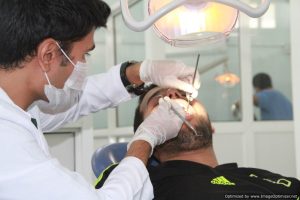
Program Vision:
To be regionally and internationally distinguished as pioneer in higher dental education, health care, and collaborative, clinical and community oriented research.
Program Mission:
The master program in clinical dentistry/orthodontics intents to develop academic and research student skills, and to improve dental community services.
Program Goals:
The program aims to:
1- Refresh and enhance the students’ knowledge of basic science important to dental clinical practice related to all aspects of orthodontics.
2- Acquire advance knowledge and clinical skills of orthodontics.
3- Learn how to manage patients with advanced stages of malocclusion.
4- Develop research skills in terms of planning, conducting, evaluating and reporting the results of investigations.
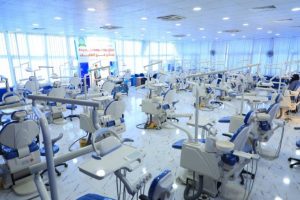
Intended Learning Outcomes (ILOs) classify into:
A. Knowledge and Understanding
The student will be able to:
A.1. Describe the scientific and biological basis of orthodontics and the relevant biomedical and behavioral sciences which form the basis for understanding craniofacial growth and development.
A.2. Explain the structure and function of the craniofacial structures in health and disease related to the practice of orthodontics.
A.3. Identify the rules and ethics governing orthodontic practices and procedures.
A.4. Describe the clinical, laboratory and special investigatory procedures practiced in orthodontics.
A.5. Show an understanding of the psychological, cultural and social factors that have implications on malocclusion prevention and management.
A.6. Explain the principles of evidence-based orthodontics and its relation to scientific research.
B. Intellectual Skills
The student will be able to:
B.1. Incorporate theoretical basic biomedical, behavioral and dental sciences with the clinical signs and symptoms for appropriate understanding of malocclusion and its management.
B.2. Apply critical thinking and evidence-based problem solving when providing patient care.
B.3. Prioritize patient’s treatment needs and formulate an appropriate orthodontic treatment plan.
B.4. Construct preventive strategies at different levels according to the targeted individual and community needs.
B.5. Select suitable dental and orthodontic materials and prescribe medicaments to be used in a specific clinical situation.
C. Professional and Practical Skills
The student will be able to:
C.1. Obtain and record a comprehensive history, perform an appropriate physical examination, and carry out different investigations to reach a correct diagnosis and treatment.
C.2. Detect pathological conditions related to orthodontic practice.
C.3. Apply infection control and radiation protection according to international standards.
C.4. Apply preventive measures for different age groups bearing in mind the different needs of young children, adolescents, adults, special needs and the ageing population/elderly.
C.5. Plan when, how and where to refer a patient to a specialist based on clinical assessment.
C.6 Assess the risk of medical emergencies and be competent in their management within the dental practice setup.
C.7 Apply comprehensive clinical orthodontic practices.
D. General Skills
D.1. Commit to continuous education, self-development and lifelong learning to remain updated with advances in orthodontic practice.
D.2. Use advanced information and communication technologies to enrich and diversify professional experience.
D.3. Demonstrate leadership and teamwork skills with colleagues and other oral health team for effective delivery of oral health care.
D.4. Manage time, set treatment priorities and work to prescribed time limits.
D.5. Maintain full and accurate clinical records (manual and electronic).
بروشور ماجستير تقويم أسنان 2024
Views: 385