
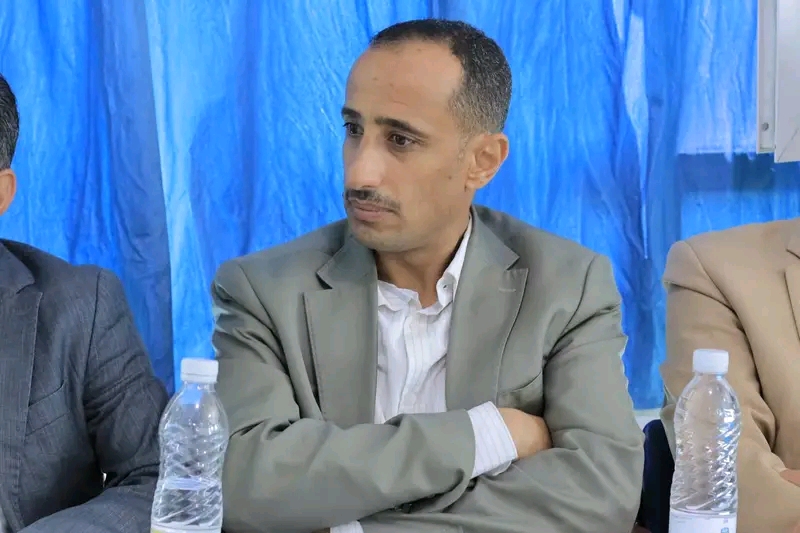
Dr. Radwan Hamoud Ali Ahmed
PhD in Molecular Medicine
ACADEMIC QUALIFICATION
- 2013 – 2017: PhD. in Molecular Medicine (Pass with Distinction) – Faculty of Medicine, University of Malaya, Malaysia.
- 2008 – 2010: MSc. in Clinical Biochemistry & Molecular biology – Faculty of Medicine, Sana’a University, Yemen.
- 2007 – 2008: M. Preliminary in Biochemistry & Molecular biology – Faculty of Medicine, Sana’a University, Yemen.
- 2000 – 2004: BSc. in Medical Microbiology – Faculty of Science, Ibb University, Yemen.
WORK HISTORY & EXPERIENCES
- Head, Medical Laboratories, Faculty of Medicine (since 15/01/2018).
- Editorial board member for Journal of diabetes and its complications (2018).
- Member, American Society for Microbiology, USA (2018).
- Researcher in Molecular Medicine, University of Malaya (2013-2017).
- Researcher in Biochemistry and Molecular Biology Department, Sana’a University (2008-2010).
- Lab Technologist, and Head of Al-Majed Med Lab, Sana’a (2005-2011).
TRAINING
- Application Training in Immunohistochemistry Hands On, University of Malaya (2017).
- Training in Operation of InjectMan NI 2.FemtoJet for Zebrafish Embryos, University of Malaya (2017).
- Techniques on Rodent Handling (Handling, Restraining, Inoculation, Bleeding & Organ Harvesting), Cyberjaya University (2017).
- Bioinformatics Analysis of Transcriptomics Datasets, University of Malaya (2016).
- Biostatistics Research Method Training (14 CME credit hours), University of Malaya (2014).
- Application Training in Real Time PCR, University of Malaya (2013).
- The National Training Programme in “Improving the Quality of Laboratory Diagnosis of Malaria”, Ministry of Health, Yemen (2008).
WORKSHOPS & CONFERENCES
- Logistic Regression Analysis, Julius Center University of Malaya (2014).
- International Conference of Golden Helix Symposia – Next-Generation Pharmacogenomics (2015).
- EndNote, H-Indix & Citation, and Mendeley Workshops (2015-2016).
- Editing Your Manuscript For Publication Workshop (2016).
- Best Poster Award – 1st Molecular Medicine Research Day Conference (2016).
- Systematic Review and Meta-analysis workshops (2016-2017).
- Innovative Stem Cell Technologies Workshop (2017).
- Regression Models and Generalized Linear Models Workshops, Julius Center (2017).
- How To Publish and Handling Problems of Publishing workshop (2017).
TECHNICAL LABORATORY SKILLS
Medical Laboratory: Clinical chemistry, Diagnostic PCR, Serological & ELISA, Hematological investigations.
Molecular Biology: DNA/RNA extraction, Various PCR types, Genotyping & Gene Expression, Primer Design, Karyotyping, Genetic analysis.
Cellular Biology: Cell & tissue culture, clonogenic survival assay.
PUBLICATIONS
• Al‐Yousofy, F., Hamood, M., et al. (2024). Accuracy of ultrasound‐guided fine‐needle aspiration cytology in evaluation of thyroid nodules. Cytopathology.
• Ahmed, R. H., et al. (2015). Serum Levels of Soluble CD26/Dipeptidyl Peptidase-IV in Type 2 Diabetes Mellitus. PLoS ONE (Q1).
• Ahmed, R. H., et al. (2016). Association of DPP4 Gene Polymorphisms with Type 2 Diabetes Mellitus in Malaysian Subjects. PLoS ONE (Q1).
• Ahmed, R. H., et al. (2017). Altered Circulating Concentrations of Active Glucagon-Like Peptide (GLP-1) and Dipeptidyl Peptidase- IV (DPP-IV) in Obese Subjects. Clinical Biochemistry (Q2).
• Ahmed, R., et al. (2015). Association of Genetic Polymorphisms of Dipeptidyl Peptidase-4 with Metabolic Syndrome Parameters. Public Health Genomics (Q2).
• Al-absi, B., et al. (2017). Contributions of IKZF1, DDC, CDKN2A, CEBPE, and LMO1 Gene Polymorphisms to Acute Lymphoblastic Leukemia in a Yemeni Population. Genetic Testing and Molecular Biomarkers.
• Alsalahi, A., et al. (2016). Conflicting reports on the role of the glycemic effect of Catha edulis (khat): a systematic review and meta-analysis. Journal of ethnopharmacology.
• Al-absi, B., et al. (2017). Association of ARID5B gene variants with acute lymphoblastic leukemia in Yemeni children. Tumor Biology.
REFERENCES
Prof. Sekaran A/L Muniandy, Dr. Hasniza Binti Zaman Huri, Dr. Muhammad Fazril Bin Mohamad Razif, Dr. Mohammed Abdullah Mahdi Alshawsh, Dr. Ali AL-Meeri.