

 English
 برنامج المختبرات الطبية
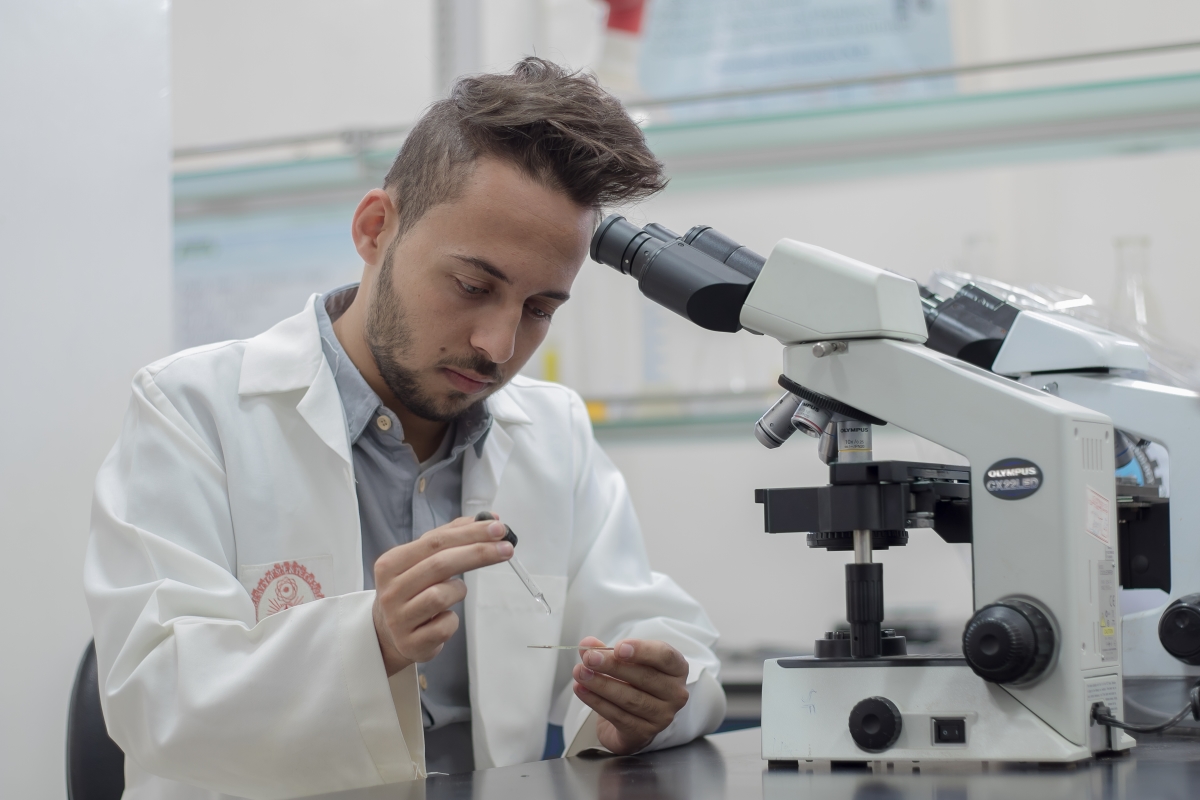
يُعد برنامج بكالوريوس المختبرات الطبية بجامعة العلوم والتكنولوجيا، الذي أُطلق عام 1998 كأول برنامج أهلي متخصص في هذا المجال باليمن، ركيزة أساسية في إعداد كوادر فنية مؤهلة علميًا وعمليًا، وذلك من خلال بيئة تعليمية محفزة يقدمها كادر أكاديمي متفرغ ومتميز، ومعامل مجهزة بأحدث الوسائل التدريبية، واتفاقات تدريب ميداني مع مستشفيات نموذجية. يسهم البرنامج منذ نشأته في رفد القطاع الصحي المحلي والإقليمي بأخصائيي مختبرات طبية ذوي كفاءة عالية، قادرين على إجراء التحاليل الدقيقة وتشخيص الأمراض، مما يعزز جودة الخدمات الصحية ويساهم في تحسين الرعاية الوقائية والعلاجية داخل اليمن وخارجه.
– تأسيس البرنامج: تأسس البرنامج عام 1998 كأول برنامج على مستوى الجامعات الأهلية في اليمن.
– تخريج كفاءات: تخرج من البرنامج عشرات الدفعات من أخصائيي المختبرات الطبية المؤهلين.
– تنافسية عالية: يتمتع خريجو البرنامج بقدرة تنافسية متميزة في سوق العمل المحلي والإقليمي.
– مجالات عمل متنوعة: يمارس الخريجون أدوارًا حيوية في قطاعات صحية، تعليمية، بحثية، ومختبرات متخصصة داخل الوطن وخارجه.
– خدمة المجتمع: يساهم البرنامج بأنشطة خدمة مجتمعية متعددة، تشمل فحوصات طبية مجانية والتوعية الصحية.
– الإثراء البحثي: يشارك كادر القسم الأكاديمي المتفرغ في نشر أبحاث علمية محكمة تعالج أبرز القضايا الصحية في المجتمع اليمني.
-
يهدف برنامج الطب المخبري إلى تخريج أخصائيي مختبرات طبية مهرة قادرين على المساهمة بفعالية في خدمة المجتمع والبحث العلمي على المستويات المحلية والإقليمية والدولية، وذلك من خلال بيئة تعليمية متميزة، وكفاءات مؤهلة، ومناهج عالية الجودة، وتقنيات تعليمية حديثة، مع الالتزام بمعايير الجودة والاعتماد الأكاديمي.
- تأهيل الطلاب بالمهارات العلمية والبحثية والمهنية في علوم المختبرات الطبية.
- تزويد الطلاب بتدريب سريري عالي الجودة في مختبرات مجهزة تجهيزاً جيداً.
- تنمية التفكير النقدي لتفسير البيانات والمساعدة في التشخيص والمتابعة.
- إعداد الطلاب للتعاون الفعال لتقديم خدمات مخبرية موثوقة.
- إشراك الطلاب في أنشطة خدمة المجتمع والبحث العلمي لمعالجة الاحتياجات الصحية.
- تعزيز الالتزام بأخلاقيات المهنة والتعلم المستمر والتطوير المهني.
A. المعرفة والفهم:
عند الانتهاء بنجاح من برنامج البكالوريوس في الطب المخبري، سيكون الخريجون قادرين على:
1ِA- تحديد المبادئ والنظريات والمفاهيم الأساسية لعلوم المختبرات الطبية الأساسية والتطبيقية.
2A- وصف خصائص ومسببات الأمراض والعينات السريرية وطرق التشخيص المخبرية للبكتيريا والفيروسات والفطريات والطفيليات المسببة للعدوى البشرية.
3A- التعرف على التغيرات في مستويات المؤشرات الحيوية المرتبطة بأمراض مختلفة وأهميتها في التشخيص المخبري.
4A- التعرف على نظريات ومبادئ مراقبة الجودة وضمان الجودة والجوانب الأخلاقية التي تحكم العمل في مجال المختبرات الطبية.
B. المهارات المعرفية/الفكرية:
عند الانتهاء بنجاح من برنامج البكالوريوس في الطب المخبري، سيكون الخريجون قادرين على:
1B- ربط المعرفة القائمة على الأدلة لمختلف موضوعات المختبرات الطبية في الممارسة العملية لضمان دقة الفحوصات والنتائج والتقارير التشخيصية المخبرية.
2B- توظيف مهارات التفكير النقدي وحل المشكلات في الإجراءات المخبرية.
3B- إظهار الكفاءة في تحليل بيانات المختبر السريري ونتائج الاختبارات التشخيصية لاتخاذ قرارات مهنية أثناء عملية التشخيص المخبري.
C. المهارات العملية والمهنية:
عند الانتهاء بنجاح من برنامج البكالوريوس في الطب المخبري، سيكون الخريجون قادرين على:
1C- ممارسة الإجراءات التحضيرية (قبل التحليل) والتحليلية وما بعد التحليلية للعينات البيولوجية المختلفة وفقًا لنظام إدارة الجودة وإجراءات السلامة الحيوية.
2C- تطبيق المهارات التقنية في تشغيل وصيانة واستكشاف أعطال معدات وأجهزة المختبر.
3C- تقييم وتفسير نتائج الفحوصات المخبرية، وإظهار الاحترافية في إعداد التقارير وتحليل البيانات وإجراء البحث العلمي.
D. المهارات العامة والقابلة للنقل:
عند الانتهاء بنجاح من برنامج البكالوريوس في الطب المخبري، سيكون الخريجون قادرين على:
1D- العمل بفعالية ضمن فرق متنوعة، وإظهار الكفاءة القيادية والتعاون مع الزملاء والمتخصصين في الرعاية الصحية لتحقيق أهداف مشتركة في ممارسة المختبرات الطبية.
2D- الحفاظ على النزاهة والسلوك الأخلاقي في التعامل مع المرضى وفريق الرعاية الصحية والبيانات المخبرية وخصوصية المريض.
3D- توصيل المعلومات العلمية بوضوح وفعالية شفهياً وكتابياً، والانخراط في التعلم مدى الحياة.
سيكون الخريج قادراً على:
- إجراء الفحوصات والإجراءات المخبرية المتقدمة ببراعة.
- تحليل وتفسير البيانات السريرية المعقدة بدقة.
- تطبيق ممارسات ضمان الجودة لضمان نتائج مخبرية دقيقة وموثوقة.
- تطبيق مهارات التفكير النقدي لحل المشكلات في بيئة المختبر.
- التواصل بفعالية ومناقشة النتائج المخبرية مع المتخصصين في الرعاية الصحية.
- التمسك بالمعايير الأخلاقية والحفاظ على السرية في الممارسة المخبرية.
- العمل والتعاون بفعالية مع فرق متعددة التخصصات لتحسين رعاية المرضى.
- قيادة الابتكار والمساهمة في التحسين المستمر للتقنيات المخبرية.
- التكيف مع التطورات التكنولوجية والمنهجية في الطب المخبري.
- الالتزام بالتعلم مدى الحياة والتطوير المهني في مجال الطب المخبري.
- المشاركة في أبحاث تعاونية لتطوير ممارسات الرعاية الصحية.
- إظهار المسؤولية الاجتماعية والمشاركة المجتمعية في المبادرات الصحية.
– إكمال 138 ساعة معتمدة بنجاح
– اجتياز جميع المقررات النظرية والعملية الإجبارية والاختيارية
– إكمال واجتياز التدريب الميداني في المستشفيات والمراكز الصحية المعتمدة
– انجاز ومناقشة بحث التخرج
– الكيمياء السريرية (Clinical Chemistry)
– أمراض الدم (Hematology)
– علم الأحياء الدقيقة (Microbiology)
– علم المناعة (Immunology)
– الطفيليات الطبية (Parasitology)
– بنك الدم ونقل الدم (Blood Banking)
– علم الأنسجة والخلايا (Histology & Cytology)
– الهرمونات والعلامات الحيوية (Hormones & Biomarkers)
– البيولوجيا الجزيئية (Molecular Biology)
- أخصائي مختبرات طبية.
- عالم مختبرات سريرية.
- محلل مراقبة الجودة.
- العمل كباحث.
- مدير مختبر.
- أخصائي بنك الدم.
- مختص مكافحة العدوى.
- مندوب مبيعات وتسويق (لمعدات المختبرات)
- العمل كمدرس او مدرب.
- أخصائي مختبرات صحة عامة.
البحث العلمي
– مقاومة المضادات الحيوية
– الأمراض البكتيرية الشائعة
– صحة الأم والحمل من وجهة نظر ميكروبية
– الأمراض الفيروسية المنقولة بالدم (التهاب الكبد B وC)
– المناعة واللقاحات
– امراض المناعة الذاتية
– الكيمياء الحيوية والسريرية
– أمراض الدم
– مختبرات رئيسية متخصصة (علم الدم، الميكروبيولوجي، الأحياء، علم الأمراض، الكيمياء الحيوية)
– مختبرات داعمة (حاسوب، فسيولوجي، تشريح)
– قاعات دراسية مجهزة بأجهزة عرض وحاسوب وسبورات ذات تهوية وإضاءة مناسبة
– مكتبة ورقية وإلكترونية محدثة
– مراكز تدريب متنوعة
– بيئة تعليم آمنة
– مساحات خضراء ومواقف سيارات
– مرافق رياضية
أبحاث طلبة برنامج بكالوريوس المختبرات الطبية – المستوى الرابع
| No | Research | Abstract | Supervised By | Done By |
|---|---|---|---|---|
| 1 | Bacteriological profile of meningitis in Sana’a, Yemen: two years retrospective study | Determining the bacterial isolates and their sensitivity pattern in the cerebrospinal fluid of acute meningitis patients at a USTH in Sana’a city was the purpose of this investigation. The study was carried out retrospectively at USTH, which serves Yemen’s urban and rural populations. Between January 2021 and December 2022, 187 samples of cerebrospinal fluid (CSF) from meningitis patients with clinical suspicion underwent bacteriological examination. | Dr. Ibrahim Alsubol | • Asma’a Mutaher • Kholood AL-Sharafi • Jeehan Al-Neshmi • Olof Almathehgi • Enas Mahyob • Samah Al-Hddad |
| 2 | Evaluation of Antimicrobial activity of Tribulus terrestris extract against Multi resistant bacteria | This study seeks to evaluate the antibacterial efficacy of ethanolic extracts of Tribulus terrestris against four pathogenic bacteria in vitro. In this experimental work, the antibacterial effects of a Tribulus terrestris extract evoked by ethanolic solvent on S. aureus, E. coli, P. aeruginosa, and K. pneumoniae were investigated using the disc diffusion assay. | Dr. Ibrahim Alsobul + Dr. Ahmed Almohamadi |
• Yomna Waleed Alzubairy • Eman Jama Yousef • Hadeel Khaled Alshawish • Shaima’a Ahmed Aljabi • Khawlah Rashad Al-Sama’a • Aisha Jameel Al Khayati • Nora Ameen Mohammed • Sally Abdalgber Ali Alsuied |
| 3 | Prevalence and antimicrobial susceptibility and molecular distribution of extended-spectrum beta-lactamase producing- Escherichia coli isolates from patients with urinary tract infections in Sana’a city. | This study aimed to determine the prevalence, antimicrobial susceptibility, and molecular distribution of extended-spectrum beta-lactamase (ESBL) producing- Escherichia coli isolates from patients with urinary tract infections in Sana’a city. | Dr. Ahmed Al-Attas | • Ahlam Khaled Ziad • Rawdah Saeed Al-Hemiary • Roqhaiah Hasan Al-Ahdal • Marwa Ahmed Al-Sharaby • Omaimah Gehad Al-Shamiry • Shrowq Mohammed Ziad • Wala’a Adel Al-Thawr |
| 4 | Estimation of the Level of Platelets and Immunoglobulin IGg Among Autoimmune Hepatitis Patients at University Science and Technology Hospital. | This study aimed to estimate the Level of Platelets and Immunoglobulin IGg Among Autoimmune Hepatitis Patients in Science and Technology Hospital. This was cross-sectional retrospective conducted in 2023. Records of Autoimmune diseases patients who were diagnosed at Science and Technology hospital. | Dr. Talal Al-Qahtani | • Ahmed Alattas • Ahmed Aljumai • Mohammed Alhatheq • Rashid Almassodee • Ali Alakraee • Hamid Zyad |
| 5 | Clinical and Laboratory Features of Systemic Lupus Erythematous in Sana’a City – Yemen | The aim of this study was screening the frequency of Systemic lupus erythematosus among other autoimmune disease during the interval 2020 to 2022 in Sanaa city. This retrospective cross-sectional study, which was conducted during the period from 2020 to 2022, included 158 patients who suffered from SLE at the Science and Technology Hospital, the Saudi German Hospital, and the Republican Hospital. | Dr. Talal Al-Qahtani | • Aya Hossam • Sarah Al-Nasheri |
Medical Laboratories Program
Note: Publications are sorted descending by year. Duplicates within the department were removed using DOI or normalized title.
| No. | Research title and DOI link | Authors | Journal / Conference / Publisher | Scopus/WoS classification | Year | Scientific field |
| 1 | Domain-specific depression patterns among hemodialysis patients in Yemen: implications for mental-health screening in resource-limited settings DOI https://doi.org/10.1080/0886022X.2026.2663421 |
Nuha Al-AghbariORCID Icon ,Asmaa Al-Awadi ,Reham Awfan ,Sarah Al-Sharafi ,Aya Mareai ,Safia Al-Qashaee &Bushra Al-Ghaffari | Renal Failure, Volume 48, Issue 1. / Taylor & Francis | Scopus Indexed / Web of Science (WoS) / Open Access | 2026 | Psychiatry & Behavioral Sciences, Clinical Psychology, Nephrology & Hemodialysis, and Public Health |
| 2 | Patterns and Predictors of Systemic Autoimmune Diseases in Sana’a City: A Retrospective Study | TY Alqahtani, MS Al-Hakimi, AS Hudna | Zagazig University Medical Journal | Peer-Reviewed / Internationally-Indexed Journal (Crossref DOI) | 2025 | Rheumatology, Clinical Immunology, Internal Medicine, and Epidemiology |
| 3 | The Prevalence and Associated Factors of Hepatitis B and C Virus in Hemodialysis Patients in Ibb Governorate, Yemen | RH Ahmed, N Al-Nagar, I Al-Subol, R Al-Wahbi, M Al-Sabahi, M Al-Sabahi, … | Cureus (Part of Springer Nature), Vol. 16, Issue 10. | Scopus Indexed / Web of Science (WoS) / PubMed Central | 2024 | Virology, Nephrology & Hemodialysis, Gastroenterology, and Public Health |
| 4 | Latent tuberculosis infection and diagnostic performance of the tuberculin skin test among type 2 diabetics in Sana’a city, Yemen | R Abdul-Ghani, A Al-Awadi, N Al-Aghbari, AA Al-Mikhlafy, … | BMC Infectious Diseases, Vol. 24, Article No. 1065. / Springer Nature | Scopus Indexed (Q1) / Web of Science (WoS) | 2024 | Infectious Diseases, Diabetology & Endocrinology, Clinical Immunology, and Public Health |
| 5 | Knowledge, attitudes and practices towards toxoplasmosis among pregnant women receiving antenatal care in Sana’a city, Yemen | R Abdul-Ghani, A Al-Awadi, AS Oqbah, FA Hujaira, MA Alkokbany, … | (Sana’a University Journal of Medicine and Health Sciences), Vol. 18, Issue 3. | Peer-Reviewed / Internationally-Indexed Journal (Crossref DOI) | 2024 | Medical Parasitology, Obstetrics & Gynecology, Public Health, and Behavioral Epidemiology |
| 6 | EVALUATION OF C-REACTIVE PROTEIN LEVELS AS BIOMARKERS FOR IMMUNE RESPONSE AMONG SEPTIC PATIENTS IN YEMEN | Talal Yahya Alqahtani, Abdulsalam Halboup, Ahmed S Hudna, Ibrahim Al-Subol | Community practitioner: the journal of the Community Practitioners’ & Health Visitors’ Association, 21(07):7. | Internationally-Indexed Journal (Crossref DOI / Zenodo) | 2024 | Clinical Immunology, Internal Medicine, Intensive Care (ICU), and Clinical Biochemistry |
| 7 | COVID-19 vaccine acceptability among healthcare workers in Yemen | AA Al Mikhlafy, M Al Karawani, RA Ghani, I Alsubol, AAH Al-Awadi, … | Eastern Mediterranean Health Journal (EMHJ), Vol. 29, Issue 11, pp. 877–884. / World Health Organization (WHO) | Scopus Indexed / Web of Science (WoS) / PubMed Central | 2023 | Public Health, Epidemiology, Infectious Diseases, and Behavioral Medicine |
| 8 | Prevalence of hepatitis C virus among patients with arthralgia: is it logic for screening? | Arwa Mohammed Othman, Asma’a Ahmed Al-hnhna, Belques Sharaf Al-Huraibi, Rowa Mohammed Assayaghi, Talal Yahya Al-Qahtani, Kamal Hamoud Jahzar, Marwan Mohammed Al-Huthaifi | Virology Journal, Vol. 20, Article No. 162. / Springer Nature | Scopus Indexed / Web of Science (WoS) / PubMed Central | 2023 | Virology, Rheumatology, Clinical Immunology, and Gastroenterology |
| 9 | Research Article An Initial Survey on the Prevalence of Group B Streptococcus (GBS) among Yemeni Pregnant Women in Sana’a City | I Al-Subol, M Abdul-Aziz, AA Almikhlafy, T Alqahtani | Infectious Diseases in Obstetrics and Gynecology, Volume 2022, Article ID 9247914. / Hindawi | Scopus Indexed / Web of Science (WoS) / PubMed Central | 2022 | Medical Microbiology, Obstetrics & Gynecology, Neonatology, and Public Health |
| 10 | An Initial Survey on the Prevalence of Group B Streptococcus (GBS) among Yemeni Pregnant Women in Sana’a City | I Al-Subol, M Abdul-Aziz, AA Almikhlafy, T Alqahtani | Infectious Diseases in Obstetrics and Gynecology / Hindawi & Wiley | Scopus Indexed / Web of Science (WoS) / PubMed | 2022 | Medical Microbiology, Obstetrics & Gynecology, and Neonatology |
| 11 | Neonatal sepsis in Sana’a city, Yemen: a predominance of Burkholderia cepacia | A Salah, I Al-Subol, A Hudna, A Alhaj, AR Alqubaty, W Farie, D Sulieman, … | Infectious Diseases in Obstetrics and Gynecology / Hindawi & Wiley | Scopus Indexed / Web of Science (WoS) / PubMed | 2022 | Medical Microbiology, Obstetrics & Gynecology, and Neonatology |
| 12 | Toxoplasma gondii Infection Among Institutionalized Children with Down syndrome in Sana’a city, Yemen: Implications of Low IgG Seroprevalence | Asmaa AH Al-Awadi, Rashad Abdul‑Ghani, Abdulsalam M Al-Mekhlafi | Acta Parasitologica, 67(1): 530–534. / Springer Nature | Scopus Indexed (Q2) / Web of Science (WoS) / PubMed | 2021 | Medical Parasitology, Clinical Immunology, Pediatrics & Special Needs, and Public Health |
| 13 | An initial survey on the prevalence of group B Streptococcus (GBS) among Yemeni pregnant women. | Ibrahim Hasan AL-Subol, Maha Abdul-Aziz, Abdullah A Almikhlafy, Talal Y Alqahtani | Infectious Diseases in Obstetrics and Gynecology (Hindawi / Wiley) | Scopus Indexed / Web of Science (WoS) / PubMed Central | 2021 | Medical Microbiology, Obstetrics & Gynecology, and Neonatal Infections |
| 14 | Prevalence and risk factors associated with obesity among students of a private | Ali Alhaj , Abdulhabib Alqubaty | International Journal of BioMedicine and Public Health (IJBMPH), 3(2): 30–34. | Peer-Reviewed International Journal (Open Access) | 2020 | Public Health, Clinical Biochemistry, and Behavioral Epidemiology |
| 15 | Glucose-6-Phosphate Dehydrogenase Deficiency among Newborns in Sana’a City, Yemen | Mogahid Nassar , Ahmed S. Hudna , Ali Alhaj, Abdulhabib R. Alqubaty, Talal Alqahtani | Zagazig University Medical Journal (ZUMJ) | Internationally-Indexed Peer-Reviewed Journal (Crossref DOI) | 2020 | Pediatrics, Neonatology, Medical Genetics, and Clinical Biochemistry |