
 العربية
 Master's Program in Architecture
Through the Department of Architectural Engineering, which offers the Master of Architectural Engineering Program, the University of Science and Technology (UST) is committed to providing a distinguished academic experience. The program delivers professional and academic education in various areas of architectural engineering, including planning, architectural design, engineering project management, and other related fields.
The Architectural Engineering Program was established in 2014. The program integrates authenticity with modern technology, providing students with a solid academic and professional foundation. Since its establishment, the program has graduated 13 architects who have excelled in enhancing the built environment through innovative, research‑driven contributions.
The Master of Architectural Engineering Program at the University of Science and Technology seeks to play an active role in developing and enhancing the academic and research skills of architects. The program aims to meet community needs and labor‑market requirements through a specialized and highly qualified faculty and an advanced infrastructure, in accordance with comprehensive quality standards and ethical and professional requirements.
The Architectural Engineering Program aims to:
- Provide students with advanced knowledge and skills across various architectural specializations.
- Prepare academically and research‑oriented specialists with distinguished professional competence.
- Contribute to addressing architectural, urban, and environmental issues within the community.
- Achieve comprehensive quality standards and adhere to ethical and professional requirements.
A. Knowledge and Understanding
A.2 Identify and describe fundamental architectural, planning, and environmental design considerations, including redevelopment concepts and their various applications.
A.3 Explain scientific advancements and modern technologies related to the field.
A.4 Recognize contemporary issues and emerging perspectives in housing, design, and planning.
Upon completion of the course, the student is expected to be able to:
B.2 Analyze and evaluate information within the field of specialization and apply it to problem‑solving.
B.3 Select appropriate alternative ideas and solutions to architectural and urban community issues, compare them, and determine the most suitable option.
B.4 Make professional decisions in different specialized contexts.
B.5 Connect suitable plans and methodologies to address architectural and urban community issues.
B.6 Anticipate possible outcomes and solutions and develop appropriate plans and programs accordingly.
Upon completion of the course, the student is expected to be able to:
C.2 Analyze design, planning, and urban problems—along with modern construction technologies—and develop suitable solutions.
C.3 Evaluate existing methods and tools used in the field.
C.4 Use appropriate technological tools to support professional practice.
C.5 Address environmental, planning, and urban problems affecting the community.
Upon completion of the course, the student is expected to be able to:
D.2 Commit to research ethics, integrity, credibility, and adherence to professional standards.
D.3 Maintain continuous self‑development and contribute to the preparation of new professionals.
D.4 Communicate effectively with others and manage work teams efficiently.
Graduates of the program are expected to demonstrate the following competencies:
-
Conduct research in the fields of architectural design, urban design, and urban planning (Researcher).
-
Design and plan according to built environment systems and sustainability requirements (Designer and Planner).
-
Utilize modern tools and technologies to solve architectural and planning challenges (Professional Practitioner).
-
Actively participate in scientific seminars, academic conferences, and research activities within the field of specialization (Engaged Contributor).
-
Employ modern technologies and software effectively and apply them in developing appropriate strategies and solutions (Technology Specialist).
-
Analyze data related to architectural and planning topics to achieve clear, effective, and evidence-based outcomes (Data Analyst).
-
Adhere to sustainability principles in both design and planning practices (Sustainability Professional).
-
Comply with occupational health and safety standards within the built environment (Health and Safety Advocate).
-
Keep pace with developments in artificial intelligence and leverage them to address human needs in architecture and urban planning (Continuous Learner).
-
Demonstrate integrity, professionalism, and ethical conduct, while maintaining positive relationships with colleagues, clients, and stakeholders (Responsible and Disciplined Professional).
- Successful completion of all courses specified in the study plan.
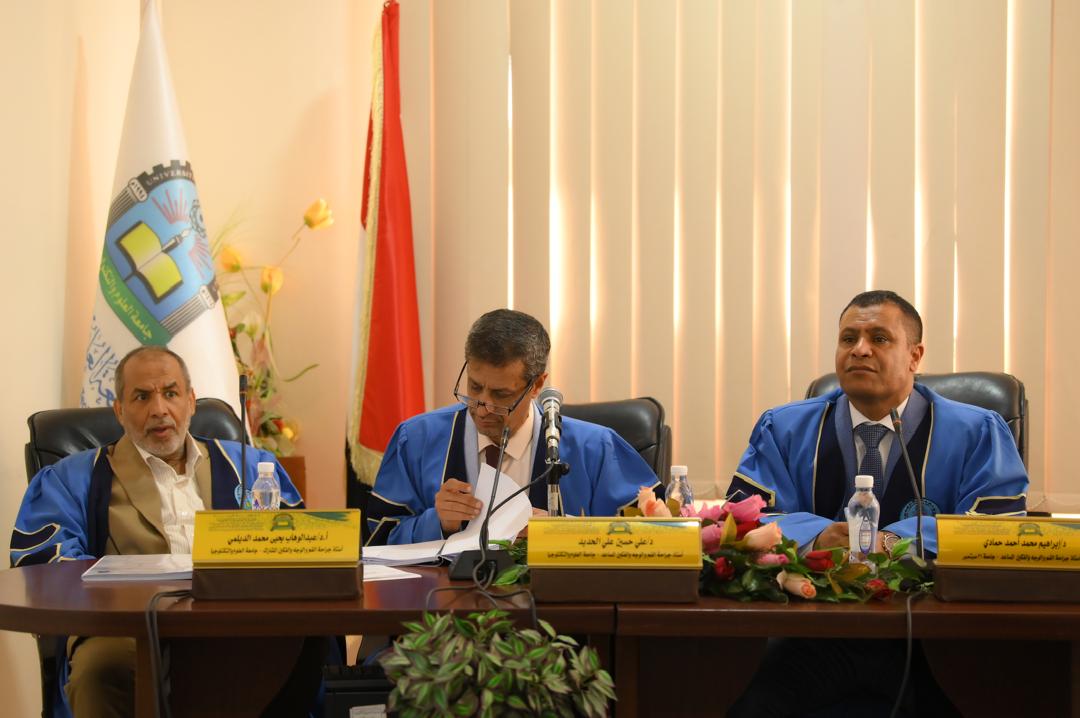
- Successful defense of the master’s thesis.
- Submission of the required bound copies of the research thesis.
- Passing the English proficiency examination.
- Completion of the degree‑granting procedures through the Graduate Studies Committee, the Graduate Studies Council, and the University Council.
- Scientific Research and Advanced Architectural Design Methodologies.
- Modern Construction Systems and Smart, Sustainable, and Environmentally Friendly Material Technologies.
- Urban Planning and City Development.
- Digital Technologies and Virtual Reality Simulation Techniques.
- Architectural Conservation, Heritage Revitalization, and Urban Development.
- Professional Practice and Engineering Project Management.
Graduates may pursue a range of professional and research-oriented career paths, including:
-
Researcher specializing in modern architectural trends and their applications, contributing to the development of projects and built environments that address contemporary needs and challenges.
-
Designer of functional solutions for public and service facilities, enhancing engineering performance and improving user experience through innovative architectural design.
-
Urban planning and design specialist, involved in the study and design of public spaces and urban fabrics, as well as the development of structural plans for contemporary and historic communities to ensure quality of life and environmental sustainability.
-
Leader of architectural design teams, developing engineering solutions for complex buildings while integrating modern structures harmoniously within their surrounding urban and historical contexts.
-
Sustainability and building performance consultant, providing advanced expertise in applying international sustainability standards and improving energy and resource efficiency in both modern and historic buildings.
-
Manager of architectural and construction projects, overseeing the implementation of public and service facilities with a focus on resource scheduling, risk assessment, and quality assurance in accordance with international standards.
-
Research and development specialist in research centers or major real estate development companies, conducting technical feasibility studies and environmental impact assessments for projects within urban environments.
-
Advanced architectural consultant, delivering integrated technical and design solutions for complex projects and facilities, and advising investors and development organizations on best practices and innovative approaches.
-
Supervisor of rehabilitation, comprehensive maintenance, and engineering modernization projects, ensuring the preservation of the historical, cultural, or functional value of existing buildings while enhancing their performance and usability.