
 English
 برنامج الماجستير في الهندسة الإلكترونية (الاتصالات)
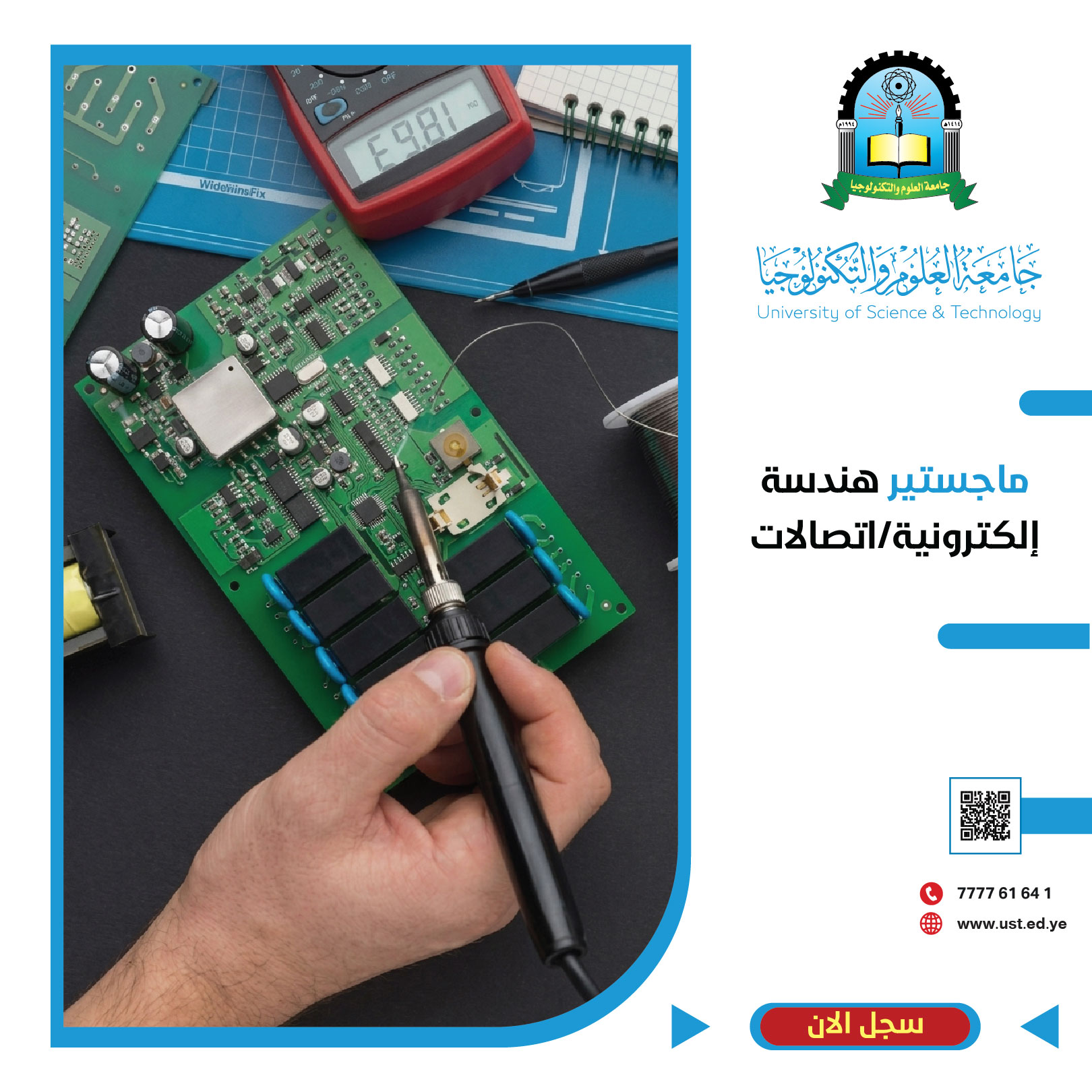
تسعى جامعة العلوم والتكنولوجيا من خلال توفير برنامج ماجستير هندسة إلكترونية/اتصالات إلى تقديم برنامج متميز يعمل على تطوير المهارات العلمية والبحثية للطلاب الملتحقين بالبرنامج
لإنجاز أبحاث تسهم في تنمية المجتمع وحل مشكلاته المرتبطة بالمجال، وذلك من خلال كادر أكاديمي متميز وموارد تعليمية متطورة.
منذ تأسيس البرنامج في عام 2014، عملنا على سد الفجوة التكنولوجية؛ وقد زود برنامج الاتصالات السوق بـ 13 مهندساً.
السعي إلى تقديم برنامج متميز في تخصص ماجستير الهندسة الإلكترونية / اتصالات، يعمل على تطوير المهارات العلمية والبحثية للطلاب الملتحقين بالبرنامج لإنجاز بحوث تسهم في تنمية المجتمع وحل مشكلاته المرتبطة بالمجال، وذلك من خلال كادر أكاديمي متميز وموارد تعليمية متطورة.
- تمكين الطالب من المعرفة المتقدمة في مجال هندسة الاتصالات والعلوم المرتبطة بها.
- النهوض بالبحوث العلمية والتطبيقية المتعلقة بمتطلبات المجتمع وبما يضمن مواكبة التكنولوجيا الحديثة.
- رفد سوق العمل التطبيقي والأكاديمي بكادر متخصص ومؤهل تأهيلاً عاليا.
A. المعرفة والفهم
أن يكون الطالب قادراً على أن:
A.1 يستوعب أساسيات ومنهجيات مشروع البحث العلمي وتطبيقها في مجال هندسة الاتصالات.
A.2 يشرح تطبيق المعرفة في الرياضيات والعلوم والبرمجة في مجال هندسة الاتصالات.
A.3 يوضح التطورات العلمية في مجال التخصص والمميزات والعيوب للتقنيات الحديثة.
A.4 يتعرف على مشاكل أنظمة الاتصالات الحديثة والطرق المناسبة لحلها.
B. المهارات الذهنية
أن يكون الطالب قادراً على أن:
B.1 يحلل البيانات الخاصة بتطبيقات أنظمة الاتصالات ويفسرها ويستخلص النتائج.
B.2 يبتكر الحلول المناسبة لمشاكل أنظمة الاتصالات المتطورة.
B.3 يقارن بين البدائل المختلفة لحل مشكلة هندسية ما، ويختار البديل وفقا للمواصفات المتطلبة.
B.4 يحلل أوجه القصور في أنظمة الاتصالات.
C. المهارات المهنية والعملية
أن يكون الطالب قادراً على أن:
C.1 يوظف الأدوات والتقنيات والبرامج الهندسية الحديثة في أنظمة الاتصالات الموجودة.
C.2 يبني الأنظمة الالكترونية وبرمجياتها والأنظمة المتضمنة مراعيا المحددات المالية والاجتماعية والصحية والأخلاقية.
C.3 يطبق الأساليب الإحصائية والرياضية المتقدمة في تحليل وتفسير مشاكل الأنظمة الرقمية.
C.4 يطبق النظريات والتجارب الحديثة في مجال التخصص بشكل ابداعي ومستندا إلى معارف من داخل وخارج تخصصه.
D. المهارات العامة
أن يكون الطالب قادرا على أن:
D.1 يلتزم بأخلاقيات البحث العلمي والنزاهة والمصداقية واحترام قواعد المهنة.
D.2 يبحث بطريقة منهجية ويعرض أفكاره بطريقة موضوعية وبمبررات علمية.
D.3 يعمل بشكل فردي أو ضمن فريق بفاعلية.
D.4 يتواصل بشكل فعال ويتمتع بمهارات تطوير الأداء والتفكير والتحليل الناقد وبمستوى الدراسات العليا.
Upon successful completion of the Master of Science in Electronics Engineering (Communications Engineering) program, the graduate will be able to:
- Apply advanced knowledge of mathematics, electronics, communication theory, signal processing, programming, and digital systems to analyze and develop advanced telecommunication systems.
- Analyze, model, design, integrate, and evaluate advanced communication systems, networks, transmission and reception systems, and related electronic systems using modern engineering tools and technologies.
- Analyze communication data and system performance, identify limitations and sources of degradation, and develop technically justified solutions to complex telecommunications problems.
- Evaluate alternative communication technologies and emerging systems and select appropriate solutions based on technical, economic, performance, reliability, safety, and other relevant requirements.
- Design, implement, simulate, and evaluate advanced communication systems and subsystems, including wireless, optical, microwave, satellite, and digital communication applications.
- Conduct systematic scientific research, critically evaluate relevant literature, and apply appropriate research methodologies to address advanced problems in telecommunications engineering.
- Communicate technical and research outcomes effectively through scientific reports, presentations, and professional communication, and work effectively both independently and within multidisciplinary teams.
Demonstrate professional ethics, research integrity, social responsibility, critical thinking, and commitment to lifelong learning and continuous professional development.
- اجتياز مقررات الخطة الدراسية بنجاح.
- اجتياز مناقشة رسالة الماجستير بنجاح.
- تسليم النسخ المطلوبة المجلدة من الرسالة البحثية.
- اجتياز امتحان الكفاءة في اللغة الإنجليزية.
- استكمال إجراءات منح الدرجة من لجنة الدراسات العليا ومجلس الدراسات العليا ومجلس الجامعة.
- Advanced Communication Systems
- Signal and Image Processing
- Wave Propagation and Antenna Systems
- Communication Electronics and Embedded Systems
- Data Communications, Computer Networks and Cybersecurity
Graduates of the Master of Science in Electronics Engineering (Communications Engineering) program may work as engineers, senior technical specialists, researchers, or consultants in a wide range of sectors, including:
- Telecommunication Operators, Mobile and Internet Service Providers: Design, planning, optimization, operation, and evaluation of advanced communication networks, mobile and wireless systems, broadband networks, and Internet services.
- Wireless, Microwave, Satellite, and Radio Communication: Design and development of wireless, microwave, satellite, radio, and related transmission and reception systems.
- Optical and Fiber-Optic Communication: Design, implementation, testing, and evaluation of fiber-optic transmission systems and high-speed optical networks.
- Broadcasting, Aviation, Maritime, and Navigation Systems: Communication, broadcasting, and navigation systems used in radio and television broadcasting, airports, aircraft, ports, and maritime applications.
- Communication and Network Security: Security of communication networks, secure transmission systems, and protection of telecommunications infrastructure.
- Engineering Consultancies, Technology Companies, and Industrial Organizations: Communication system design, integration, testing, evaluation, technical consulting, and development of communication and electronic systems.
- Research and Development and Government Institutions: Research and development, technical planning, evaluation, regulation, spectrum-related activities, and development of emerging communication technologies.
- Higher Education and Entrepreneurship: Academic and research activities, as well as development of communication services, network solutions, and specialized communication technologies, subject to applicable institutional and regulatory requirements.