
 العربية
 Master's Program in Islamic Studies
The program offers a single track leading to the Master’s degree in Islamic Studies, namely the Thesis Track. The program plan consists of compulsory and elective courses aimed at acquainting students with the various disciplines of Islamic Studies, including jurisprudence (Fiqh) and its principles (Usul al‑Fiqh), the Qur’an and its sciences, Hadith and its sciences, Islamic creed, sects and religions, in addition to research methodologies.
The Master’s Program in Islamic Studies at the University of Science and Technology (UST) has combined authenticity and modernity since 2014. The program has graduated 18 researchers distinguished by their ability to derive jurisprudential and intellectual solutions through a sound methodological vision.
Through the Master’s Program in Islamic Studies, the University of Science and Technology (UST) seeks to provide high-quality research expertise for students of Islamic sciences by equipping them with the necessary academic knowledge and research skills, fostering the capacity for research, critique, analysis, and creativity to achieve academic excellence, and ensuring the optimal application of knowledge and research in light of the values and needs of society, in accordance with academic accreditation standards.
- Preparing scientifically and research‑qualified competencies specialized in the various fields of Islamic Studies in line with the needs of the labor market.
- Providing students with the diverse knowledge and skills in Islamic sciences in a manner that contributes to disseminating sound Islamic concepts.
- Developing students’ scholarly aptitude in Islamic sciences, enabling them to analyze, critique, infer, compare, and weigh scholarly opinions.
- Contributing to the provision of solutions to issues related to the fields of Islamic sciences through the conduct of scientific research.
- Enhancing teamwork and fostering a spirit of collaboration among researchers.
A. Knowledge and Understanding
The student shall be able to:
A.1 Explain the concept of scientific research and academic investigation, as well as their stages and procedures.
A.2 Explain Islamic jurisprudential rulings and the mechanisms for deriving them.
A.3 Clarify the scientific concepts and facts related to Islamic creed and Qur’anic studies.
A.4 Demonstrate knowledge of the scientific concepts and facts related to Hadith sciences.
A.2 Explain Islamic jurisprudential rulings and the mechanisms for deriving them.
A.3 Clarify the scientific concepts and facts related to Islamic creed and Qur’anic studies.
A.4 Demonstrate knowledge of the scientific concepts and facts related to Hadith sciences.
B. Cognitive Skills
The student shall be able to:
B.1 Analyze the texts of the Qur’an and Sunnah using a systematic and methodological approach.
B.2 Distinguish between sound and unsound concepts in creed, Qur’anic exegesis, jurisprudence, and Hadith in light of the primary sources of Islam and the principles and methodologies of ijtihad.
B.3 Derive jurisprudential rulings in an objective manner that integrates authenticity with contemporary relevance.
B.2 Distinguish between sound and unsound concepts in creed, Qur’anic exegesis, jurisprudence, and Hadith in light of the primary sources of Islam and the principles and methodologies of ijtihad.
B.3 Derive jurisprudential rulings in an objective manner that integrates authenticity with contemporary relevance.
C. Professional and Practical Skills
The student shall be able to:
C.1 Prepare academic research and critically edit manuscripts in the fields of creed, Qur’anic exegesis, jurisprudence, and Hadith in accordance with established rules of scientific research and manuscript verification.
C.2 Trace Hadith sources and assess their authenticity and weakness in accordance with the approved principles of Hadith scholars.
C.3 Weigh and prefer the opinions of Qur’anic exegetes and jurists based on sound scientific methodology.
C.4 Respond to intellectual and doctrinal misconceptions and doubts.
C.2 Trace Hadith sources and assess their authenticity and weakness in accordance with the approved principles of Hadith scholars.
C.3 Weigh and prefer the opinions of Qur’anic exegetes and jurists based on sound scientific methodology.
C.4 Respond to intellectual and doctrinal misconceptions and doubts.
D. General Skills
The student shall be able to:
D.1 Apply Islamic and human values in various life situations.
D.2 Interact positively with others, avoiding extremism and fanaticism.
D.2 Interact positively with others, avoiding extremism and fanaticism.
Upon completion of the program, the graduate will be characterized by the following:
- Advanced understanding of concepts, theories, and principles in Islamic sciences.
- Proficiency in advanced research and inquiry methodologies in the field of Islamic Studies, and the ability to apply them independently in research and academic study.
- The ability to derive research findings, conduct analysis, and propose solutions to emerging issues in Islamic Studies, and to optimally apply them in a manner consistent with the spirit and requirements of the contemporary era.
- The ability to work efficiently in the fields of Islamic sciences in accordance with the requirements of the specialization.
- Effective and positive communication with others within a value-based ethical framework.
- Successfully complete all courses included in the approved study plan.
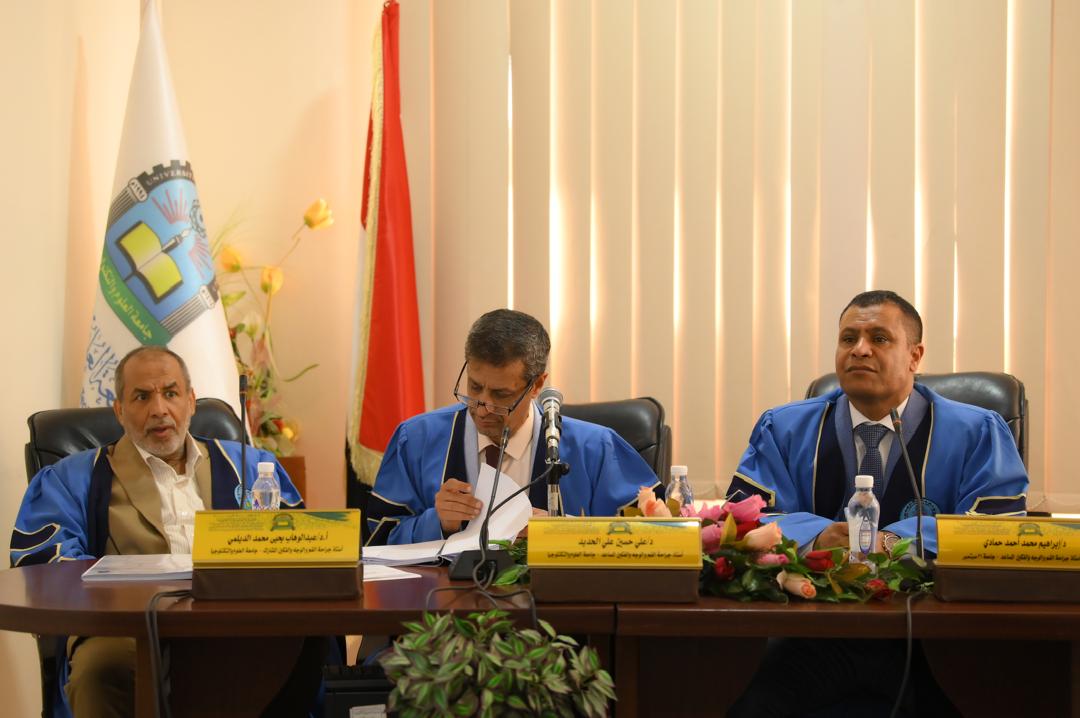
- Successfully pass the Master’s thesis defense.
- Submit the required bound copies of the research thesis.
- Pass the English Language Proficiency Examination.
- Complete all degree-awarding procedures as approved by the Graduate Studies Committee, the Graduate Studies Council, and the University Council.
- The Qur’an and Its Sciences.
- Hadith and Its Sciences.
- Jurisprudence (Fiqh) and Its Principles (Usul al‑Fiqh).
- Religions, Schools of Thought, and Sects.
- Research and Its Methodologies.
Graduates of the program may pursue careers in the following fields:
- Teaching in schools and universities.
- Providing Sharia-based consultations.
- Sharia supervision in Islamic banks.
- Imamate and religious preaching (khutbah).
- Working in research centers.