
 العربية
 Providing a distinguished educational and research services in the fields of computer science, cybersecurity and networks, software engineering, and artificial intelligence, in a way that contributes to enhancing and improving levels of compliance with national and international computing standards, through quality academic programs, specialized teaching staff, an excellent educational environment, and an effective partnership in order to achieve good practices in the computing disciplines at the national level.
To be one of the leading electronics engineering departments locally and distinguished regionally.
- Provide students with knowledge, skills, and ethics related to electronic engineering specializations.
- Conduct research and studies of scientific value that have an applied nature in electronic engineering disciplines.
- Prepare qualified engineers who can apply engineering sciences and methods in the labor market, and make decisions and deal with crises.
- Develop curricula, and scientific and practical requirements periodically to ensure following rapid changes and in harmony with the labor market requirements.
- Exchange scientific and training experiences with similar institutions, organizations, and centers.
- Implement mechanisms that ensure the quality of the educational process to obtain accreditation for the academic programs offered by the department.
- Develop the academic and professional skills of the academic staff.
- Provide technical and scientific consultations to all governmental and private sectors of society.
- The first bachelor’s program in Yemen specializing in Computer Engineering and Intelligent Systems.
- Highly qualified and dedicated academic and technical staff.
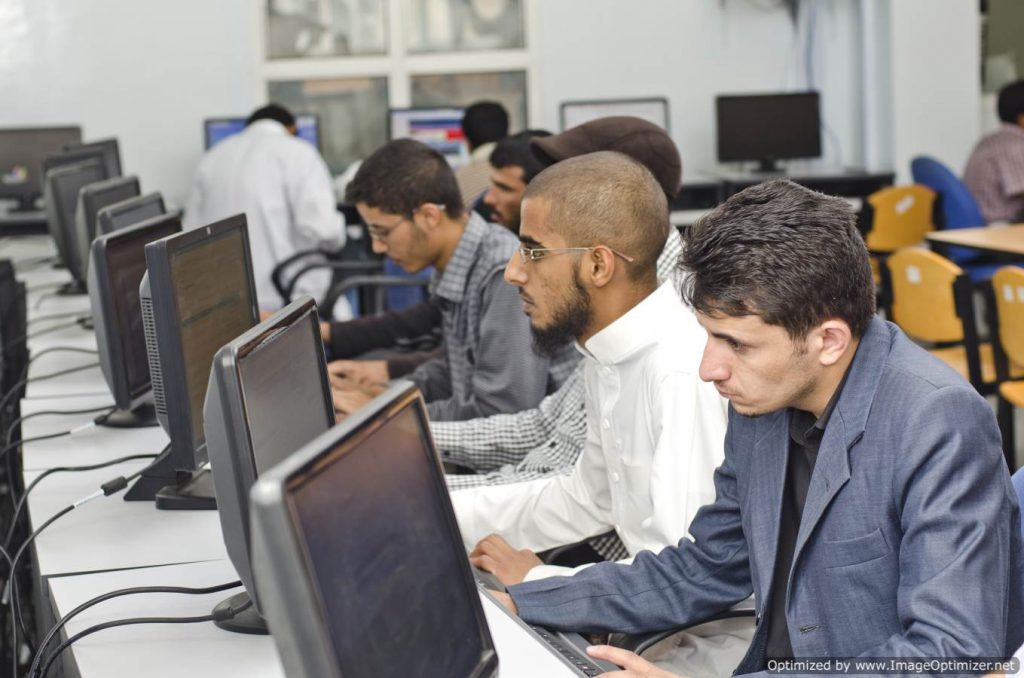
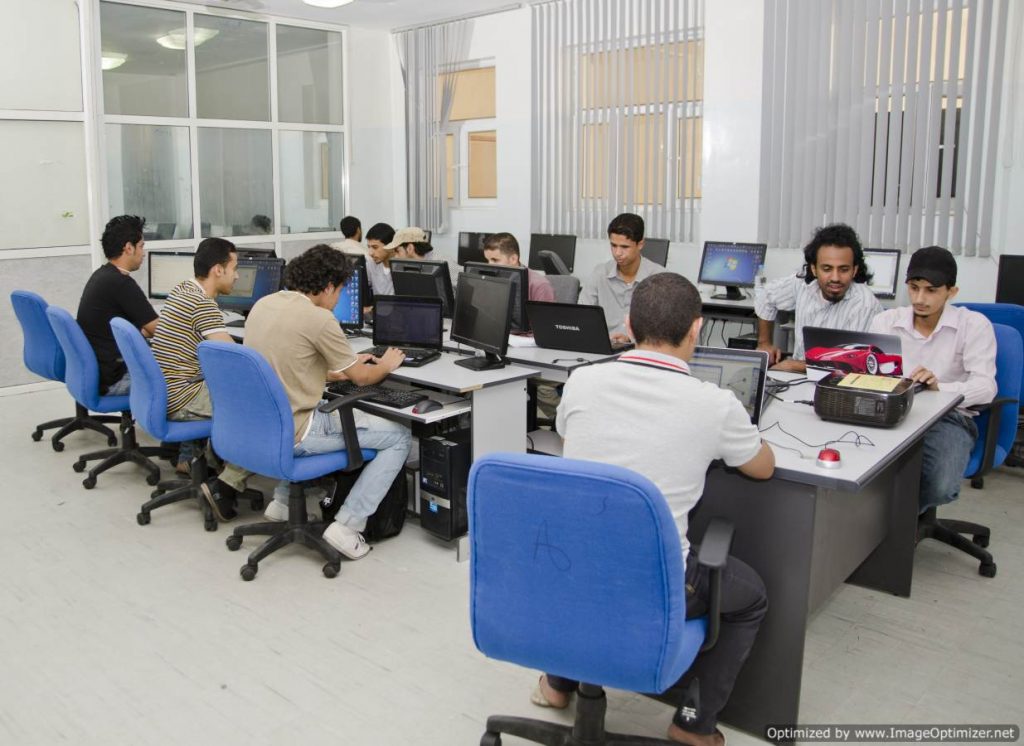
- Modern and advanced laboratories and workshops.
- Comprehensive infrastructure and conducive learning environment.
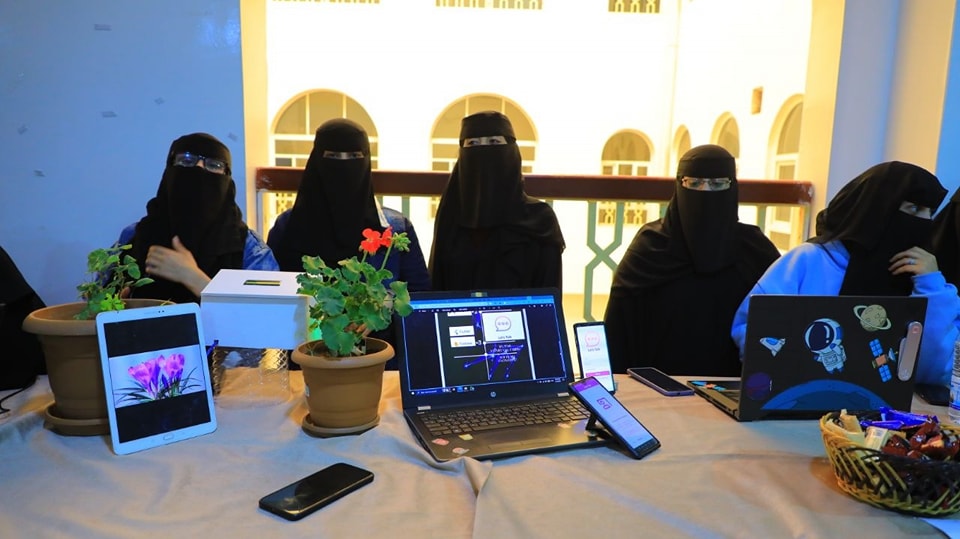
- Outstanding student activities and services.
- A contemporary curriculum aligned with accreditation standards and labor market needs.
- Practical training opportunities in leading companies and institutions.
- International professional certifications, such as Cisco Academy certification.
- Access to specialized diplomas and training courses tailored to market requirements.

Academic Programs


Scientific research
Introduction
First: Artificial Intelligence and Data Science Track
- Artificial Intelligence, Machine Learning, Deep Learning, and Computer Vision
- Explainable Artificial Intelligence (XAI)
- Natural Language Processing and Sentiment Analysis
- Data Science and its Applications
- Medical Artificial Intelligence and Healthcare Machine Learning
Second: Cybersecurity and Distributed Systems Track
- Cybersecurity and Malware Detection
- Internet of Things (IoT) Security
- Edge Computing and Cloud Computing
- Interconnected and Distributed Systems
Third: Intelligent Networks and Communication Systems Track
- Wireless Networks and Sensor Networks (WSN)
- Coverage Optimization and Energy Efficiency
- Traffic Engineering
- Quality of Service and MPLS/TCP Protocols
Fourth: Software Engineering and Quality Assurance Track
- Software Engineering
- Test Quality and Test Smell Analysis
- Systematic Mapping Studies
- Software Process Improvement and Quality Assurance
Fifth: Applied Computing and Mathematical Modeling Track
- Applied Mathematics
- Graph Theory
- Topological Indices and Their Applications
Sixth: Educational Technology and Digital Transformation Track
- E‑Learning
- Augmented and Virtual Reality Applications (AR/VR)
- Intelligent Educational Systems
| The Project | Supervisor | Academic Year |
|---|---|---|
| Smart Application for Enhancing Agricultural Pest and Disease Control and Improving Productivity | Dr. Waleed Shahir | 2024/2025 |
| Mobile Application for Teaching Yemeni Sign Language | Dr. Widad Al‑Sarouri | 2024/2025 |
| Professional Social Networking Application (Job Tag) | Mr. Hassan Abdul‑Raqeeb Asaad | 2024/2025 |
| Chatbot for Responding to Customer Inquiries | Dr. Sadiq Al‑Taweel | 2024/2025 |
| HR System for Small and Medium Enterprises | Mr. Mohammed Al‑Souti | 2024/2025 |
| Attendance Management Accelerator | Dr. Ameera Al‑Adeemi | 2024/2025 |
| Creative Projects Financing | Mr. Ahmed Fouad | 2024/2025 |
| Analysis of Vulnerabilities in Web-Based Financial Applications Using Artificial Intelligence Models | Prof. Bilal Al‑Faheedi | 2024/2025 |
| Parcel Management System | Dr. Nabil Al‑Mokhallafi | 2024/2025 |
| CAYMA E‑Learning Student Service | Prof. Ammar Al‑Zuhairi | 2023/2024 |
| Electricity Bill Payment System via Smart Cards | Dr. Wadea Al‑Qubati | 2023/2024 |
| Crime Activities Detection System in Surveillance Videos Using Deep Learning | Prof. Abdullah Al‑Hashidi | 2023/2024 |
| “Khadamtak Lebeytak” Home Services Platform Application | Prof. Abdul‑Latif Ghallab | 2023/2024 |
| RECOGnizer: Object Recognition Application Using YOLO Algorithm | Prof. Bilal Al‑Faheedi | 2023/2024 |
| Electronic Market Platform for Supplier Offers and Retailer Product Orders | Prof. Abdul‑Latif Ghallab | 2023/2024 |
| “Ezar” Online Sewing Application | Dr. Waleed Shahir | 2023/2024 |
2025
-
Simplified Deep Neural Network Models for Cardiovascular Disease Classification Authors: FAK Al-Fahaidy, MYH Al-Shamri, A Ghallab, AF Aldubai, B Al-Fuhaidi, … Source: Applied Computational Intelligence and Soft Computing.
-
Comparative Analysis of Machine Learning and Deep learning Techniques for Early Prediction of Breast Cancer Authors: M Al-Duais, AAG Al-Khulaidi, FS Mohamad, W Yousef, B Al-Fuhaidi, … Source: Journal of Future Artificial Intelligence and Technologies.
-
Machine learning techniques for early detection and diagnosis of breast cancer prediction Authors: M Al-Duais, AAG AL-Khulaidi, FS Mohamad, W Yousef, B AL-Futhaidi, … Source: The Indonesian Journal of Computer Science.
-
IMAGE-BASED IOT MALWARE DETECTION USING CHI-SQUARE AND CNN Authors: MH Al-Musawi, BM Khammas, SB Joseph. Source: Iraqi Journal of Information and Communication Technology.
-
EFFICIENT COVERAGE OF SENSORS IN A WSN USING AMODIFIED HYBRID PSO AND ALO ALGORITHMS Authors: JS Abdullah, MI Aal-Nouman, B Al-Fuhaidi. Source: Iraqi Journal of Information and Communication Technology.
-
Topological and hyper topological coindices of benzenoid circumcoronene series Authors: Walid Yousef, Abdu Alameri, Mohammed Alsharafi, Noman Al-Naggar. Source: Baghdad Science Journal.
2024
-
DNCCLA: Discrete New Caledonian Crow Learning Algorithm for Solving Traveling Salesman Problem Authors: AH Alsaidi, W Al-Sorori, AM Mohsen. Source: Applied Computational Intelligence and Soft Computing.
-
Anomaly‐Based Intrusion Detection System in Wireless Sensor Networks Using Machine Learning Algorithms Authors: B Al-Fuhaidi, Z Farae, F Al-Fahaidy, G Nagi, A Ghallab, A Alameri.
-
Lightweight yet effective: A modular approach to crack segmentation Authors: O Al-maqtari, B Peng, Z Al-Huda, A Al-Malahi, N Maqtary. Source: IEEE Transactions on Intelligent Vehicles.
-
Emerging stock market prediction using GRU algorithm: Incorporating endogenous and exogenous variables Authors: FMM Alsheebah, BA Al-Fuhaidi. Source: IEEE Access.
-
Impact of integrating lean, agile, and devops with itil4 framework for modern it service management Authors: Y Al-Ashmoery, Y Chaabi, K Lekdioui, B Al-Fuhaidi, K Alwesabi, H Haider.
-
Anomaly-based intrusion detection system in wsn using dnn algorithm Authors: B Al-Fuhaidi, Z Farae, W Al-Sorori, N Maqtary, Y Al-Ashmoery.
-
Assessment of IT Governance Maturity Level for Yemeni Telecom Sector Using COBIT 2019 Authors: A Ghallab, T Alswari, S Alhazbi, B Al-Fuhaidi, M Hadwan, F Al-Fahaidy.
-
Firefly Algorithm Based Proportional Integral Derivative Controller for AQM in TCP Networks Authors: B Al-Fuhaidi, A Alabbadi, N Maqtary, W Al-Sorori, S Al-Taweel, W Yousef.
-
Knowledge Transfer Challenges: A Practical Study of Yemen Public Telecommunication Corporation Authors: S Al-Taweel, GA Ali, S Alhazbi, W Yousef, B Al-Fuhaidi, T Albater.
-
Authentication Techniques in 5G Network Slicing Security: A Survey Authors: EA Abduh, BA Al-Fuhaidi, FA Alqasemi.
2023
-
Secured Cloud APIs Using Activity Analyzer Authors: A Ghallab, MH Saif, ME Mousa, B Al-Fuhaidi, GA Ali, G Nagi.
-
AUTO-ADAPTIVE THE WEIGHT IN BATCH BACK PROPAGATION ALGORITHM VIA DYNAMIC LEARNING RATE Authors: MM MOHAMMED SARHAN AL_DUAIS, ABDUALMAJED A.G. AL- KHULAIDI.
2022
-
Ensemble Classifiers for Arabic Sentiment Analysis of Social Network (Twitter Data) towards COVID‐19‐Related Conspiracy Theories (الأكثر استشهاداً بـ 78 مرة) Authors: A Al-Hashedi, B Al-Fuhaidi, AM Mohsen, Y Ali, HA Gamal Al-Kaf, N Maqtary.
-
A diagnostic model of breast cancer based on digital mammogram images using machine learning techniques Authors: FAK Al-Fahaidy, B Al-Fuhaidi, I AL-Darouby, F AL-Abady, M AL-Qadry.
-
Object-Oriented Test Case Generation Using Teaching Learning-Based Optimization (TLBO) Algorithm Authors: O Al-Masri, WA Al-Sorori.
-
Cooperative Discrete Firefly Algorithm to Solve the Traveling Salesman Problem Authors: AM Mohsen, W Al-Sorori, A Ghallab.
2021
-
Computation offloading algorithms in vehicular edge computing environment: A survey Authors: S Talal, WSM Yousef, B Al-Fuhaidi.
-
Literature review on cyber attacks detection and prevention schemes Authors: B Al-Fuhaidi, W Al-Sorori, N Maqtary, A Al-Hashedi, S Al-Taweel.
-
A performance comparison of machine learning classifiers for Covid-19 Arabic Quarantine tweets sentiment analysis Authors: A Mohsen, Y Ali, W Al-Sorori, NA Maqtary, B Al-Fuhaidi.
-
Arabic sentiment analysis towards feelings among COVID-19 outbreak using single and ensemble classifiers Authors: W Al-Sorori, AM Mohsen, Y Ali, NA Maqtary, AM Altabeeb, B Al-Fuhaidi.
2020
-
New Caledonian crow learning algorithm: A new metaheuristic algorithm for solving continuous optimization problems Authors: W Al-Sorori, AM Mohsen.
-
An efficient deployment model for maximizing coverage of heterogeneous wireless sensor network based on harmony search algorithm Authors: B Al-Fuhaidi, AM Mohsen, A Ghazi, WM Yousef.
-
Quality of Group Formation in CSCL Environments Authors: N Maqtary, A Mohsen, K Bechkoum.
2019
-
Group formation techniques in computer-supported collaborative learning: A systematic literature review (الأعلى استشهاداً بـ 121 مرة) Authors: N Maqtary, A Mohsen, K Bechkoum.
-
E-Learning Adoption in Open Learning Programs: A Case Study of Public and Private Universities in Jeddah City Authors: SA Al-Taweel, AH Al-Abdali, B Al-Fuhaidi.
Years from 2009 to 2018 (Selections)
-
Single Fault tolerance Method for Protection Data Flow in the MPLS Network (2018)
-
An Efficient Routing Method for Protection Data Flow in the MPLS Network (2017)
-
A new hybrid discrete firefly algorithm for solving the traveling salesman problem (2017)
-
An improved hybrid bat algorithm for traveling salesman problem (2016)
-
Multi-population discrete bat algorithm with crossover to solve tsp (2016)
-
Interference cancellation with space diversity for downlink MC-CDMA systems (2014)
-
Improved interference cancellation for downlink DCT‐MC‐CDMA systems (2013)
-
Parallel interference cancellation with linear equalisation and rake receiver for downlink MC-CDMA (2012)
-
Performance evaluation of a genetic algorithm based approach to network intrusion detection system (2009)
Views: 185