

 العربية
 Bachelor of Oral and Dental Medicine and Surgery
- Preparing dentists with a high level of knowledge and practical skills across the various disciplines of dental sciences.
- Enhancing students’ knowledge and skills to meet the needs of the local community and the requirements of the regional labor market.
- Equipping students with the fundamental skills necessary to contribute to scientific research in the different fields of dental sciences.
- Providing the community with comprehensive oral and dental healthcare services, while enabling graduates to acquire the professional and interpersonal skills required for effective and ethical interaction with patients and colleagues in the field of dentistry.
A. Knowledge and Understanding:
A2. Identify the structure and function of the human body in health and disease as they relate to the practice of dentistry.
B3. Select appropriate dental materials and handle them properly for use in specific clinical cases.
C5. Handle and manage different medical emergency cases within dental practice or refer them appropriately to specialists.
- Dental Practitioner: Practicing dentistry with a high level of ethical conduct and strict adherence to medico-legal standards.
-
Protector: Applying infection control measures and radiation protection protocols.
-
Communicator: Communicating effectively with patients, colleagues, and other members of the medical and dental team.
-
Problem Solver: Applying critical thinking and evidence-based problem-solving when delivering patient care.
-
Adaptable: Responding to the cultural and social characteristics of the community and understanding their impact on the management and prevention of oral diseases.
-
Collaborator: Working as part of a team with dental staff (receptionists, dental assistants, dental hygienists, dental laboratory technicians, and treatment coordinators) to manage dental cases effectively.
-
Leader: Demonstrating leadership qualities and the ability to work efficiently within a team.
-
Self-Directed Learner: Pursuing continuing education, self-development, and lifelong learning and research to remain up to date with advancements in dental practice and dental technologies.
-
Professional: Defining professional boundaries and performing clinical referrals when appropriate.
1. Restorative and Prosthodontic Department
About the Department
- Removable Prosthodontic Unit
- Fixed Prosthodontic Unit
- Operative Dentistry Unit
- Endodontic Unit
Department Vision
To become a leading department in education and training by achieving the highest professional standards in dental education, providing advanced therapeutic services in prosthodontics and dental implants, delivering comprehensive endodontic and restorative treatments, and making effective contributions to scientific research in these fields.
Department Mission
To provide students with outstanding scientific and practical education and training, enabling them to achieve accurate diagnosis, develop appropriate treatment plans, and deliver high-quality dental care in the department’s specialties in accordance with internationally recommended standards.
Department Units
1. Removable Prosthodontic Unit
2. Fixed Prosthodontic Unit
3. Operative Dentistry Unit
4. Endodontic Unit
Faculty Members
Removable and Fixed Prosthodontic Units
- Dr. Mohammed Dubais, Associate Professor
- Dr. Mohsen Al-Hamzi, Associate Professor
- Dr. Mohammed Al-Qawsi, Assistant Lecturer, PhD Candidate
- Dr. Yasser Al-Awsh, Assistant Lecturer
- Dr. Ammar Al-Arouli, Assistant Lecturer
- Dr. Nassar Issa, Assistant Lecturer
- Dr. Hamid Al-Shammari, Assistant Lecturer
- Dr. Mohammed Al-Hamzi, Research Assistant
- Dr. Rafidah Al-Ghabari, Research Assistant, Master’s Student
- Dr. Bushra Raja, Research Assistant, Master’s Student
Operative Dentistry and Endodontic Units
- Dr. Alfat Ahmed, Assistant Professor
- Dr. Ilham Sinan, Assistant Professor
- Dr. Yasser Al-Awsh, Assistant Lecturer
- Dr. Sabah Sana’ah, Assistant Lecturer
- Dr. Nada Al-Madhhaji, Research Assistant, Master’s Student
- Dr. Jamalah Al-Jama’i, Research Assistant, Master’s Student
- Dr. Bushra Rasa’, Research Assistant, Master’s Student
2. Department of Biological and Preventive Sciences
About the Department
The department also plays an active role in scientific research and community service through awareness programs and preventive initiatives, striving to improve oral health and enhance quality of life in accordance with modern academic and professional standards.
Department Vision
To be a leading and distinguished department in education, scientific research, and community service in the fields of preventive healthcare and oral health sciences, contributing to the improvement of community health in accordance with nationally, regionally, and internationally recognized academic and professional standards.
Department Mission
The Department of Biological and Preventive Sciences is committed to preparing scientifically and professionally qualified dentists who possess foundational knowledge and skills in biological sciences, preventive dentistry, and oral health. This is achieved through integrated educational programs, encouragement of applied scientific research, and promotion of preventive healthcare and community service concepts, supporting sustainable health development and improving quality of life in line with internationally recommended standards.
Department Units
-
Basic Sciences Unit
Head: Dr. Ali Al-Hadid -
Preventive Sciences Unit
Head: Dr. Ameen Al-Ashtal -
Biological Sciences Unit
Head: Dr. Amani Al-Sha’rani
Faculty Members
- Dr. Arwa Mahmoud Al-Haj, Assistant Lecturer
- Dr. Khaled Ahmed Al-Jawfi, Associate Professor
- Dr. Waddah Abdulnasser Al-Haj, Associate Professor
- Dr. Mohammed Abdullah Al-Labani, Associate Professor
- Dr. Abdulwahab Mohammed Al-Dailami, Associate Professor
- Dr. Ameen Mohsen Al-Ashtal, Assistant Professor
- Dr. Ali Hussein Ali Al-Hadid, Assistant Professor
- Dr. Hind Abdulkarim Al-Haifi, Assistant Professor
- Dr. Amani Abdulhakim Al-Sha’rani, Assistant Professor
- Dr. Ali Ali Ahmed Al-Ma’nan, Assistant Lecturer
- Dr. Hisham Suleiman Huwaiti, Assistant Lecturer
- Dr. Ahlam Abdu Muqbil Al-Kamel, Assistant Lecturer
- Dr. Mohammed Al-Hamzi, Research Assistant
- Dr. Ahmed Al-Hashadi, Research Assistant
- Dr. Mohammed Taqi, Research Assistant
- Dr. Ahmed Al-Nu’mani, Research Assistant
- Dr. Wafaa Aqabah, Research Assistant and Master’s Student
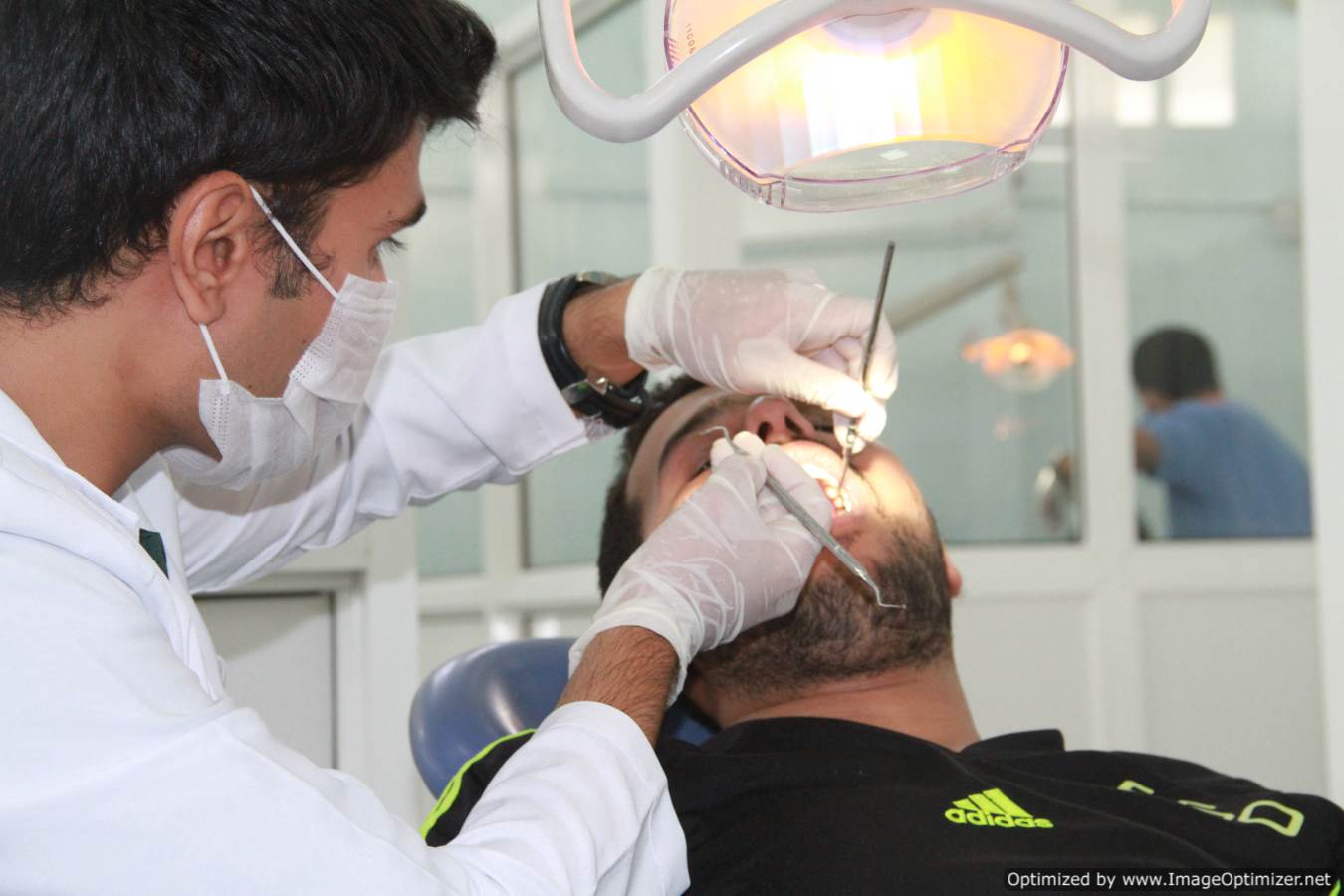
The graduation requirements for the Bachelor of Oral and Dental Medicine and Surgery include the successful completion of all theoretical and practical coursework, achieving a cumulative grade point average (GPA) of no less than 65% (or as determined by the University), completion of the required clinical training hours, passing the final-year examinations, and completion of a graduation research project or approved academic project.
-
Academic Requirements: Successful completion of all required credit hours in basic medical sciences and clinical dental sciences.
-
Cumulative GPA: Attainment of a minimum overall cumulative GPA of 65% or as stipulated by the University.
-
Clinical (Practical) Training: Fulfillment of dental clinic requirements, including the completion of a specified number of clinical cases across various specialties such as restorative dentistry (fillings), prosthodontics, endodontics (root canal treatment), and tooth extraction.
-
Graduation Project / Research: Submission of a scientific research paper or graduation project in one of the fields of dental sciences.
-
Logbook: Completion and proper documentation of all clinical cases and training activities in the student’s official clinical logbook.
-
Additional Requirements: Completion of mandatory and elective University requirements (such as language courses and computer skills).
-
Internship Year (Post-Graduation): Successful completion of the internship (house officer) year as a prerequisite for professional classification and licensure.
The Bachelor of Oral and Dental Medicine and Surgery qualifies graduates with a broad range of knowledge and clinical competencies, encompassing diagnosis, prevention, and treatment of oral and dental diseases, dental prosthetics, minor oral surgery, pediatric dentistry, basic orthodontics, and scientific research. The principal cognitive and professional domains include the following:
-
Restorative and Esthetic Dentistry: Management of dental caries, restorations, and esthetic dental treatments.
-
Endodontics: Diagnosis and treatment of diseases and injuries of the dental pulp and internal tooth structures.
-
Oral and Maxillofacial Surgery: Tooth extractions, minor oral surgical procedures, and diagnosis of jaw pathologies and tumors.
-
Prosthodontics: Fixed and removable prostheses and dental implants.
-
Periodontics and Oral Medicine and Diagnosis: Management of periodontal diseases, radiographic diagnosis, and treatment of oral and dental tissue conditions.
-
Pediatric Dentistry and Preventive Dentistry: Preventive care and treatment of children’s dental conditions.
-
Basic Medical Sciences: Head and neck anatomy, histology, and physiology.
-
Other Professional Fields: Academic careers, representation of pharmaceutical and dental supply companies, and dental clinic management.
The program aims to equip graduates with the dental knowledge and competencies required to meet labor market needs for specialized dental professionals, enabling them to practice across a wide range of dental career paths, particularly the following:
- Hospitals (public and private).
- Healthcare centers (public and private).
- Private dental clinics.
- Medical and dental-related industries.
- Positions as scientific representatives or supervisors in companies specializing in dental materials and equipment.
- Supervisory and administrative roles in medical institutions (public and private).
- Academic positions as faculty members in Colleges of Dentistry.
Scientific research
First: Biomaterials Science and Its Applications in Dentistry
This field focuses on the development and evaluation of materials used in various dental procedures, with the aim of improving their performance, biocompatibility, and longevity. It includes the development of smart restorative materials capable of remineralization, releasing antibacterial agents, or responding to environmental changes in the oral cavity. It also covers the enhancement of nanomaterials through the study of nanotechnology applications to improve dental material properties such as bond strength, wear resistance, and biocompatibility. In addition, this field involves the evaluation of biomaterials through laboratory and clinical studies to assess the long-term performance of different materials, including ceramics, composites, crowns, and bridges, as well as tissue engineering approaches that utilize advanced biomaterials and scaffolds to stimulate the regeneration of lost or damaged oral tissues such as bone and gingiva.
This field aims to understand the biological and molecular mechanisms underlying oral diseases in order to develop more effective diagnostic and therapeutic strategies. It includes the study of the oral microbiome, focusing on bacterial composition and microbial interactions in the oral cavity and their impact on oral health and systemic diseases. Research on periodontal diseases examines genetic and environmental factors contributing to gum diseases and their relationship with cardiovascular diseases and diabetes. The field also addresses dental caries by investigating the molecular mechanisms of caries development and developing new methods for prevention and early diagnosis, in addition to oral immunology, which explores the role of the immune system in protecting against oral diseases and the mechanisms of chronic inflammation and its effects on oral tissues.
This field focuses on improving clinical practice through the development and evaluation of new techniques, tools, and treatment protocols. It encompasses digital dentistry, including the application of digital imaging, optical scanning, three-dimensional printing, and computer-aided design and manufacturing (CAD/CAM) to enhance the accuracy and efficiency of dental treatments. It also includes dental implantology research, focusing on factors affecting the long-term success of dental implants and the development of innovative surgical and prosthetic techniques. Orthodontic research evaluates the effectiveness of different orthodontic appliances, factors influencing treatment stability, and the development of customized treatment plans. In pediatric dentistry, the focus is on developing preventive and therapeutic strategies suitable for children and researching methods for behavior management during dental treatment. Oral medicine and pathology research addresses the molecular mechanisms of oral and maxillofacial diseases, such as cysts and tumors, and the development of early diagnostic and innovative treatment approaches.
This field focuses on studying the distribution and determinants of oral diseases within the community and developing and evaluating public health programs for their prevention. It includes epidemiological surveys to determine the prevalence of oral diseases, such as dental caries and periodontal diseases, and associated risk factors across different age groups. The field also evaluates the effectiveness of preventive programs, including community awareness initiatives, water fluoridation programs, and the application of preventive agents such as fluoride varnish in schools and healthcare centers. Furthermore, it examines healthcare systems by studying access to and quality of dental services in urban and rural areas and assessing the efficiency of different models of care delivery. Research also explores the impact of social and economic factors, such as income, education, and occupation, on oral health and investigates barriers to accessing dental care.
This field focuses on the development of teaching and training methods in dental schools to ensure the graduation of competent dentists capable of keeping pace with advancements in the field. It includes evaluating the effectiveness of traditional versus modern teaching approaches, such as problem-based learning, flipped classrooms, and simulation, in improving learning outcomes. The field also addresses the assessment of clinical skills through the development of objective tools for evaluating students’ clinical competencies and identifying ways to enhance clinical training. In addition, it explores the use of artificial intelligence in education, including its potential for personalizing learning pathways, providing immediate feedback to students, and developing interactive virtual learning environments. Research in this area also examines continuing professional development by analyzing graduates’ needs for professional development programs and evaluating their impact on the quality of clinical practice.
This field focuses on basic research that supports the understanding of biomedical sciences related to dentistry. It includes pharmacology, which studies the mechanisms of action of drugs used in dentistry, such as antibiotics, analgesics, and local anesthetics, as well as their side effects and drug interactions. Research in physiology examines the effects of chronic diseases, such as cardiovascular diseases and diabetes, on oral tissue function and the impact of oral health on overall bodily functions. Pathology research investigates the molecular and cellular mechanisms of diseases affecting the oral and maxillofacial tissues, while immunology focuses on immune responses within the oral cavity and their role in protection against infections and autoimmune diseases.
Classrooms – Boys Branch
Faculty of Dentistry – University of Science and Technology
| No. | Classroom Name/No. | Area (m²) | Capacity |
|---|---|---|---|
| 1 | Lecture Hall (1) | 92.28 | 85 |
| 2 | Lecture Hall (2) | 118.00 | 102 |
| 3 | Lecture Hall (3) | 80.04 | 70 |
| 4 | Lecture Hall (4) | 80.97 | 70 |
| 5 | Lecture Hall (5) | 107.76 | 90 |
| Total | 479.05 | 417 | |
Head of Department
Classrooms – Girls Branch
Faculty of Dentistry – University of Science and Technology
| No. | Classroom Name/No. | Area (m²) | Capacity |
|---|---|---|---|
| 1 | Hall 1 – 4th Floor | 117.60 | 100 |
| 2 | Hall 3 – 4th Floor | 71.34 | 60 |
| 3 | Hall 5 – 4th Floor | 96.80 | 90 |
| 4 | Hall 7 – 3rd Floor | 70.34 | 60 |
| 5 | Grand Hall | 334.12 | 250 |
| Total | 690.20 | 560 | |
Head of Department
Labs and Clinics – Boys Branch
Faculty of Dentistry – University of Science and Technology
| No. | Lab/Clinic Name | Area (m²) | Capacity |
|---|---|---|---|
| 1 | Chemistry Lab | 123.91 | 35 |
| 2 | Anatomy Lab (Dissection 1) | 51.00 | 30 |
| 3 | Anatomy Lab (Dissection 2) | 51.00 | 30 |
| 4 | Biology Lab | 71.98 | 30 |
| 5 | Histology Lab (Pathology) | 74.44 | 30 |
| 6 | Physics Lab | 68.22 | 30 |
| 7 | Physiology Lab | 82.91 | 30 |
| 8 | Microbiology Lab | 95.75 | 30 |
| 9 | Phantom Lab | 99.33 | 33 |
| 10 | Carving and Orthodontics Lab | 31.17 | 25 |
| 11 | Plaster Lab | 62.80 | 25 |
| 12 | Fixed Prosthodontics Lab | 93.96 | 35 |
| 13 | Removable Prosthodontics Lab (1) | 94.19 | 35 |
| 14 | Removable Prosthodontics Lab (2) | 61.30 | 25 |
| 15 | Radiology Lab | 56.52 | 25 |
| 16 | Production Lab | 38.35 | 20 |
| 17 | Dental Clinic (1) | 281.30 | 28 |
| 18 | Dental Clinic (2) | 342.08 | 22 |
| 19 | Dental Clinic (3) | 172.04 | 20 |
| Total | 1730.25 | 561 | |
Head of Department
Labs and Clinics – Girls Branch
Faculty of Dentistry – University of Science and Technology
| No. | Lab/Clinic Name | Area (m²) | Capacity |
|---|---|---|---|
| 1 | Chemistry Lab | 76.44 | 30 |
| 2 | Anatomy Lab (1) | 42.00 | 30 |
| 3 | Anatomy Lab (2) | 30.00 | 25 |
| 4 | Biology Lab | 90.00 | 30 |
| 5 | Physics Lab | 81.00 | 30 |
| 6 | Physiology Lab | 44.56 | 25 |
| 7 | Histology Lab (Pathology) | 60.00 | 30 |
| 8 | Microbiology Lab | 92.00 | 30 |
| 9 | Phantom Lab (1) | 115.22 | 40 |
| 10 | Phantom Lab (2) | 56.62 | 25 |
| 11 | Plaster Lab | 48.05 | 25 |
| 12 | Fixed Prosthodontics Lab | 68.44 | 30 |
| 13 | Removable Prosthodontics Lab (1) | 56.83 | 30 |
| 14 | Removable Prosthodontics Lab (2) | 55.14 | 30 |
| 15 | Radiology Lab | 22.04 | 15 |
| 16 | Production Lab | 45.24 | 20 |
| 17 | Dental Clinic (1) | 174.44 | 12 |
| 18 | Dental Clinic (2) | 91.64 | 13 |
| 19 | Dental Clinic (3) | 91.64 | 15 |
| 20 | Dental Clinic (4) | 68.44 | 12 |
| 21 | Dental Clinic (5) | 118.64 | 20 |
| 22 | Dental Clinic (6) | 185.62 | 25 |
| Total | 1674.14 | 567 | |