 العربية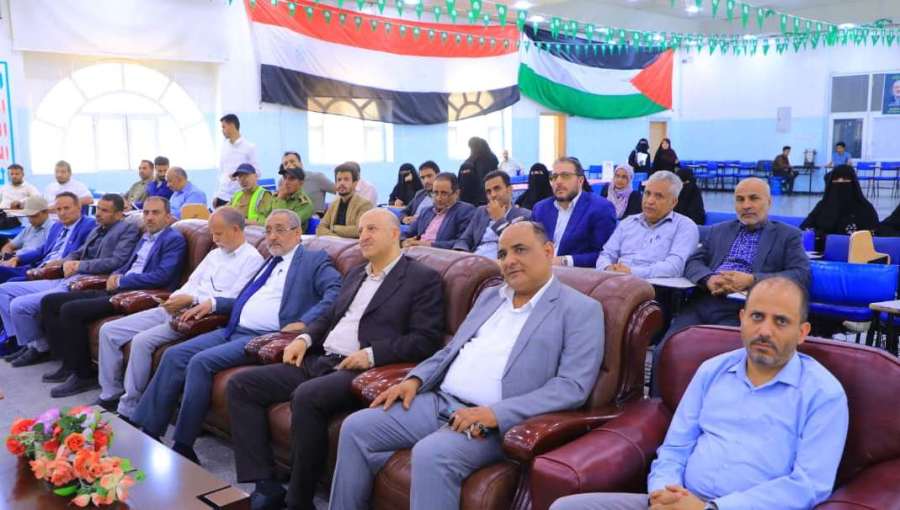
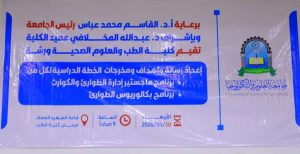
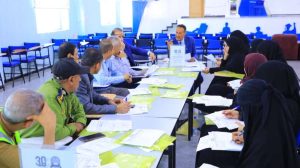
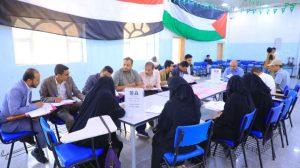
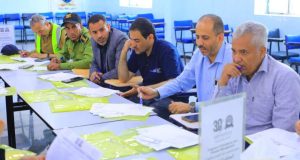
Sana’a – The College of Medicine and Health Sciences at the University of Science and Technology (UST) today held a workshop dedicated to developing the mission, objectives, and intended learning outcomes of the study plans for the Master’s Program in Emergency and Disaster Management and the Bachelor’s Program in Emergency Sciences, with the participation of a distinguished group of academics, specialists, and relevant stakeholders.
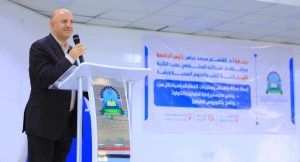
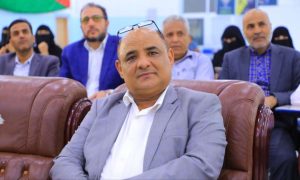
In the opening session, the President of the University, Prof. Al-Qasim Mohammed Abbas, delivered a welcoming address in which he emphasized the importance of the two programs in meeting the growing national need for qualified professionals capable of managing emergencies and disasters with high levels of professionalism and efficiency.
He noted that through these specialized programs, the University seeks to keep pace with scientific developments and strengthen its role in serving the community and supporting the health and humanitarian sectors, particularly in light of the natural and human-made disasters Yemen has experienced over recent years, most notably the repercussions of the aggression against Yemen.
The University President expressed his hope that the workshop would produce outcomes and recommendations that contribute to enhancing coordination and clarifying the distribution of roles, responsibilities, and competencies among the various entities concerned with emergency and disaster management.
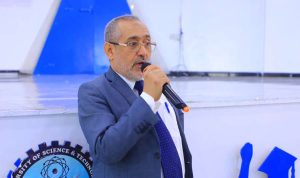
For his part, the Dean of the College of Medicine and Health Sciences, Dr. Abdullah Al-Mukhlafi, explained that the workshop comes within the framework of the College’s efforts to develop modern academic programs that respond to labor market needs and accredited academic standards, thereby contributing to the preparation of specialized cadres equipped with the necessary skills and knowledge in the fields of emergencies and disaster management.
Dr. Al-Mukhlafi also expressed regret over the delay in launching such specialized programs in Yemen despite the exceptional circumstances the country has faced due to disasters and wars, noting that many Arab universities had initiated similar programs years earlier.
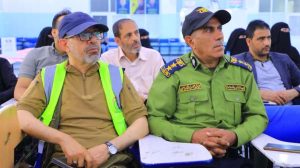
The workshop was attended by Dr. Munir Al-Mukhlafi, representative of the Academic Accreditation Council, along with representatives from the Supreme Emergency Committee, the Meteorological Authority, the National Atomic Energy Committee, and a number of faculty members from the College of Medicine and postgraduate studies, as well as representatives of the University’s Quality Assurance and Accreditation Department. Participants discussed the mission, educational objectives, intended learning outcomes, and study plans of the two programs in a manner that ensures academic quality and meets national needs in this vital field.