
 العربية
 BSc. in Software Engineering
The mission of the Software Engineering program is to prepare students to compete in the labor market and provide a motivated environment for teaching, learning, and research in the field of software engineering. The program strives for offering excellent education according to quality assurance standards and to make students able to serve the community ethically and professionally.
The program aims to:
- Provide students with a core body of knowledge in the software engineering field.
- Equip students with the required knowledge and cognitive skills to solve various computing problems.
- Prepare students for successful careers in the software engineering field.
- Integrates students into the labor market with capability of practicing professionally and ethically.
The department of computer science was established in 1994 with a B.Sc. program to prepare a highly competent creative workforce in the field of computer science. The department, since its inception, has made significant progress. The computer science department encompasses three joint programs; they are computer science program, computer networks program and software engineering program. Software engineering program was launched in the academic year 2007/2008.
The first intake graduated in 2010/2011. To develop competent professionals in the field of computer science with high moral and ethical values.
A. Knowledge and Understanding
A1. Demonstrate knowledge of theories, mathematical foundations, main concepts, principles, facts, and standards of software engineering discipline.
A2. Demonstrate a sound understanding of processes, tools, methods, techniques, models and technologies that provide the essence for developing high quality software.
A3. Describe the different phases of software development life cycle models and identify basic concepts of verification, validation and user needs of software requirements for a given software project scenario.
A4. Acquire concepts of different applications, human-computer interaction, web technologies, security, network technologies, operating systems and criteria related to the field of software engineering.
B. Intellectual Skills
B1. Explore the appropriate design solutions in one or more application domains using software engineering approaches systemically.
B2. Analyze and evaluate the current software solutions to solve software/system development problems.
B3. Compare the important criteria for the software solution quality and metrics.
B4. Investigate and evaluate the impact of globalization on computing and software engineering.
C. Professional and Practical Skills
C1. Employ effectively the principles of math and formal methods, computer systems and modern technologies in developing software-based systems.
C2. Apply and manage validated software engineering approaches, tools and technologies to integrate appropriate solutions in one or more application domains to ensure high quality software.
C3. Employ and manage effectively activities at different phases of software development life cycle using formal requirements techniques, different inspection tools and construction approaches to meet the required criteria of its usage and future developments.
D. General Skills
D1. Work effectively individually or within a team to accomplish a common goal.
D2. Write a technical report and make an effective presentation for the audience in different environments.
D3. Engage in ongoing life-long learning, negotiation, effective work habits, leadership and good communication with stakeholders.
D4. Demonstrate efficient skills in software project management, time management and research capability.
A graduate of the Bachelor of Software Engineering program exhibits the following attributes:
- Knowledgeable: Demonstrates deep and comprehensive knowledge in the field of computing.
- Problem Analyst: Capable of analyzing problems and identifying appropriate solutions.
- Developer: Equipped with the skills necessary for developing software solutions.
- Technically Proficient: Competent in utilizing modern tools and technologies.
- Communicative and Collaborative: Possesses strong communication skills and the ability to work effectively within teams.
- Professional: Committed to professional practice and computing ethics.
- Self‑Learner: Dedicated to continuous, lifelong learning.
- Manager: Holds competencies in software project management and quality assurance.
- Business‑Oriented: Able to align software solutions with business needs.
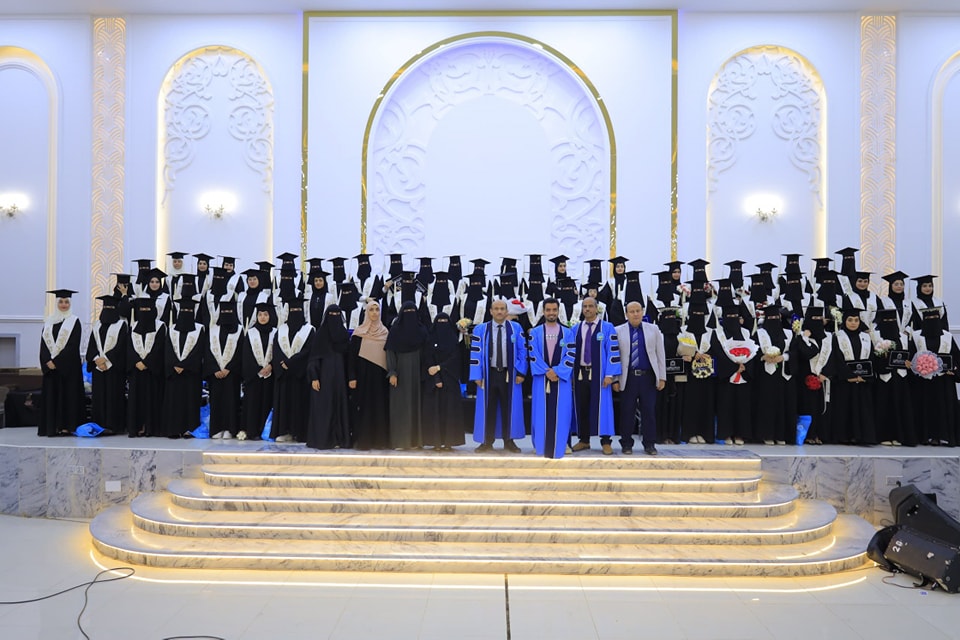
- Achieving more than 75% attendance.
- Passing all approved program requirements.
- Successfully completing 133 credit hours with a minimum score of 50% in each course.
- Basic culture in languages and cultural issues,
- Basic sciences in Mathematics, Statistics, and Physics,
- Computer science major themes such as Programming and Algorithms, Computer Networks and Architecture, Database Systems, Web Technologies, and Artificial Intelligence.
- Software Engineering major themes such as: Software Process, Software Project Management, Requirements Engineering, Software Design and Modeling, Software Construction, Software Verification and Validation and Software Evolution.
- Professional Practice which concentrates on soft skills and internship.
First: Software Development Roles
- Software Engineer
- Software Developer
- Web Application Developer
- Mobile Application Developer
- Enterprise Systems Developer
- Open Source Developer
- Systems Analyst
- IT Business Analyst
- Requirements Engineer
- Software Architect – Junior Level
- Software Testing Engineer
- Software Quality Assurance Engineer
- Verification & Validation Engineer
- Software Project Coordinator
- Software Project Manager – Junior Level
- DevOps Engineer – Entry Level
- Systems Integration Engineer
- Cloud Software Engineer
- AI Software Engineer
- Machine Learning Software Engineer – Junior Level
- IoT Software Engineer
- Application Security Engineer
- Technical Consultant
- Application Support Engineer
- Information Systems Engineer
- Tech Startup Founder
- Academic Instructor (upon meeting appointment and postgraduate requirements)
- Research Assistant in Software Engineering
Views: 98