

 العربية
 Interior Design Engineering Program
The Interior Design Engineering Program is one of the programs offered by the Department of Architecture at UST. It was first launched for female students in the academic year 2011–2012, and subsequently opened for male students in the academic year 2023–2024. The program aims to provide distinguished academic education in the field of interior design and decoration in accordance with academic standards and modern specialization requirements. It seeks to equip students with the knowledge and skills that qualify them to integrate into the labor market.
The Interior Design Engineering Program was launched in 2012 as one of the programs of the Department of Architecture at the College of Engineering, within the framework of an agreement to integrate the programs of Universiti Teknologi MARA (UiTM) into the academic programs of the University of Science and Technology (UST).
The Interior Design Engineering Program within the Department of Architecture seeks to prepare a specialized cadre capable of meeting the growing needs of the local and regional labor market in the field of interior architecture. This is achieved through the implementation of distinguished academic curricula, the use of advanced educational technologies, and the presence of highly qualified faculty members.
The Interior Design Engineering Program aims to:
- Prepare qualified scientific competencies capable of contributing to community service.
- Contribute to solving the problems faced by the community in the field of interior design by conducting relevant research and scientific studies.
- Participate in scientific seminars and specialized conferences in the field of interior design engineering, while preserving architectural heritage and promoting the sustainability and development of local building materials.
- Provide technical and practical consultations to governmental and non-governmental community sectors, and establish reciprocal relationships with other interior design programs and related institutions.
Upon completing the program, the student will be able to:
A2: Identify the history and development of architecture and interior design throughout different eras.
A3: Explain design trends, styles, theories, and standards in interior design engineering.
A4: Describe social behavior and interactions within interior spaces.
A5: Explain the relationship between mass and space, and the principles of aesthetic composition for both interior and exterior spaces.
B2: Distinguish structural behavior in buildings and their structural components.
B3: Analyze interior design problems and propose appropriate solutions.
B4: Analyze and interpret information and data related to interior design.
B5: Compare various factors (cognitive, creative, and practical) to develop solutions and apply multi-dimensional thinking in the interior design process.
B6: Classify and identify building materials used in interior design and the required implementation processes.
C2: Prepare working drawings, specifications, and quantities using computer software, and supervise different implementation works.
C3: Translate labor market needs and work to fulfill them through modern design approaches.
C4: Use research and study methods, including data collection and analysis.
D2: Develop knowledge and abilities independently, relying on modern technology.
D3: Demonstrate commitment to professional and ethical responsibility toward clients.
Upon successfully completing the Interior Design Engineering Program, the graduate will be:
- Creative and Innovative: capable of demonstrating creativity and innovation in design and planning.
- Environmentally Conscious Designer and Planner: considering built‑environment systems and sustainability requirements to meet human needs.
- Data Analyst: able to analyze literature, information, and data to make appropriate design decisions.
- Proficient: mastering modern skills through appropriate strategies.
- Safety‑Oriented: adhering to occupational health and safety standards in the built environment.
- Manager and Communicator: managing project sites, working as a team member or leader, and communicating effectively with clients and stakeholders.
- Development‑Focused Planner: planning for rehabilitation and continuous development.
- Ethically Disciplined: committed to relevant rules, regulations, and professional ethics.
- Technically Competent: mastering building systems and interior design characteristics within local and global contexts.
- Professional: using modern engineering technologies and software.
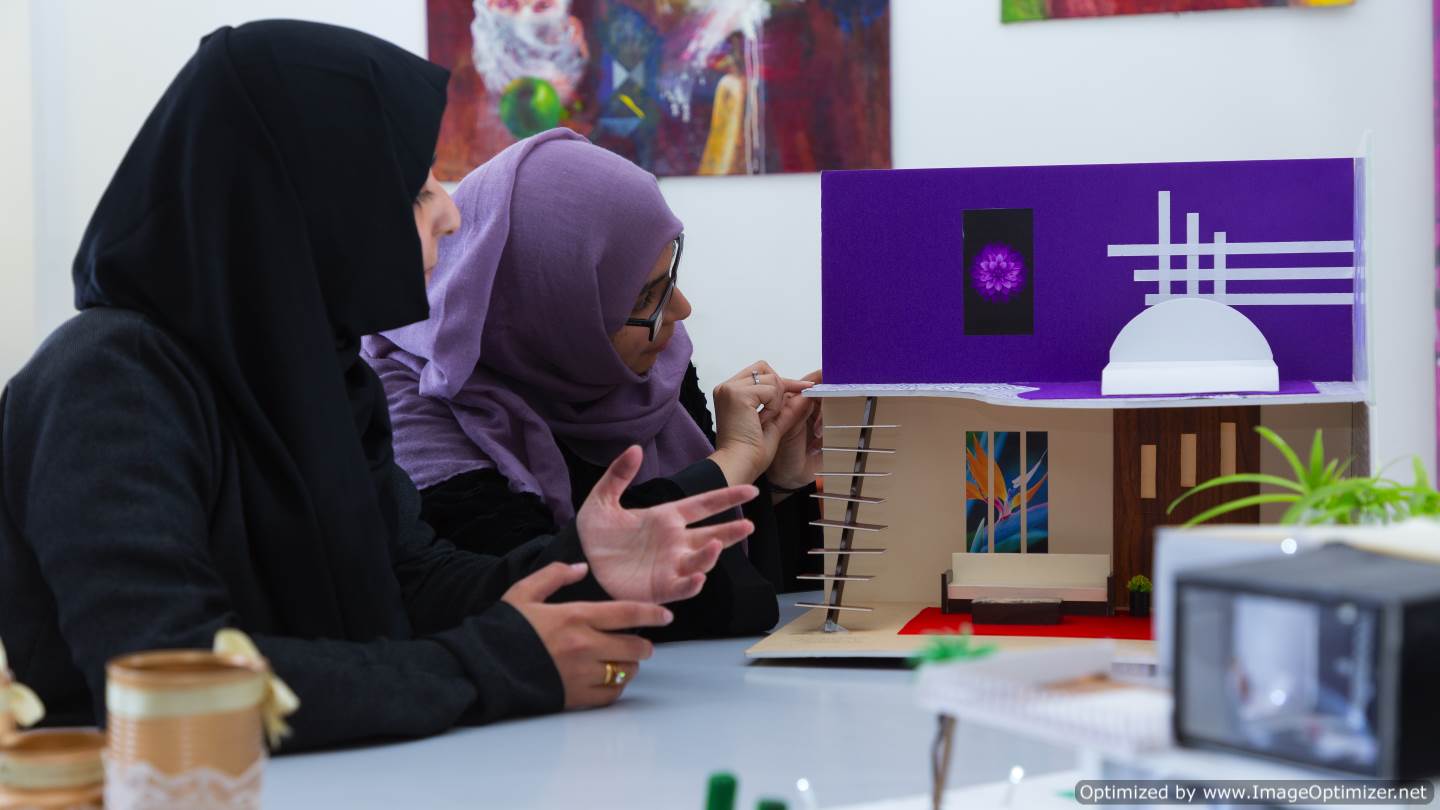
The bachelor’s degree is awarded to students upon completing the following requirements:
- Passing all courses required for graduation as outlined in the study plan (140 credit hours).
- Spending no less than the minimum period required for obtaining the degree and not exceeding the maximum number of years allowed for graduation as stipulated in the credit‑hour academic regulations.
- For transferred students, completing no less than 50% of the total required credit hours for graduation according to the approved study plan at the time of admission.
- Fulfilling all field training requirements.
- Completing all graduation project requirements, including the programming phase and submission of the final project board.
- General Culture
- Basic Sciences
- Interior Design
- Furniture Design
- Interior Design Presentation and Visualization
- Building Technologies and the Interior Built Environment
- Theories and History of Interior Design
- Graduation Project and Elective Courses
Graduates of the program can obtain a wide range of employment opportunities in the following fields:
- Managing interior works projects in buildings.
- Designing three‑dimensional interior perspectives and interior décor for public and service facilities.
- Architectural design for public and service buildings.
- Furniture design within furniture manufacturing companies.
- Consulting for interior engineering works.
- Building maintenance and renovation.
- Designing interior landscapes and site planning.