
 العربية
 Master’s Program in Structural Engineering
The Master’s Program in Structural Engineering aims to:
- To provide outstanding graduates in the field of civil engineering with opportunities to pursue higher education.
- To prepare engineers with advanced qualifications that enable them to work in research and scientific development.
- To promote creativity and innovation, and to advance scientific research aimed at solving societal and environmental problems.
- To develop and expand engineers’ expertise to keep pace with modern scientific technologies and apply them within the field of civil engineering.
A. Knowledge and Understanding
The student should be able to:
A.1 Identify and explain modern and advanced methods for analyzing structural engineering systems.
A.2 Demonstrate knowledge and understanding of advanced approaches to structural engineering design.
A.3 Clarify contemporary scientific research methods and the principles used in their evaluation.
B. Intellectual Skills
The student should be able to:
B.1 Accurately analyze and examine complex structural engineering problems and propose appropriate solutions.
B.2 Develop structural engineering concepts that can be adapted and applied to solving complex problems.
B.3 Evaluate the technical, environmental, and practical requirements of engineering projects.
B.4 Compare research methodologies and findings in structural engineering and select the most suitable among them.
C. Professional and Practical Skills
The student should be able to:
C.1 Utilize advanced structural analysis methods to analyze engineering structures.
C.2 Design advanced systems, components, and processes in structural engineering to meet required needs.
C.3 Prepare and conduct high‑quality engineering research to address structural problems.
D. General Skills
The student should be able to:
D.1 Demonstrate proficiency in preparing and presenting scientific research and theses.
D.2 Continuously develop scientific skills in preparing publications, presentations, reports, and theses.
D.3 Use technological tools effectively for learning and research.
D.4 Work efficiently and harmoniously both independently and as part of a team, and manage priorities effectively.
Graduates of this program will become specialized structural engineers possessing the following competencies:
-
Advanced Analytical Capability: The ability to apply modern methods, such as the Finite Element Method (FEM), to analyze and design complex structures subjected to static and dynamic loads.
-
Design Proficiency: Mastery of the design of structural elements and systems, including reinforced concrete and steel structures, in accordance with international and local codes and standards, while ensuring safety and sustainability.
-
Scientific Research Competence: Possessing the skills required to conduct innovative scientific research aimed at developing construction materials, improving design methodologies, and addressing existing engineering challenges.
-
Communication and Management Skills: The ability to lead engineering teams, manage projects effectively, and communicate professionally with all project stakeholders.
-
Professional Development: A commitment to continuous self-learning and lifelong professional development in order to keep pace with the rapid technological advancements in the field of structural engineering.
- Successful completion of all courses specified in the study plan.
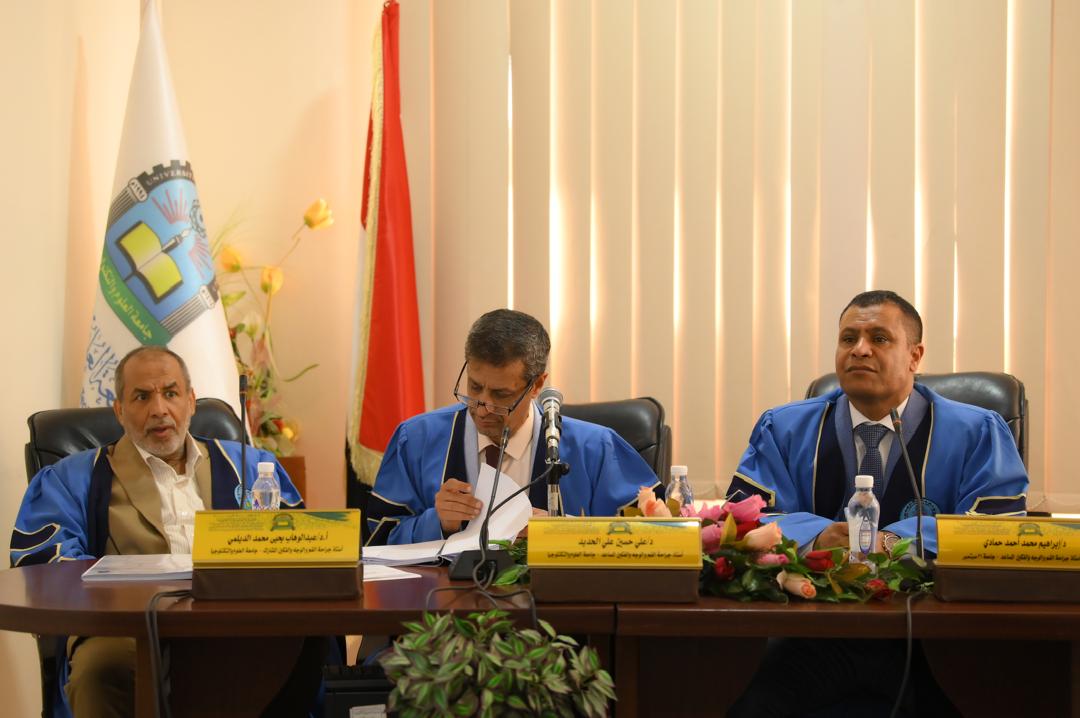
- Successful defense of the Master’s thesis.
- Submission of the required bound copies of the research thesis.
- Passing the English proficiency examination.
- Completion of all degree‑granting procedures as approved by the Graduate Studies Committee, the Graduate Studies Council, and the University Council.
In alignment with the structure of the study plan, the knowledge domains have been classified as follows:
-
Structural Analysis: Covers advanced structural analysis methods, structural dynamics, and advanced engineering statistics.
-
Advanced Structural Design: Focuses on the design of concrete structures, including reinforced concrete, prestressed concrete, and shell structures, as well as steel structures and bridges.
-
Construction Technology and Materials: Concerned with advanced concrete technology and modern construction materials.
-
Computational and Research Domain: Encompasses scientific research methodologies and advanced computer applications in engineering.
Graduates of the program are qualified to pursue careers in a wide range of vital and diverse sectors, including:
-
Engineering Consultancy Firms: Serving as structural engineers specializing in the design of high-rise buildings, industrial facilities, and bridges.
-
Construction and Contracting Companies: Working as project managers for major construction projects or as engineers responsible for quality management and quality control on construction sites.
-
Research and Academic Institutions: Serving as researchers in construction and building research centers or as faculty members at universities and technical institutes.
-
Government Agencies and Municipalities: Working as expert engineers responsible for reviewing and approving structural designs and conducting engineering inspections.
-
Construction Materials and Technology Development Companies: Serving as engineers specializing in concrete technology, advanced construction materials, or advanced computational engineering applications.